


Memoriam Homilies
Requiescant in Pace
 For our brothers who have gone to God before us, we thank the Lord for their lives and ministry and pray that they might truly know God's eternal presence and peace. May they rest in peace and rise in glory.
Eternal rest, grant unto them them, O Lord,
and let perpetual light shine upon them.
May they rest in peace!
Amen.
Out of the depths I cry to you, O Lord;
Lord Hear my voice!
Let you ears be attentive
to the voice of pleading.
If you O Lord mark our guilt
Lord who would survive?
But with you is forgiveness
and for this we revere you.
I trust in the Lord;
My soul trusts in his word
My soul waits for the Lord
More than the watchman for daybreak
As the watchman awaits for the daybreak
Let Israel await for the Lord
For with the Lord is kindness
and with him is plentiful redemption;
And he will redeem Israel
from all their inquities.
PSALM 130
Homily - Br Anthony's Funeral
Homily - Br Anthony's Funeral...
Br. Richard's Funeral Homily
Br. Richard's Funeral Homily...
BROTHER RICHARD GOLDING, CSsR, 1924- 2009
Dear family and friends:
People say there is a page in the Gospel for each of us. One, in particular, is a source of great hope and consolation. It tells the story of an old man, Simeon, who lives on a promise. He is unusual because his hopes are ahead of him, not behind him. He is not fascinated by the past - he's too interested in what's going on now. This venerable pensioner is alive with conviction, waiting for the one who will be his consolation and the consolation of all peoples. In spite of the arithmetic of his years, he inclines forwards not backwards; he hungers for new signs of God's presence, and waits for the day when he can experience God's presence in the flesh.
His stubborn waiting is rewarded. One day Mary and Joseph bring their child to the Temple. Luke's Gospel paints a wonderful picture: the old man takes the newly born child from the young mother and holds him in his arms. In the person of Simeon old age welcomes into its arms the eternal youth of God. Simeon prays the prayer of happy old age, the Nunc Dimittis. You hear poetry through the wrinkles:
Now, Master, you can let your servant depart in peace
according to your word;
for my eyes have seen the salvation
which you have prepared before the face of all peoples,
a light to enlighten the Gentiles
and the glory of your people, Israel.
It was clear to Simeon that no woman or man or child would ever have to face life alone. In all the moments of life, the times when we are hurt and haunted, the times when we feel lucky and graced, Christ would be there. More than this: Christ would be there at the moment of death. And that was why Simeon was not afraid to die. He could depart in peace because he knew that the child he held for a few moments in his arms would one day hold him in an everlasting embrace.
Dear friends, Hawkstone was graced to have its own Simeon in the community, our own ancient prophet, Brother Richard, who held God close to his heart, and the Redemptorists shall always be grateful to him for his unfailing courtesy to the people who journeyed from faraway places to this remote Temple in Shropshire.
I first met Bro Richard when I was 18, freshly arrived at our novitiate house in Kinnoull, Perth. The double-barrelled novice master, Fr Edward Lumley-Holmes, decided that given my Irish name, for manual labour I should obviously be assigned to the farm rather than the house, under the superintendence of Brother Richard. It was a strange but wonderful appointment. All the advice in the novitiate I have long forgotten except Richard's when he said to me one day: "Don't believe; do not believe even half of what you hear!"
Richard was my first Redemptorist teacher - independent, wildly attractive, utterly unpredictable. A bit like another prophet, John the Baptist in the wilderness, with an instinctive suspicion of authority, so that when our chief priests would check what he was doing he would dismiss them in a line as a brood of vipers. Like John the Baptist, Richard had no automatic respect for authority: he was his own man, with a deep sense of self and mission. I can't imagine Richard, or indeed John the Baptist, needing to attend a course on "Developing Your Self-Esteem."
Assigned to Richard, of course I was useless on the farm, testing the reaches of his patience and language, and years later when I read Seamus Heaney's poem, Follower, I thought of dear Richard:
I stumbled in his hobnailed wake, Fell sometimes on the polished sod;
I wanted to grow up and plough.
All I ever did was follow
In his broad shadow around the farm.
I was a nuisance, tripping, falling, Yapping always. But today It is he who keeps stumbling Behind me, and he will not go away.
Richard and I lived in the same community for 33 years, and I have never met a pope, or a cardinal, or a bishop, or a priest, that could measure up to this authentic human being. He was an awesome man.
Born in Shrual House, Co. Mayo, in 1924, a more unlikely beginning to Richard's career could hardly be imagined - soon after school, he joined the RAF as a military policeman. Those of you who know him well will find it difficult to imagine Richard arresting people for being insubordinate or unruly, since he had a natural charism for both. His brief career as an authority figure forever behind him, he began the Redemptorist novitiate in 1952 and was appointed to South Africa a few years later, where he joined the community in Modimong to run the farm. It was the beginning of his long love affair with animals, creatures he much preferred to humans. Richard rewrote the book of Genesis and placed cattle and dogs as the summit of God's creation.
He returned to the province after six years and had a brief disastrous spell in Brazil, when he transported three tractors to Bishop Murphy, which were promptly confiscated by the customs on arrival, leaving him empty-handed and desolate. He returned, raging at corruption and greed, disillusioned but not surprised at the low calibre of human beings. Apart from brief excursions to Perth and Erdington Abbey, Richard's true home was here in Hawkstone, running the farm, for some years ably, assisted by his nephews, Paschal, David, Paul, Kevin, Bernard - there was a legion of them. It was a family business. Richard loved Hawkstone with a full heart: this was his soul home. When I came back in 1987, Richard had 72 head of cattle, 23 cats, 18 pigs, and 7 dogs. Richard happily presided over his own zoo.
In time, of course, the farm had to go, the cattle and pigs had to be sold off, the cats put down, except for Blackie, and six of the dogs found a home. Richard's world had diminished. Some years after young Dr Mehta bought the old stable block, which was Richard's cow house, Richard and I went up for the house warming. Richard stepped in to this shining expansive sitting room, now exquisitely decorated, and looking around the reaches of the room he announced to no one in particular: "Just to think how many cows I calved in here!"
So much of what he treasured was now memory. And I thought of Larkin's poem:
Perhaps being old is having lighted rooms Inside your head: everything looms Like a deep loss restored.
........... That is where they live:
Not here and now, but where all happened once.
Not here and now, but where all happened once. Yet Richard was not constrained by nostalgia: he moved on, and during the courses here in Hawkstone, he was generous in welcoming people from all over the world. Richard developed a new life - counsellor, guru, patriarchal figure to rival Abraham. Three times a day, at table, he would hold court and dispense his wisdom, loudly, so that on each course he would assemble his own groupies who are now, after all these years, as numberless as the stars.
He had a wonderful visual use of language - I remember when a sister bought him a pair of trousers, he held the hugely oversized pair up for all to behold. I said, "They're a bit big." Richard replied, "Big? Sure, you could take a lodger in these." When you listened to his summary of the morning news at breakfast, everything seemed hugely exaggerated; if there was a plane crash where 126 people died, Richard would render it that hundreds upon hundreds had perished. In his imaginative sympathy he knew that the loss was not limited to the arithmetic of people inside the plane: the loss would go on and on and on. Instinctively he knew that.
Richard's large and distinguished family visited regularly, and he would sit in the coffee room, listening and attending. And then at supper he would share the insights always of the little ones, like little Luke or Bobbie, and say with pride: "Aren't they the clever little divils!" Needless to say for Richard, devil was a compliment.
Richard's real companion in old age was Meg, his favourite dog. As Richard got slower and slower, Meg got larger and larger. You would see them out walking every day, Meg adjusting her pace to the faltering stride of her master. Richard would often sit in the summer house, brushing her coat, while she would look up adoringly into his eyes. This wordless relationship was Richard's favourite. When Meg died out of season I thought that Richard would find a new companion, but it wasn't to be: Meg could never be* replaced, he explained; to replace her would be - " unfaithful" was his word. So for the last couple of years of his life, Richard walked haltingly around the grounds alone, with the memory of Meg, in step, beside him.
For the final chapter of his life he was attended by Sister Laurice, who cared for Richard with enormous love and devotion. They were the odd couple at Hawkstone, cajoling one another, accusing one another across tables, laughing. They had antennae fixed on each another, ever alert to the other's presence or absence. As Redemptorists we owe a huge debt of gratitude to Laurice for her abiding care.
Richard's favourite place was the chapel, his Temple, where he was at home with God. He would bend God's ear for hours every day, reminding God in no uncertain terms, who to care for especially and who to smite. Or he would simply snooze, at ease with the God he had served so generously through his long life. He waited for God; he was ready. "Now, Lord, you can let your servant depart in peace."
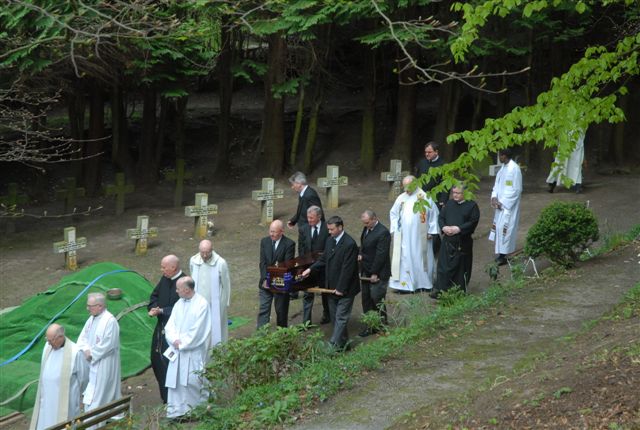
Richard died on a sunny afternoon in May, out of doors, walking up the lane, in view of his beloved cow-house. He was himself until the end and he died inside his own landscape.
Dear friends, those of us who knew Richard will have our private memories of him.
For me, he leaves behind him the memory of a man of abiding faith,
the memory of graciousness to others,
a dear good-humoured friend who loved life until life was no more.
He has now gone to the place about which Saint Alphonsus wrote:
When we reach heaven, our state is changed. There will be no more toil, but rest; No more fear, but security; No more sadness or weariness; But gladness and joy eternal.
May dear Richard, and all his beloved family who went before him, rest in peace.
Denis McBride, CSsR


Br Malachy CSsR RIP
Br Malachy's Requiem...

Brother Malachy
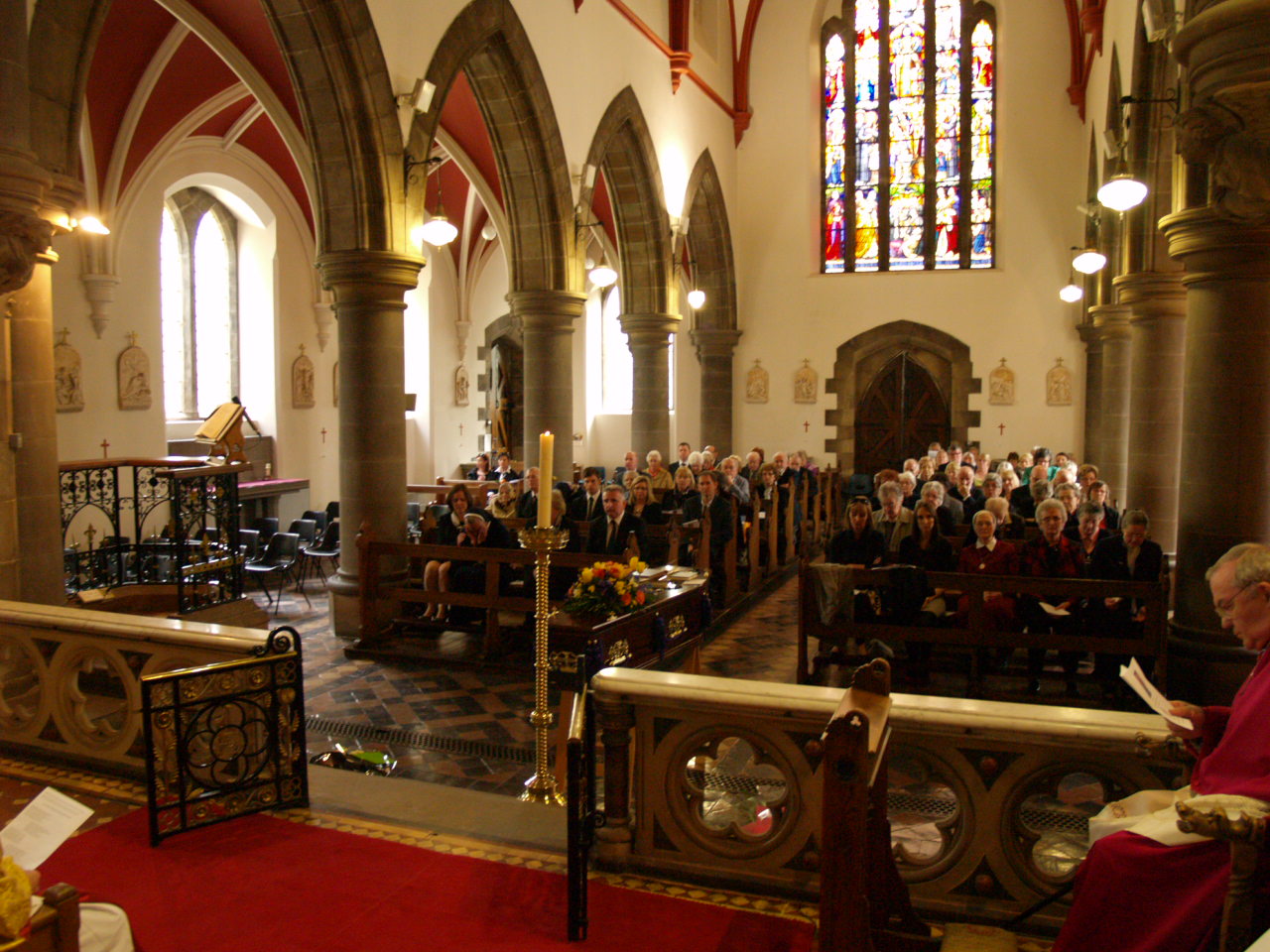
Homily Preached by Fr. Provincial, Ronald McAinsh C.Ss.R.
I feel enormously privileged to be preaching today at the Mass to celebrate the life and death of Bro. Malachy – but also at somewhat of a loss as to what I should say about so great a man.
That Brother Malachy was a saint is not in doubt in my mind. I recall the evening before his death Fr. Richard and I coming away from a visit and saying, 'Well why would anyone want to go to Padua or Assisi or our own Materdomini where St Gerard is buried – to venerate the body of a dead saint - when we have just spent half an hour with saint we both know’. Certainly by the huge turn out here today, this view is shared by so many of you.
Brother Malachy lived a comparatively hidden life. But in fact, he was probably the best known and most loved Redemptorist by the people, in any of the communities in which he lived
I mention the hidden life of Malachy – mostly spent in the garden or in the sacristy. But this was a man who had seen the world. Although he was born in Leitrim, Ireland, he joined the British Army at a young age and his first foreign posting (after England) was in Austria. After this he was sent to Hong Kong in 1947 where his Unit was involved in the battle against the communists.
From there he moved almost right round the world to Jamaica. However, with the outbreak of the Korean War he was sent back to Germany, and then posted to Korea. I asked him only a week or so ago if it was very hot in Korea. And with perfect clarity he said that in fact he was in the North, and in winter is was colder than Perth. So already he was hardened for the rigours of cold Kinnoull...
On his return to UK, he prayed about his future and decided that he was called to be a Cistercian Brother. However, when he went to the Redemptoristine Convent to tell this to Sr. Patrick – his sister who is here with us today – the Reverend Mother of that time – and remember, Reverend Mothers had power in those days – told him that he should be aRedemptorist Brother. And so he came here to Kinnoull in 1955 to begin his journey in Redemptorist Religious life...... a life he lived faithfully for these past 56 years.
We could say today that this is where the journey ends.... ...where it all began. But of course our faith tells us something very different. Because we believe that the journey carries on... it carries on in God, in eternal life... it carries on it the hearts of the many people Malachy touched during his life, it carries on in all the works and kindnesses he preformed over the years in the various communities in which he lived and worked.
Because we all know that Brother Malachy had a very rich and full interior life. I remember two years ago he was admitted to PRI after he had a slight blood clot on his leg. And he asked to me go to his room and there I would find a small (and I must say battered) little case in which he kept the few necessities of life which he might need in such an eventuality - His pyjamas, his toiletries and two books. Both books were by the medieval mystic saint, Maister Eckhart – about whom Malachy seems to have been something of an expert. Malachy had a deep knowledge of the interior life – and indeed when he went into hospital a few weeks ago – and little did we know that he would not return home – we took him a new life of Mother Celeste, the mystic and foundress of the Redemptoristines, and he read it within two days – and loved it.
Malachy had extraordinary physical energy. He never pushed a wheelbarrow. He ran with it. He washed dishes and dug gardens at an amazing rate. However, I would suggest that the energy came from within. It came from a deep inner freedom and a deep union with God that we cannot even begin to fathom.
I had glimpse of it from time to time when we spoke about his impending death and what lay beyond. When he was first diagnosed with motor neuron disease at the end of February I was in Zimbabwe, and Fr. Mulligan contacted me. My first reaction was one of anger.....’How could you do this God, to aman who has served you so vigorously with so much faithfulness’?
And when I returned the following week, I shared this with Malachy. He just smiled and said “Well perhaps God wants absolutely everything”; - and indeed God did. I then said, I suppose you are a bit like St. Peter to whom Jesus said, “When you were young you would put on your clothes and go where you wished”....And Malachy finished the phrase for me by saying, “But when you are old, another will take you and lead you in a way you would rather not go”...... And again he gave his quiet smile. And no other words were necessary.
His trust in God was complete and utter. And likewise his gratitude for all he received from God’s hands – which appears even to have included his illness. He was truly a man with a grateful heart.
And it was this serenity, this gratitude, this graciousness - (Full of grace) that touched the hearts of so many people. I recall when he was in Ninewells hospital Dundee, a nurse telling me that she had asked to be moved from another ward for the weekend to his ward, because when she was nursing Malachy, she felt she was in the presence of something blessed and special that she could not describe.
When he was in Cornhill, the Nurses told him that he did not have to keep on saying ‘thank you’ for every little service they rendered. They said, “That’s why we are here”. But Malachy could not change his nature of being a gracious man who always expressed his thankfulness.
I remember many year ago when I was Novice Master asking Fr. Bernard Haring, a famous and holy Redemptorist in Rome, what I should look out for in men who were joining us.
And he said, ‘First of all try and see if they have Eucharistic hearts. Eucharist means gratitude, and so I mean hearts that are positive and grateful – and that they are people who are ready and willing to break the bread of their lives for others.’ Surely our Malachy fulfilled this description to perfection.
Those of us who have lived with Brother Malachy knew that he was an intensely private person. He worked alone in the garden. He prayed for hours alone in the Church. He worked alone in the sacristy, and he sat in his room for hours reading his spiritual books in solitude.
I often wondered how he would accept illness and the loss of privacy. The reality is that he accepted them with totally equanimity and peace. When he first began to feel feeble, we got him a Zimmer so that he could be moderately mobile. You would have thought we had brought him a Ferrari – the gratitude and joy on his face was so intense.
And when he totally lost his privacy and had to be fed and bathed, his disposition remained utterly positive and docile. His adaptability from a hidden and independent life in the Monastery, to a public and dependent life in hospital was truly amazing.
So what do we learn from this life? We are not here to canonise Malachy. That is the last thing he would have wanted.
But there are a few lessons that his life can teach us.
The first, I think is to be grateful – to be people who can see the half full glass rather than the half empty glass. To be people who remember the blessings we have in life – our health, our families, our friends, and God’s love for us.
To be wholehearted in what we do. Malachy it seems to me, was single-minded. It did not matter if it was digging a field, welcoming a visitor or lighting the candles. He put his heart in to whatever was needed at that moment.
To be cheerful in adversity. Malachy was the same when things worked out well for him, as when things were collapsing around him. He accepted the various moves from community to community without a grumble, although I have no doubt it cost him something within.
To pray and to trust in God. This I think was Malachy’s greatest legacy to us. He was a man of deep prayer. Often he would sit in this church in silence and pray for the world – for us. And in times of difficulty, he had particular devotion to and trust in our Mother of Perpetual Help, under whose title this church is dedicated. And he often told me he was praying to her for me, and for all our needs.
And finally to be there for others. Malachy did so much for others – quietly and humbly, whether it was putting out the dustbins each week or leaving a note to change the host in the tabernacle or to collect the eggs from the hens. He generously prayed for so many intentions. You only had to ask him and he would assure you of his prayers.
Above all, he challenges us to put God before everything else.
I would like to conclude by thanking the members of the Community here at the Monastery, for their love and care for Brother Malachy. It was utterly outstanding. The Redemptorist community and the extended community, not only of Srs. Maureen and Monica, but all of these who work here and loved him so much. I cannot mention each one by name. But I know that each one loved him – and was loved by Brother Malachy.
I would like to thank our regular Masses attenders, and all of those who visited Malachy when he was in hospital or Cornhill.
A special word of thank to the doctors, nurses and staff of PRI and Ninewells – and in a very special and focused way to those in Cornhill who made life for him – and for us – so blessed during his final few weeks.
I express our condolences to Srs. Patrick and Colette his blood sisters, and to Brother Malachy’s family and friends.
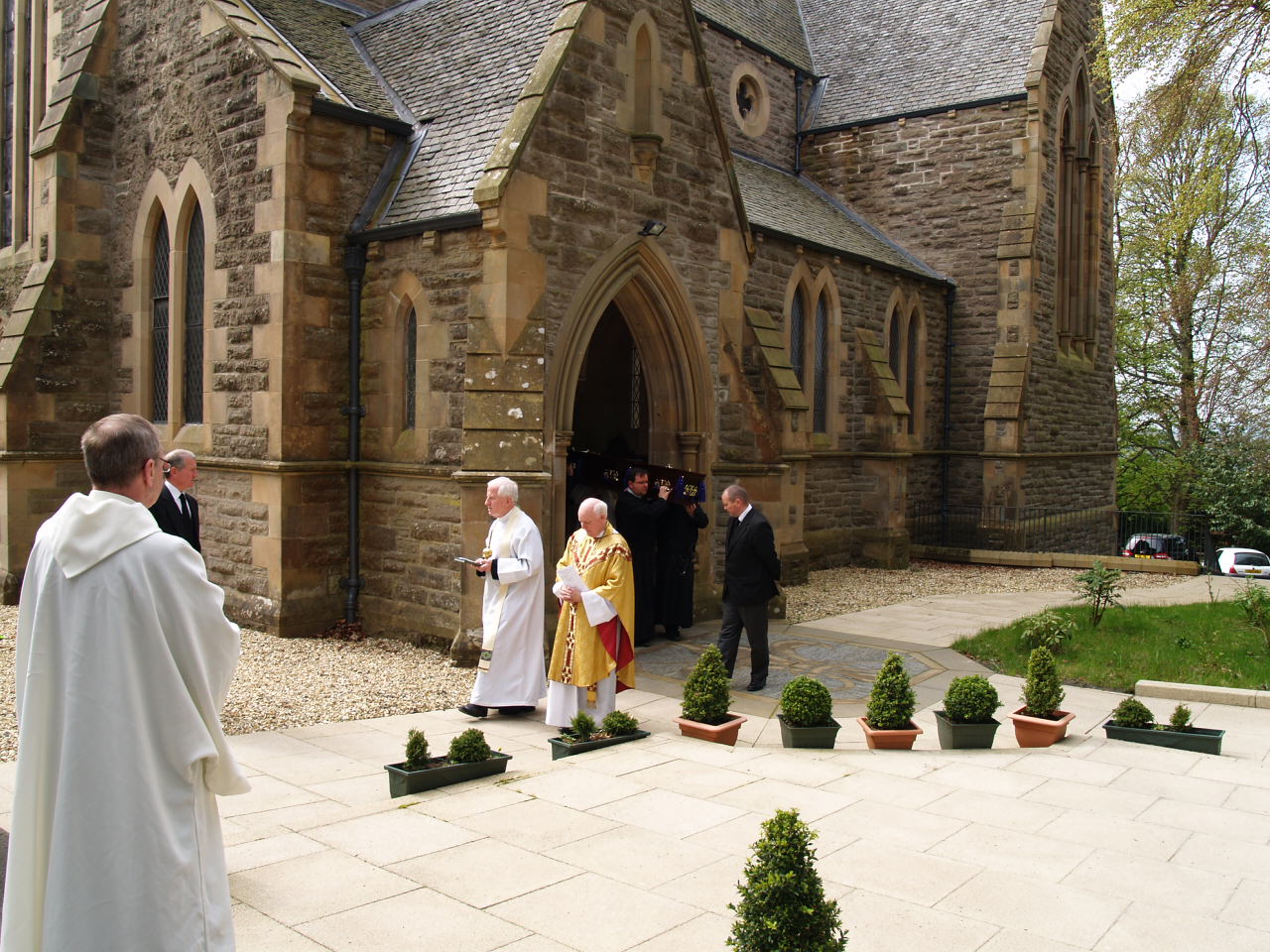
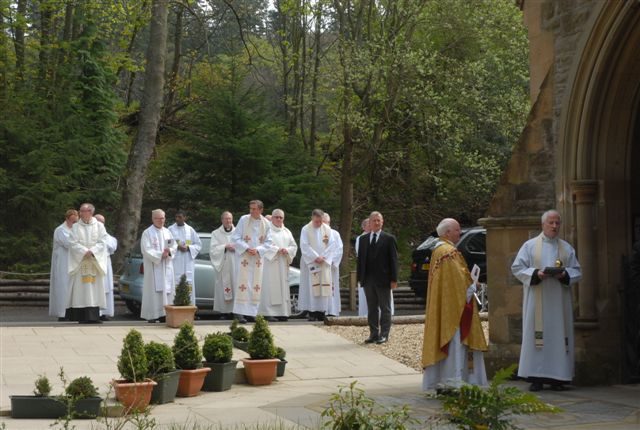
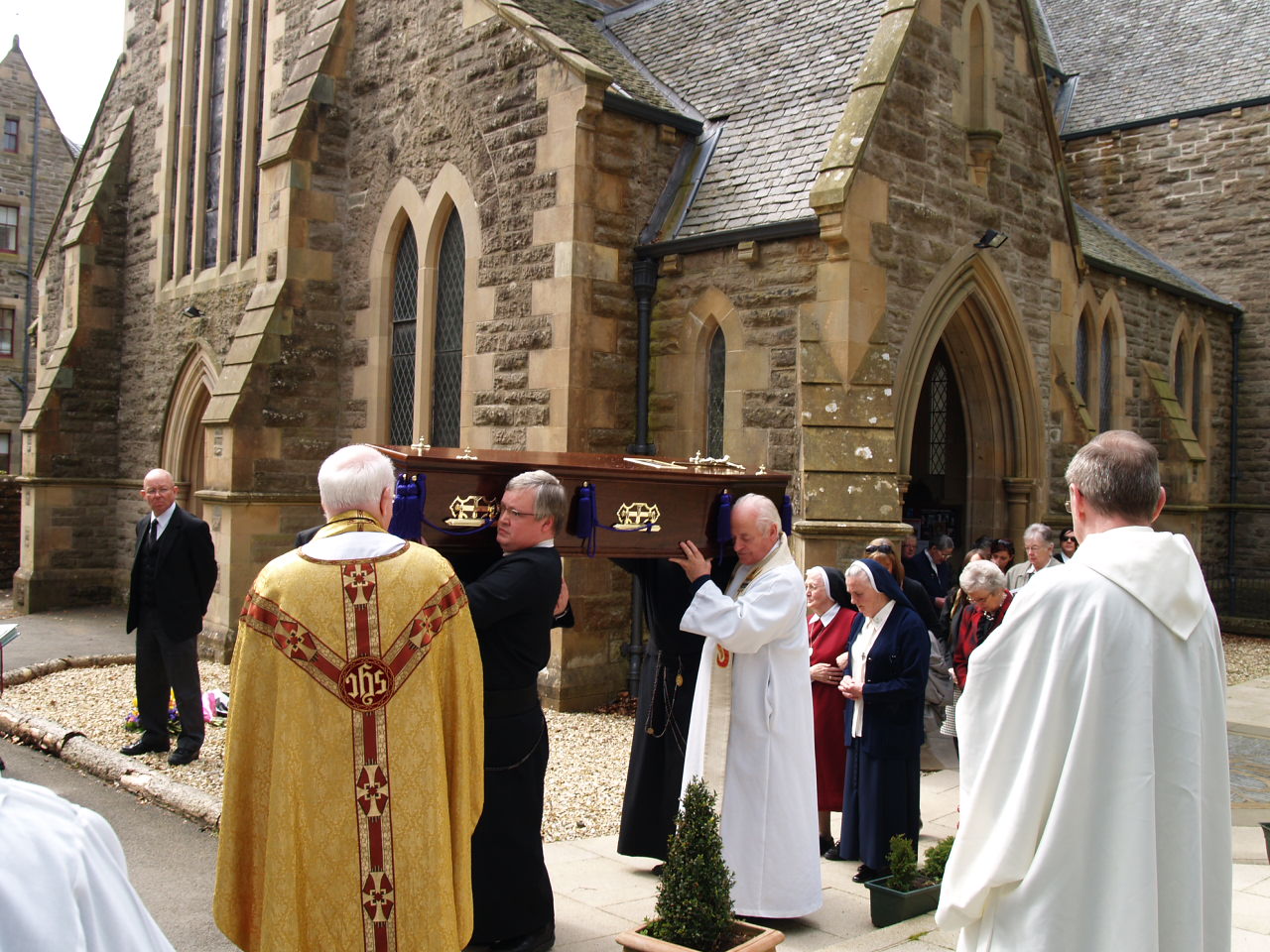
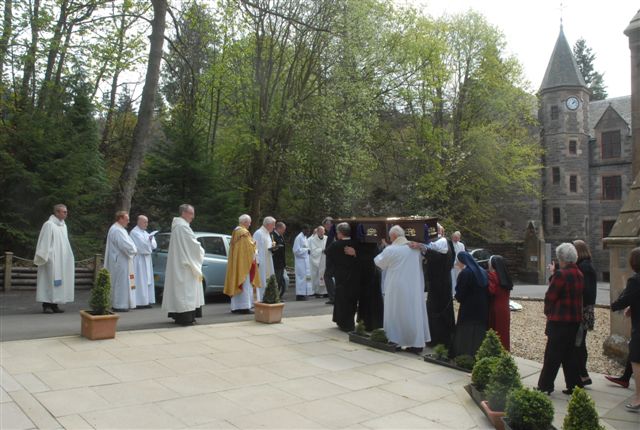
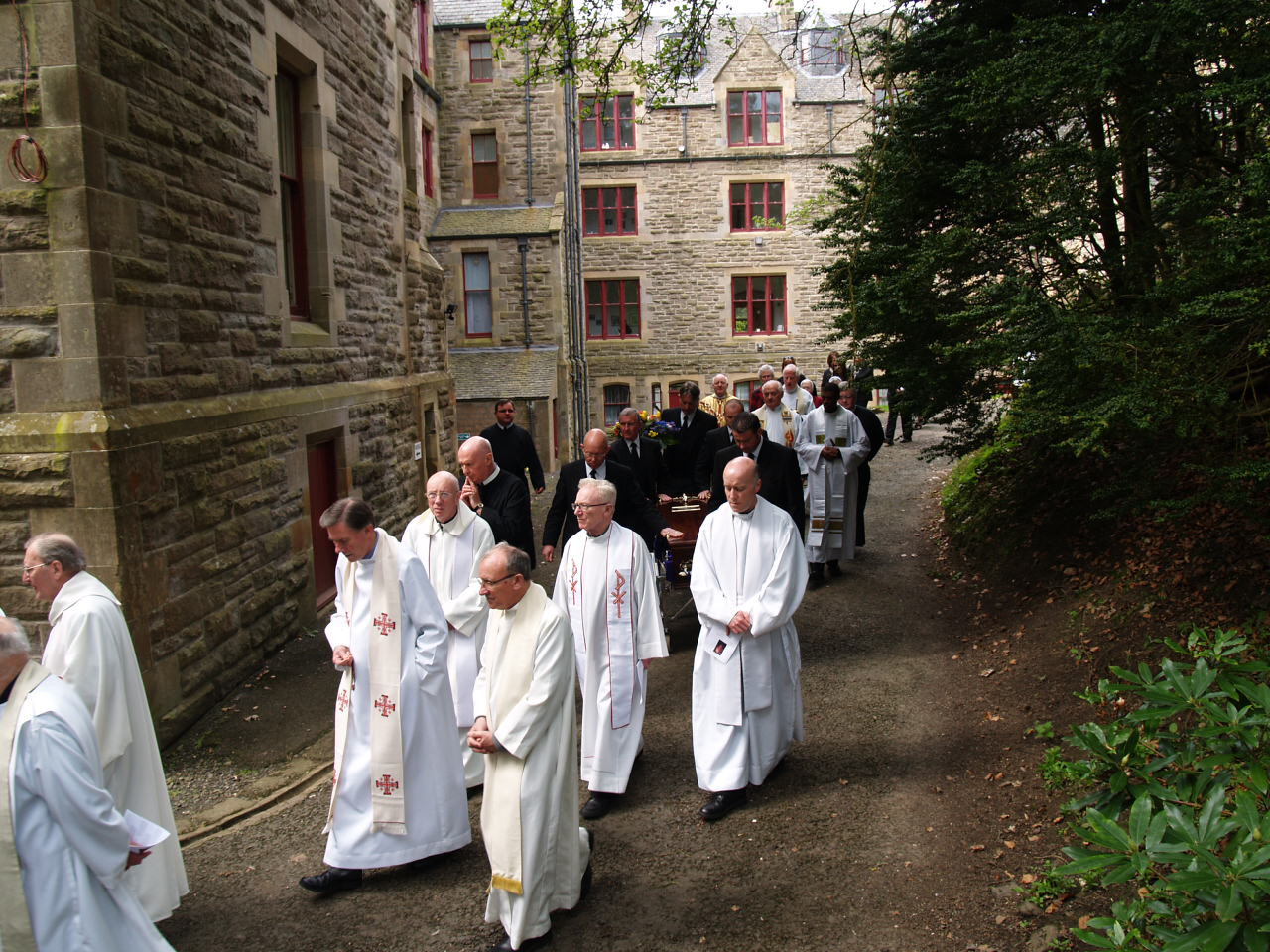
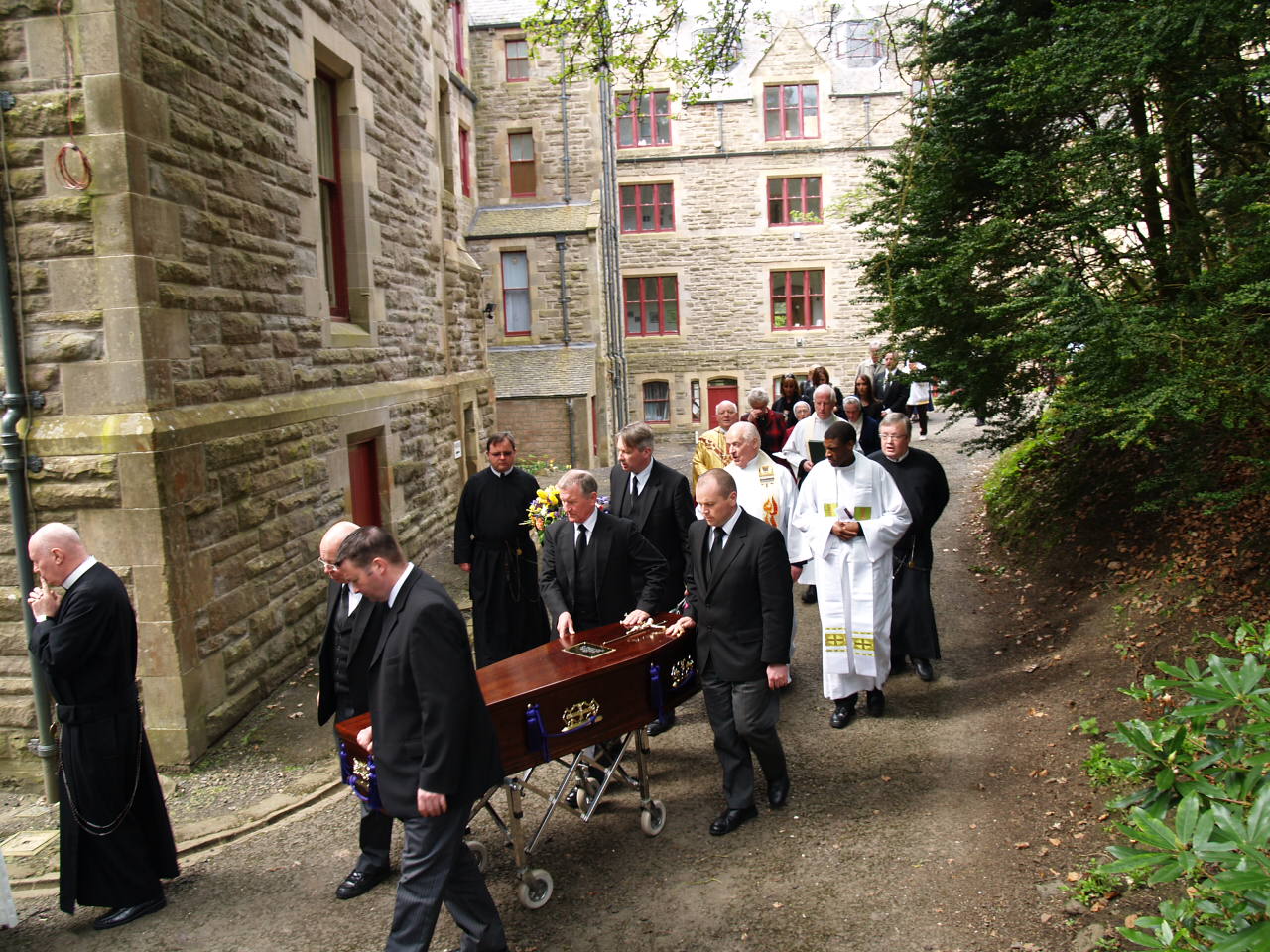
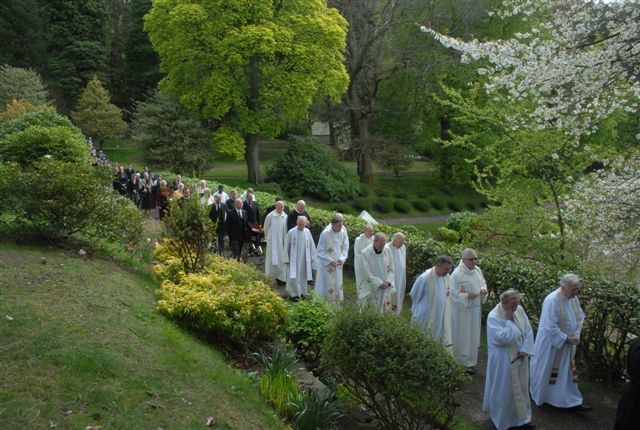
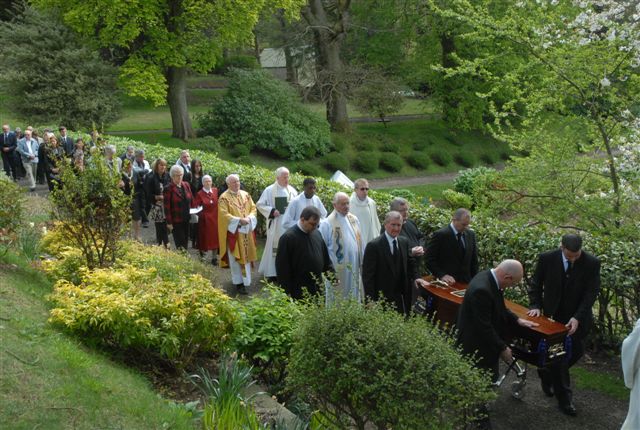
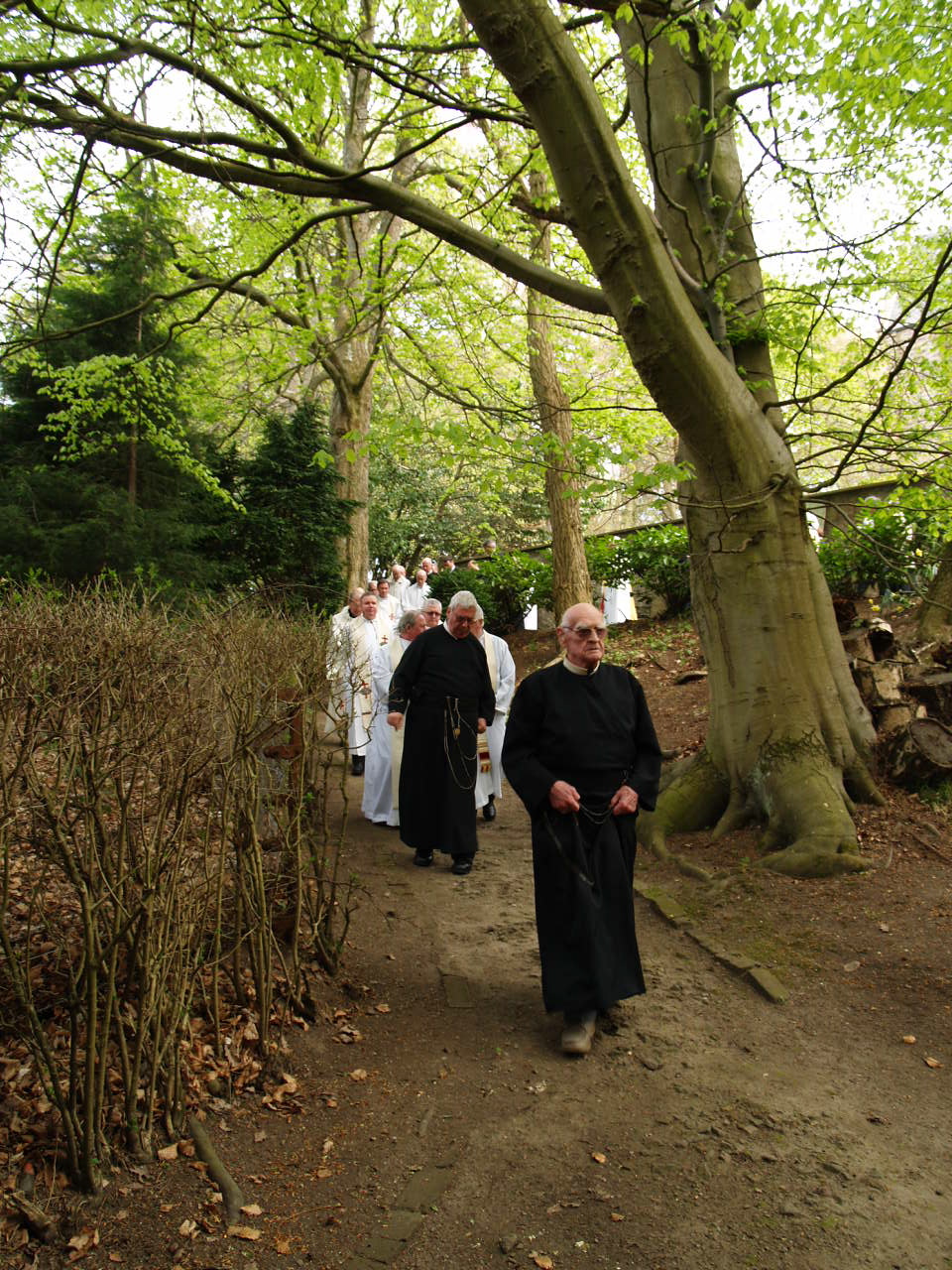
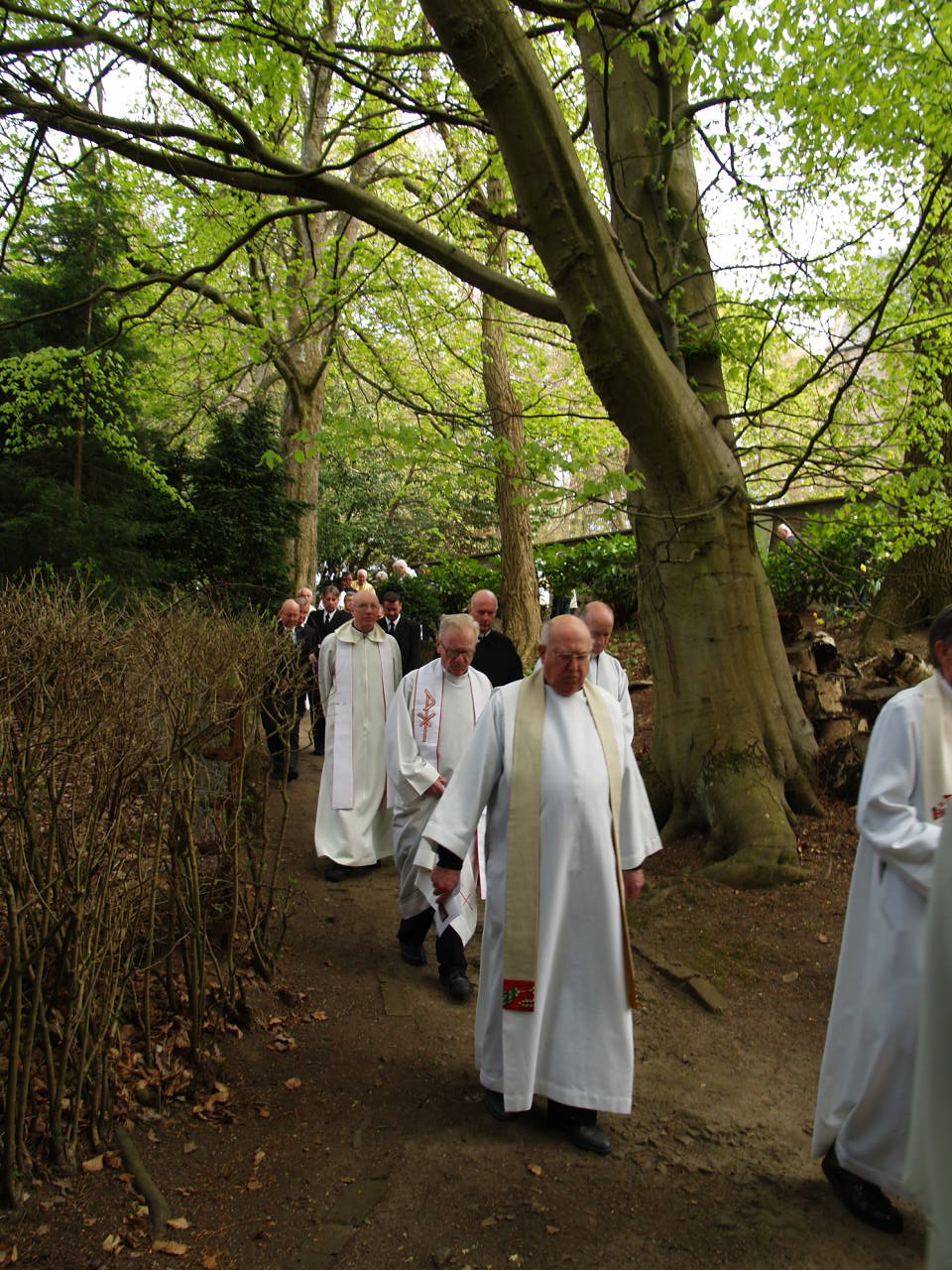
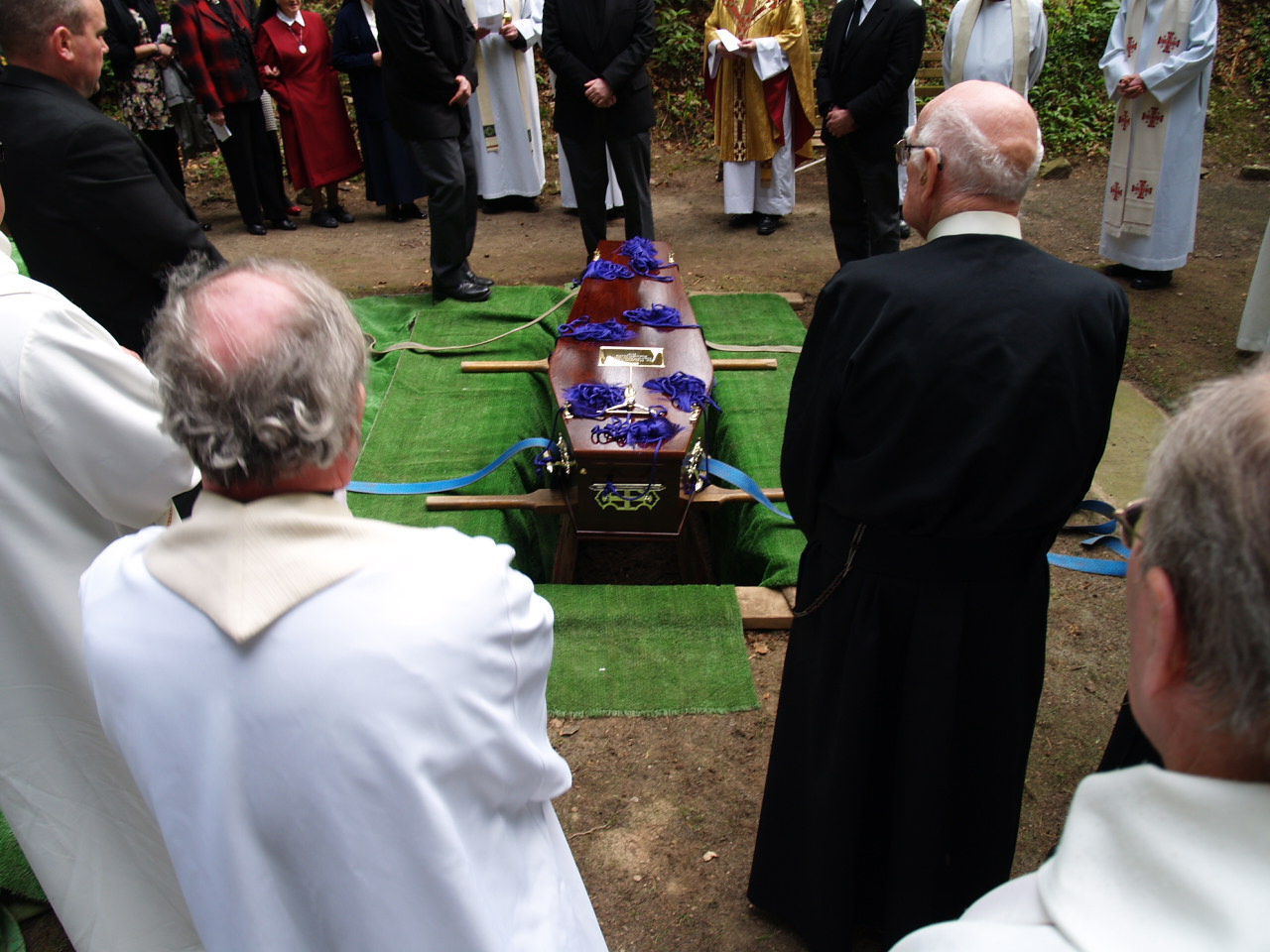
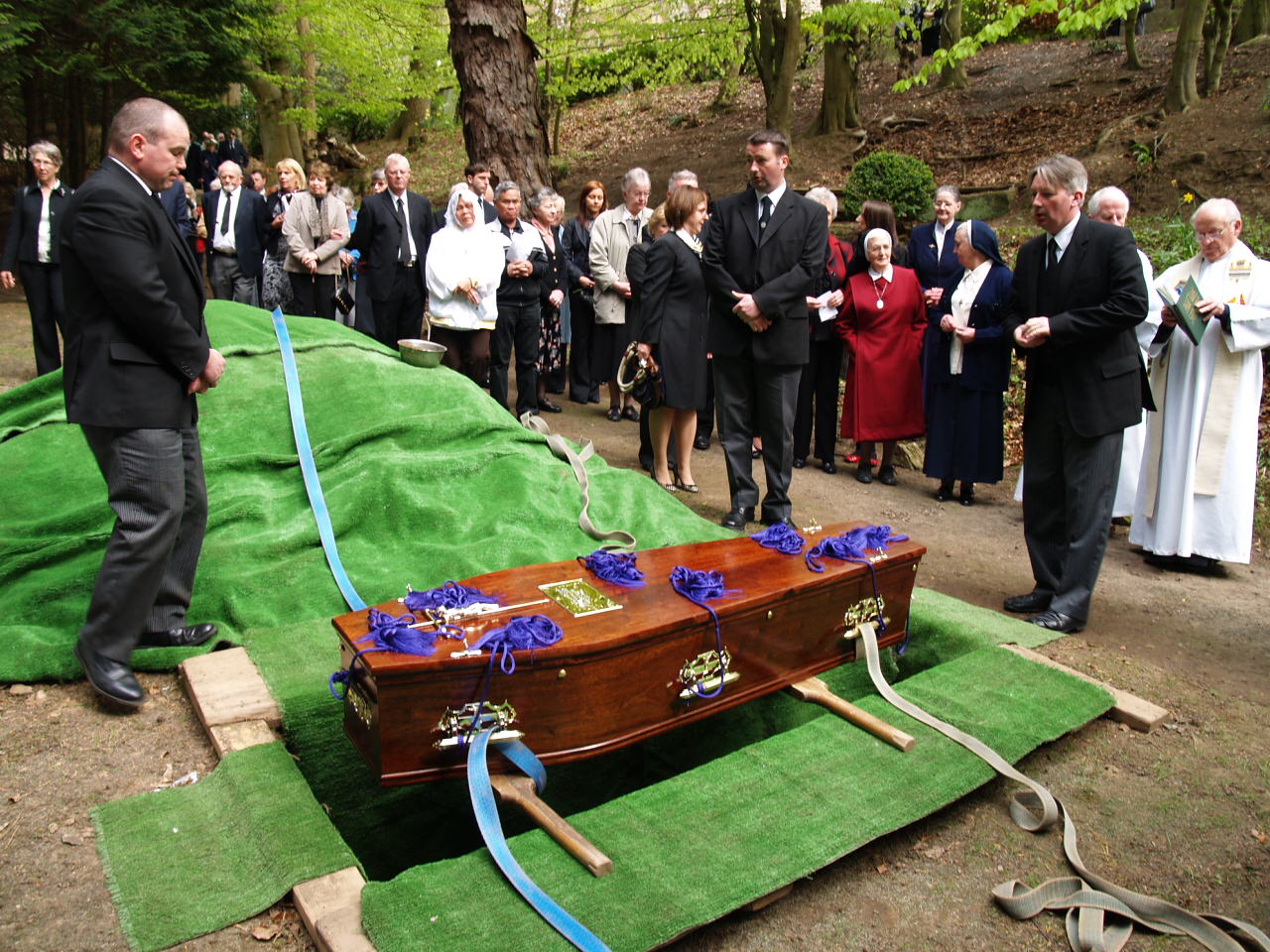
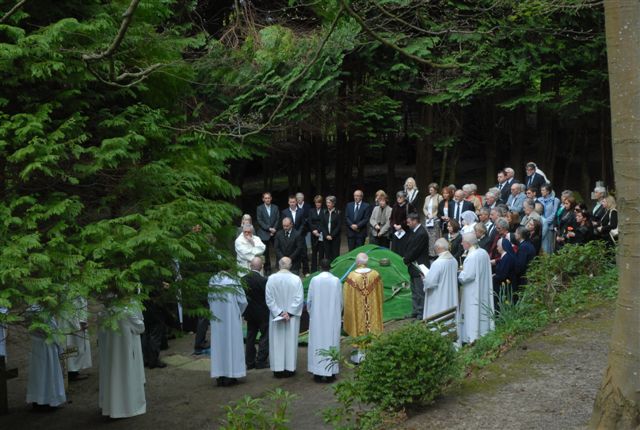
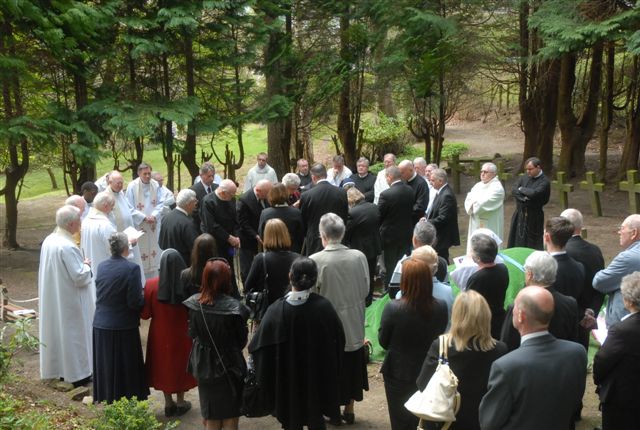
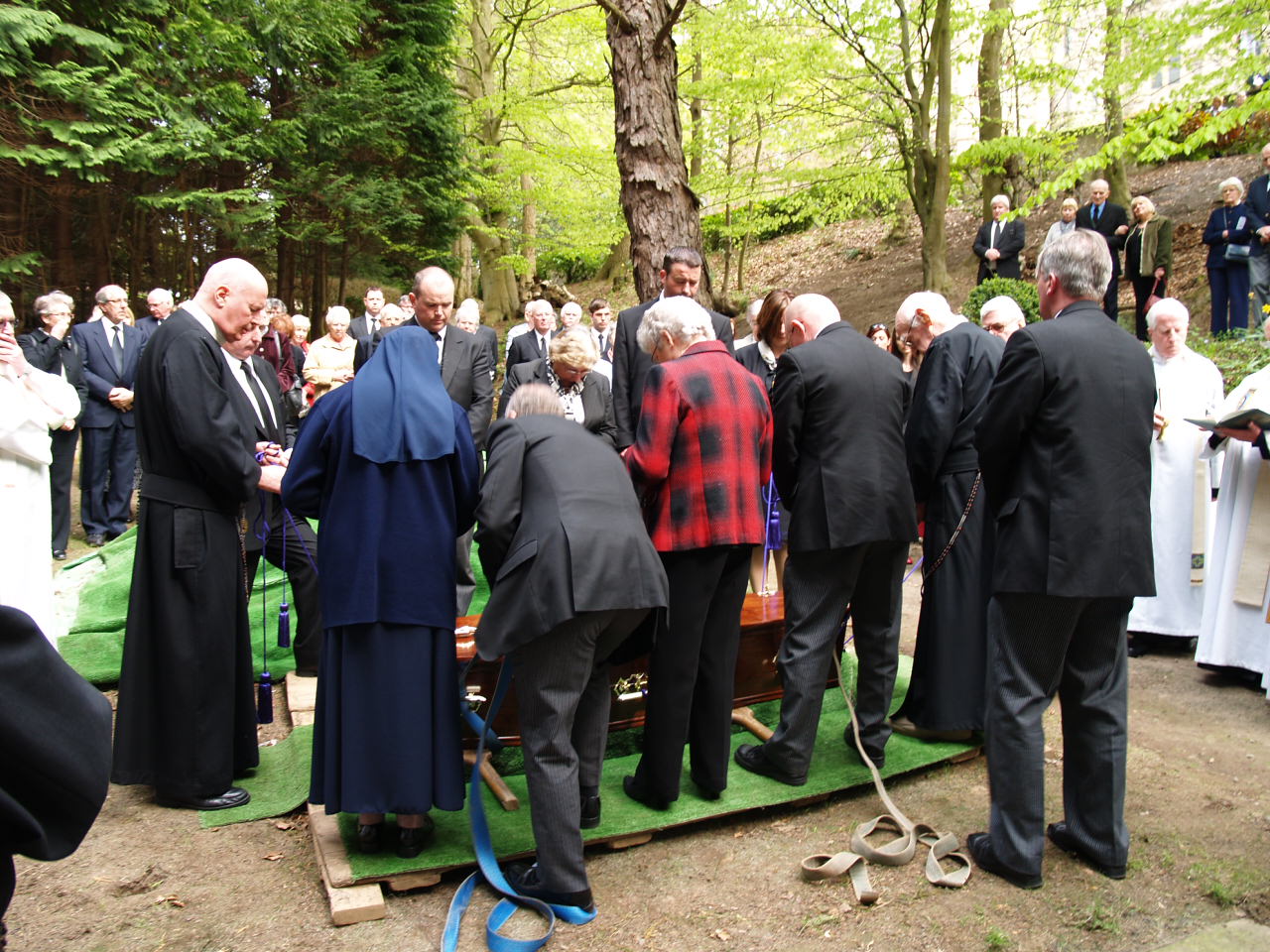
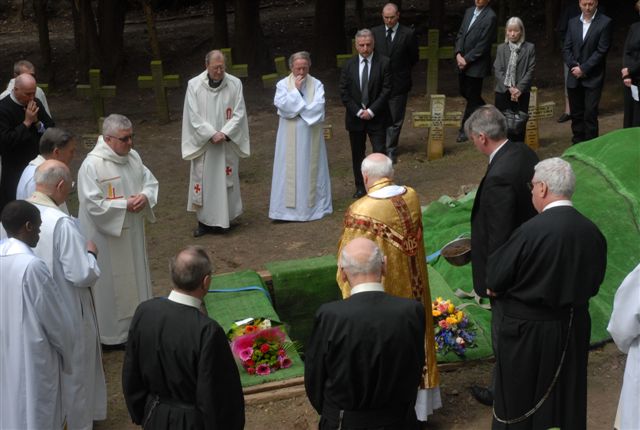
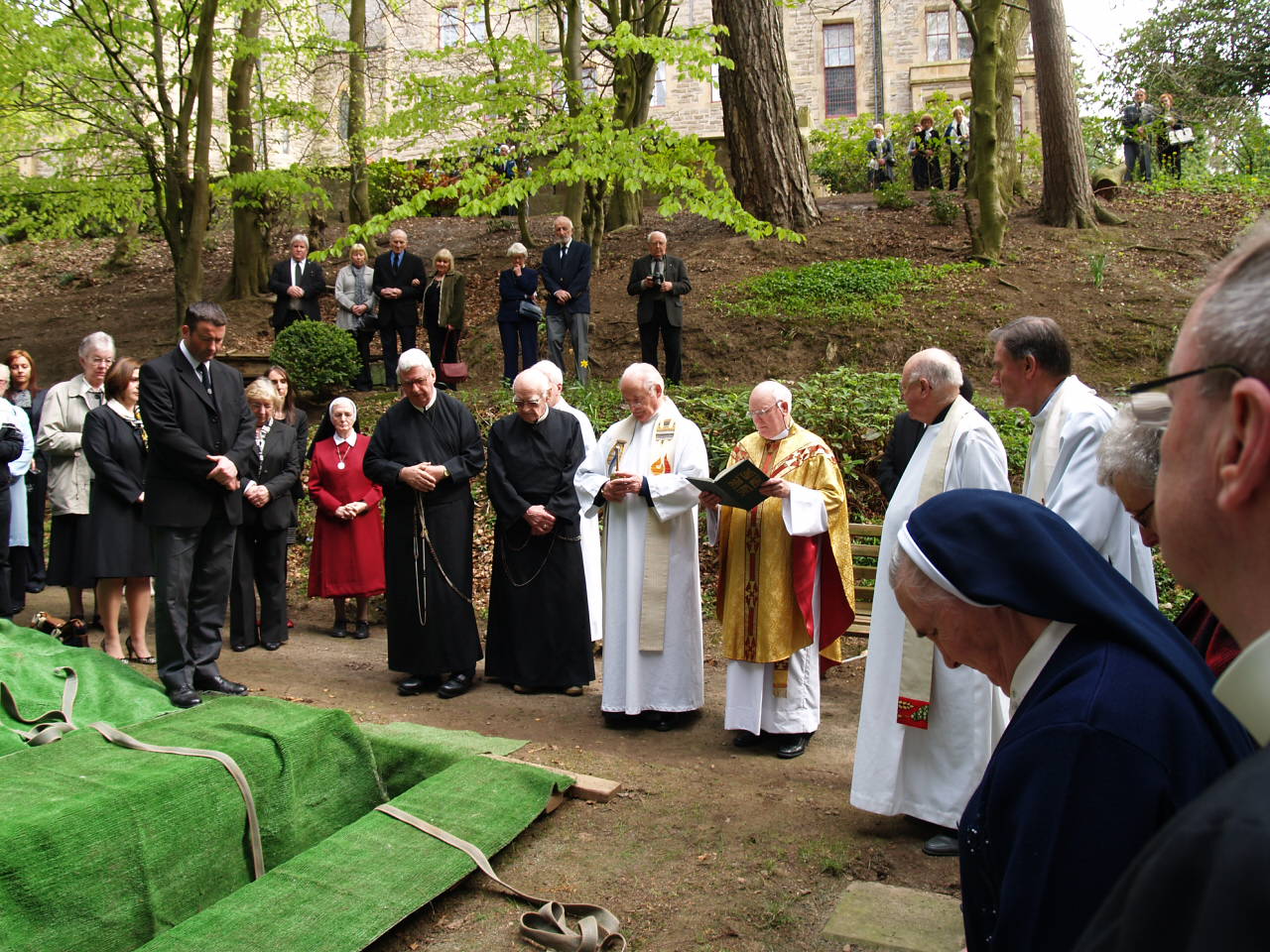
We will shortly lay Malachy to rest in our Monastery cemetery. We will say farewell to his body. But his spirit will remain with us in the years that lie ahead - whenever we come into this Church, or walk in the gardens, or look at the hens, or watch the grass grow, Malachy’s spirit will be with us.
We were privileged to have Brother Malachy with us for so long a time. May his soul rest in peace. Amen

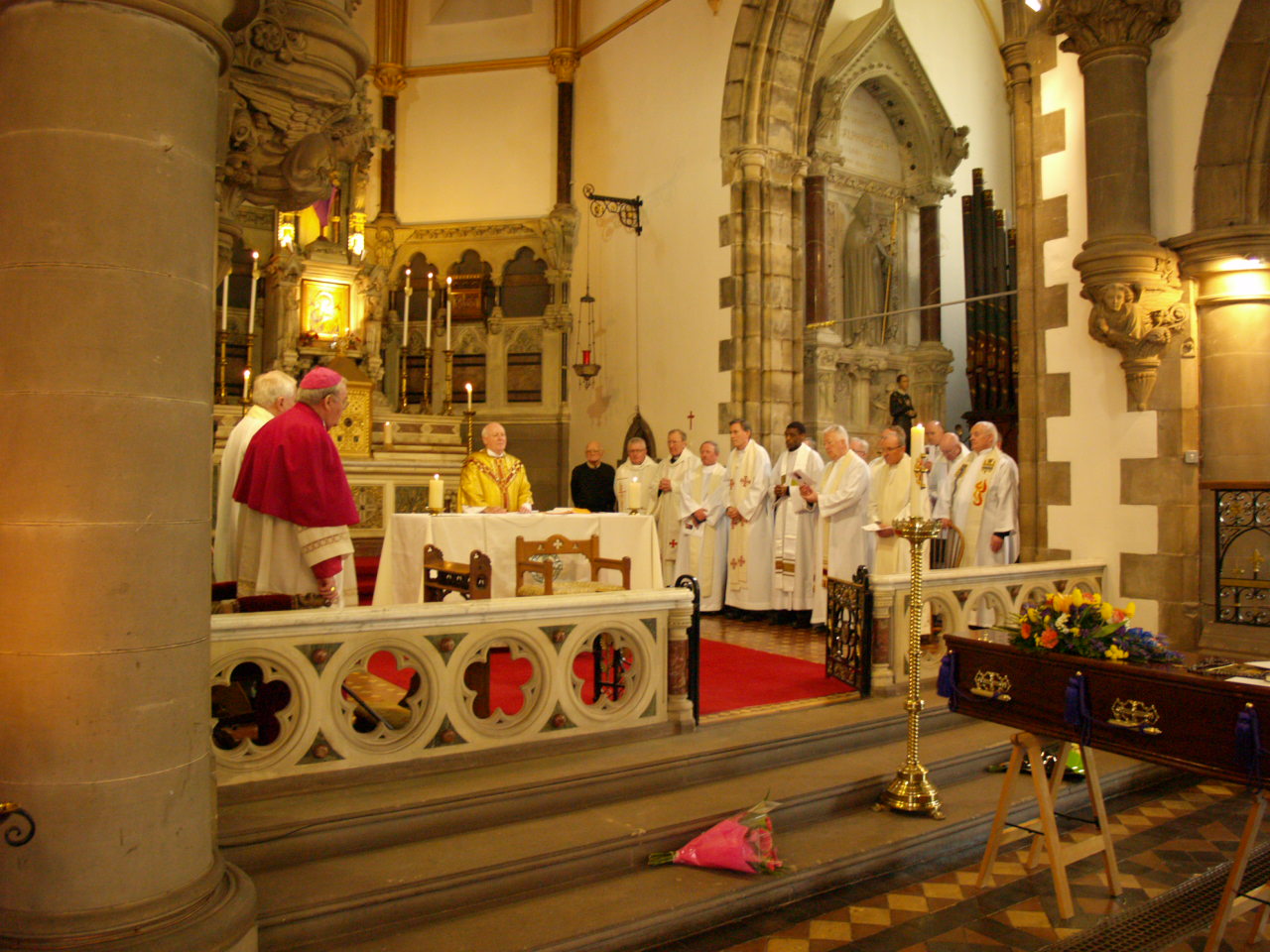
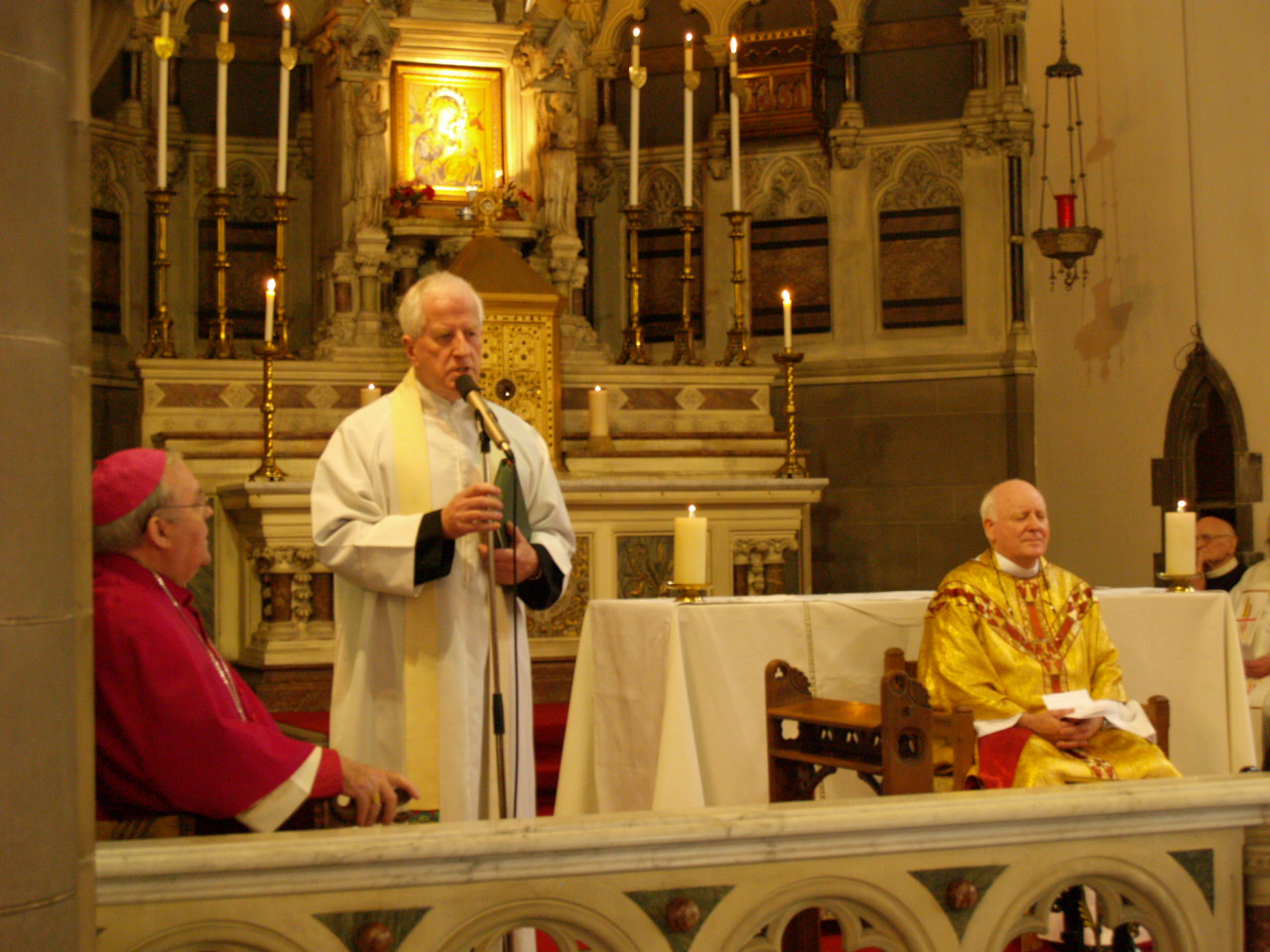
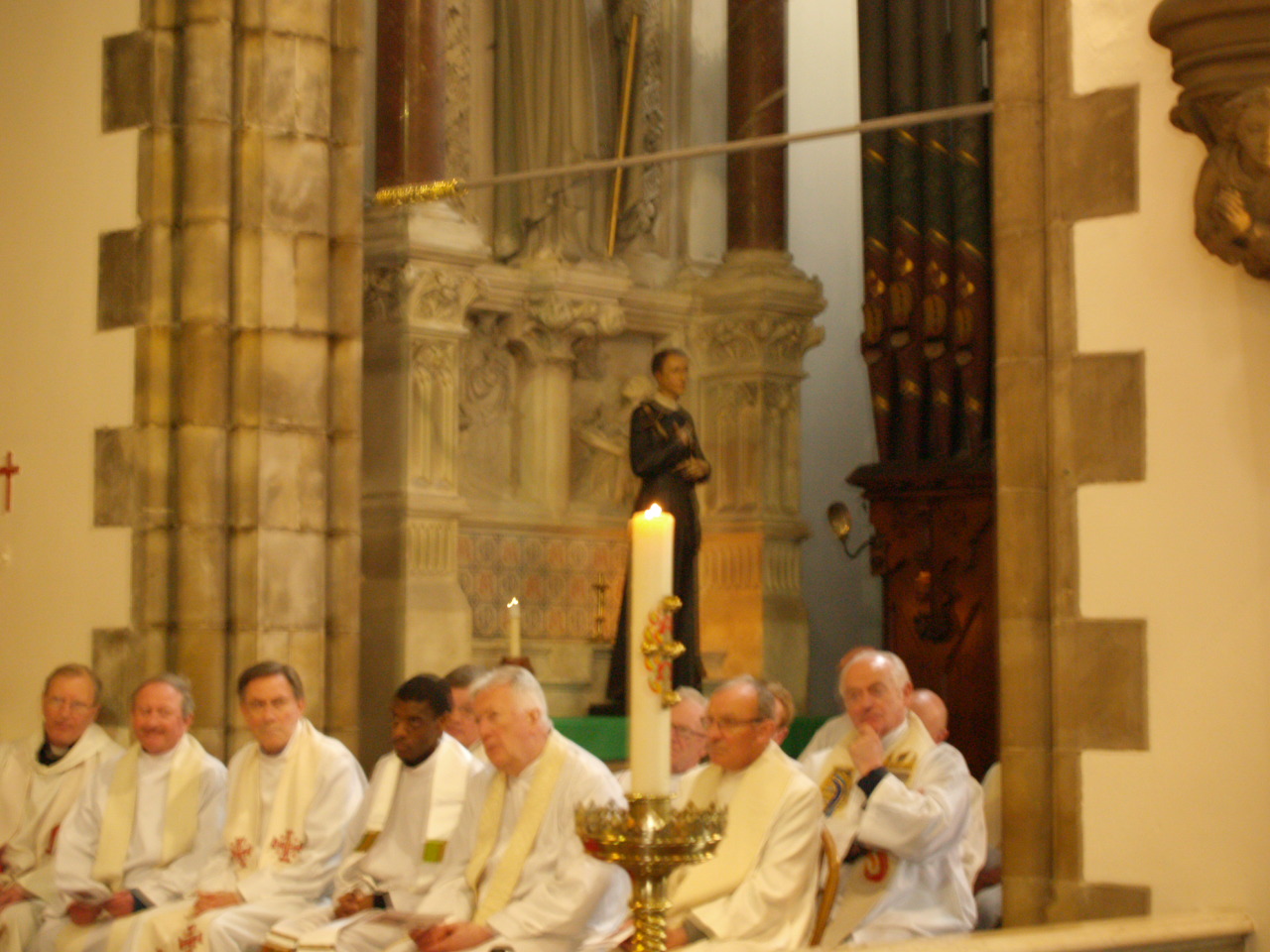
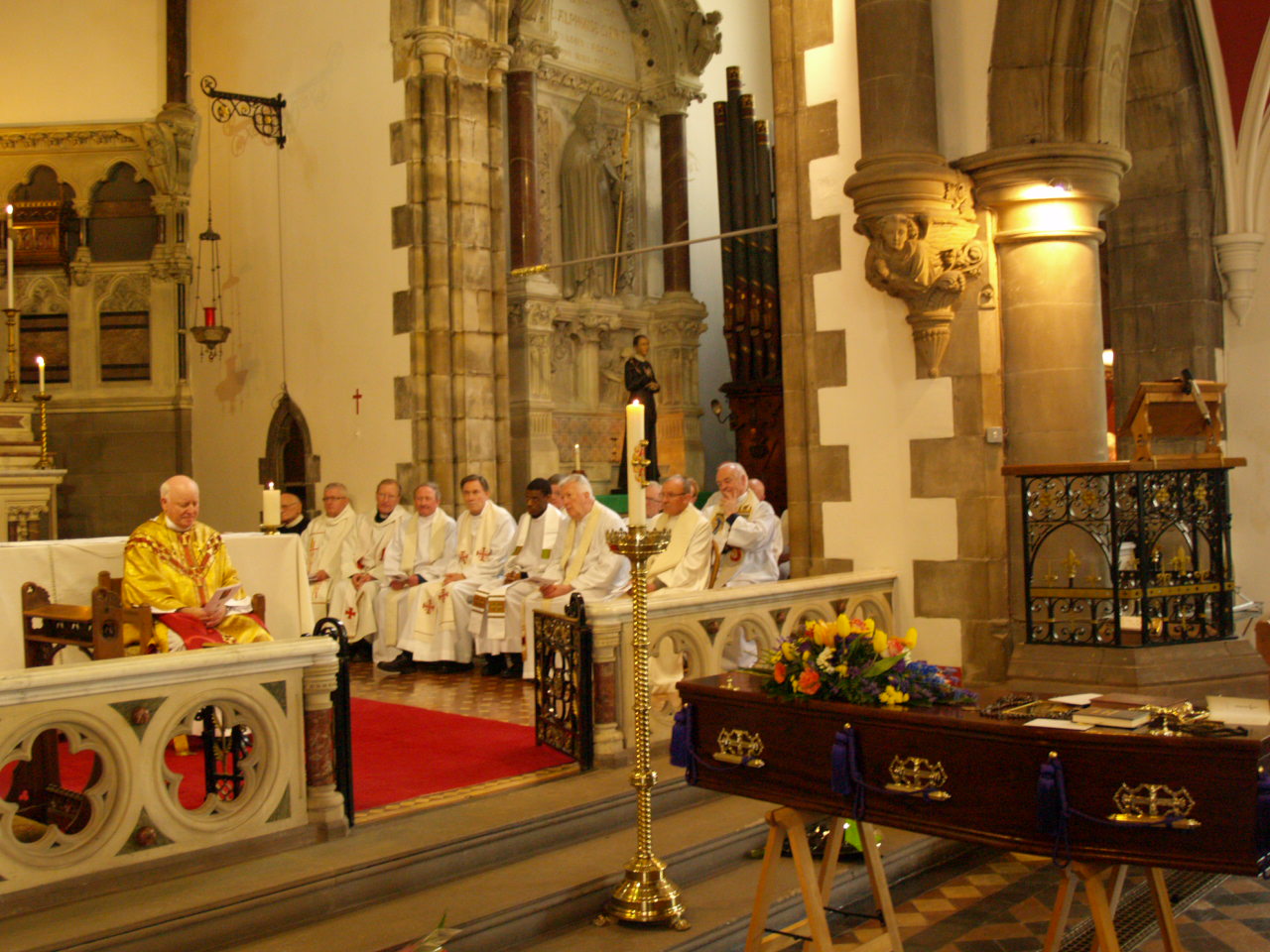
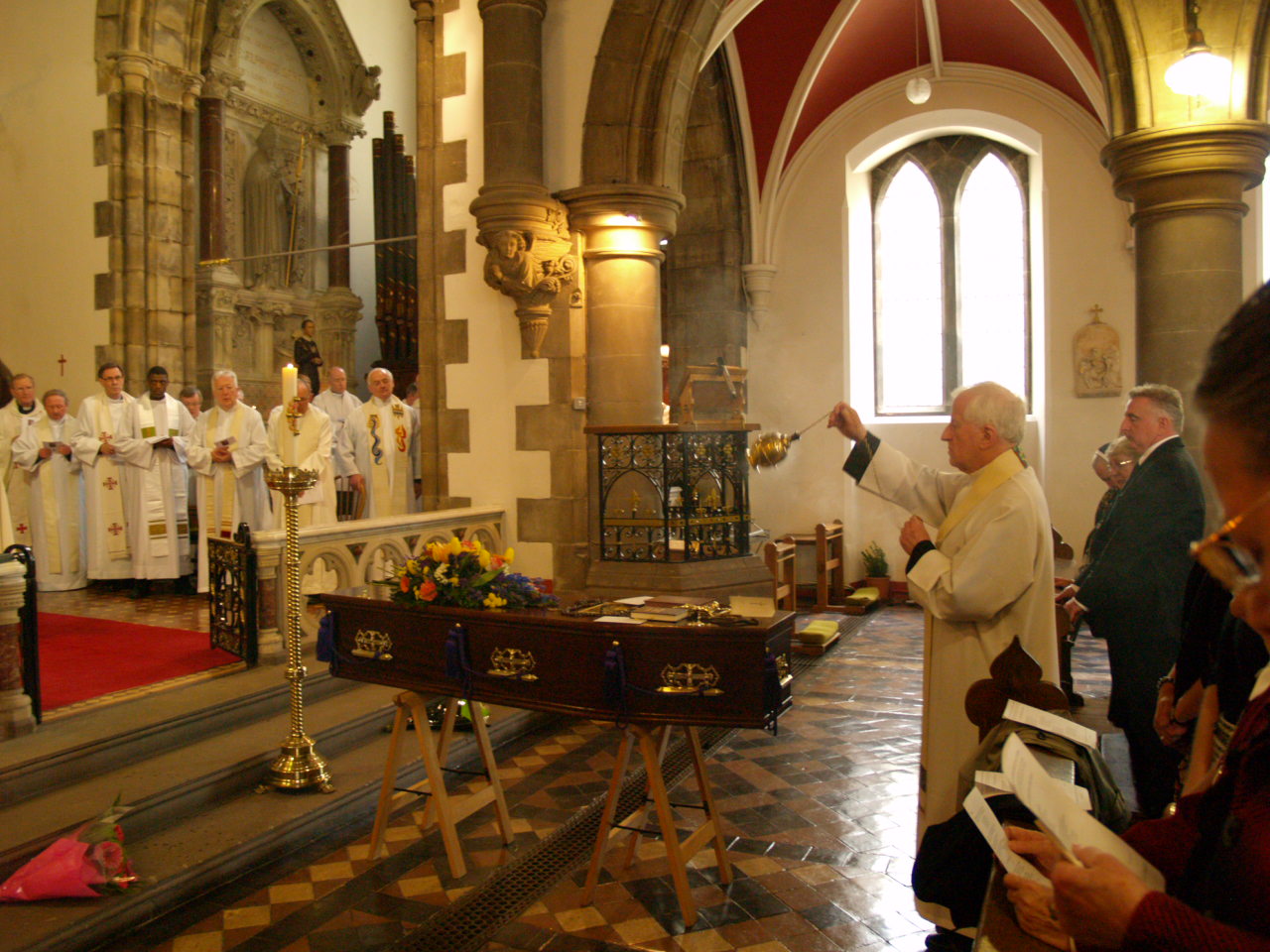
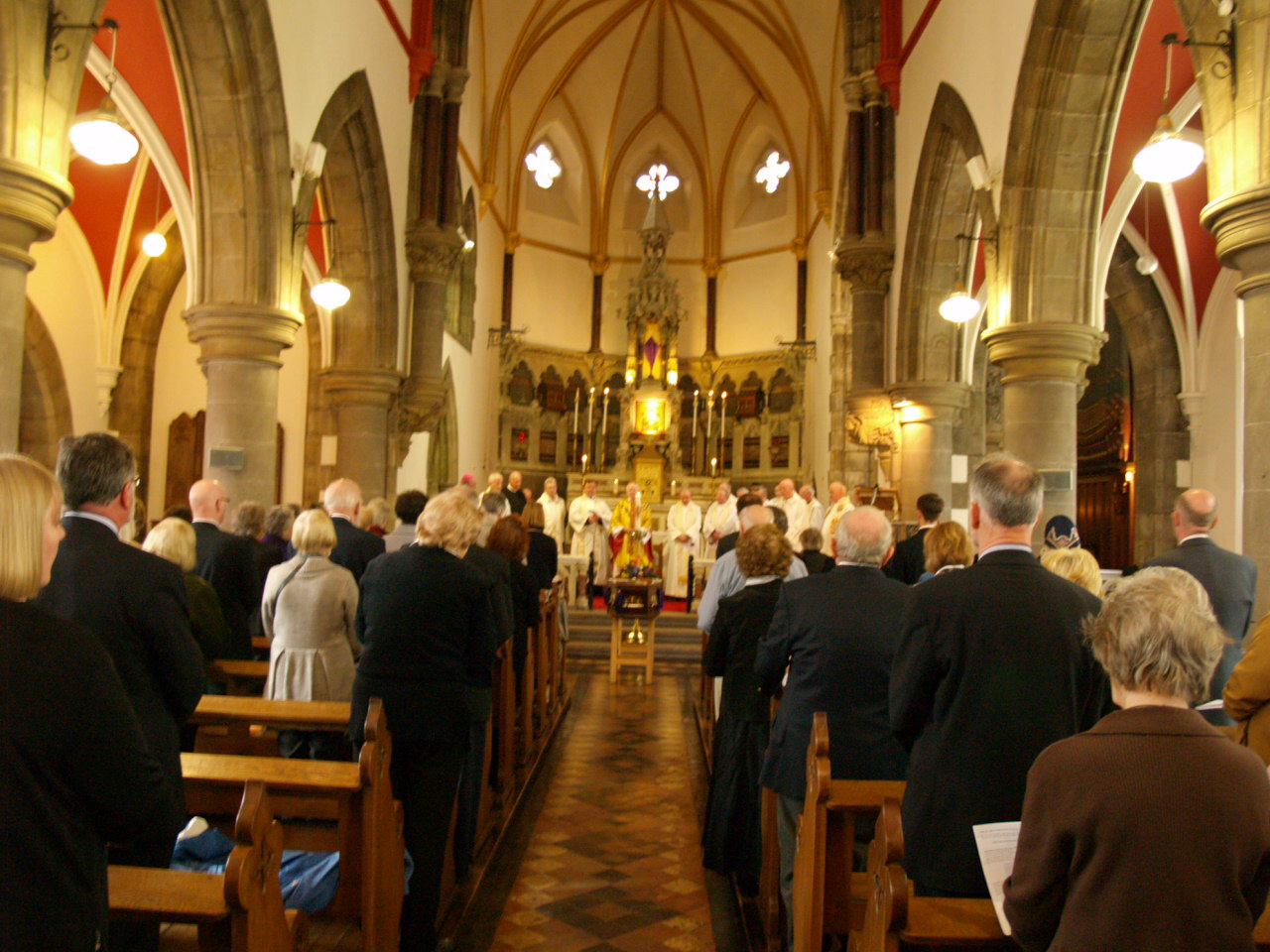
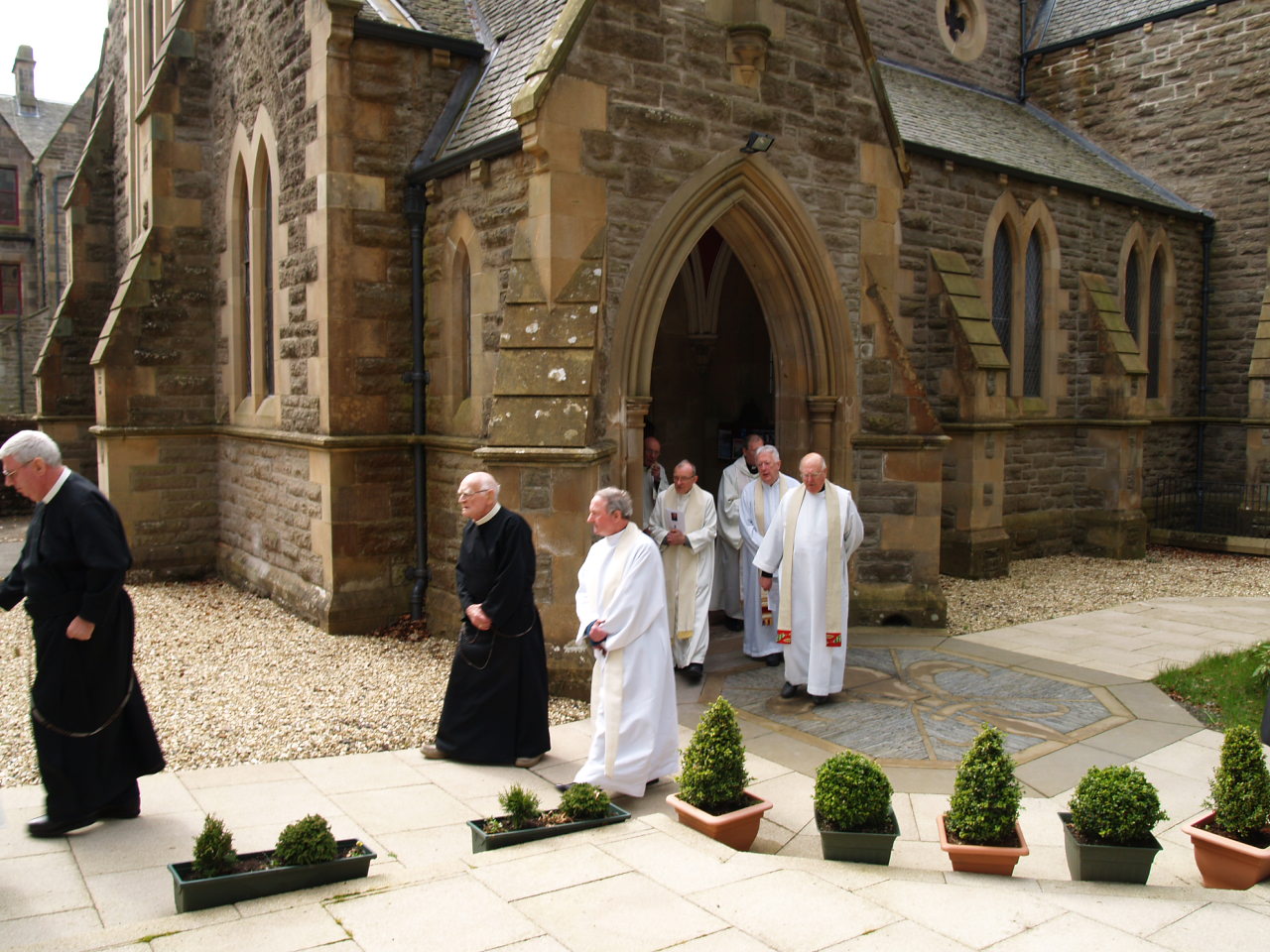




Requiem Homily Fr. Lavery
HOMILY FOR FUNERAL OF FR. W. LAVEREY C.Ss.R
Delivered by the Very Rev'd Fr Provincial C.Ss.R.

Two days ago I was on the London Underground travelling to Heathrow. Between the stations, the tube suddenly stopped and there we waited. What was most striking was that during the wait, not one person said a word. Some kept on reading. Some stared straight ahead, and some cast their eyes down. But there was no chit chat, no re-assurance to one another. Just a stony silence.
This was the atmosphere into which Fr. Bill was catapulted over 50 years ago as he began his journey to the Redemptorist priesthood. He often recounted the story to be with great amusement. Here he was, a young man from a rural area in which everyone knew everybody, in which you could enter a neighbour’s house without knocking, an environment of family closeness (which we still see here today) and friendliness.
And he described to me how after arriving in London, he took the tube to Osterley College to begin his studies. Here it was he encountered his first obstacle - as he chatted first to one person on the tube, then to another; only to be met with silence, eyes lowered, and noses further into newspapers. That evening he arrived at Osterley only to find some of the same reserve – but worse, a curriculum of studies which included English literature, Greek and Latin.
I asked Fr. Bill how he coped in these first few weeks and his answer was a reply I would hear from him many times over the years. “Well I just said my prayer. That’s what helped me”.
Throughout Fr. Bill’s life, this situation of being thrust into the unknown was repeated again and again.
After ordination, he was appointed to work on the School Mission Team in Liverpool – something for which he had not in any way been prepared….. facing very large groups of teenage boys and girls. I asked him how he managed that! Again it was the same answer. “Well I said my prayers, and somehow or other the Lord did the rest.” And it worked. He related well to these young people
Later in life, he was appointed Parish Priest and Superior of the community in Plymouth, dealing with the diocesan administration. And again the response was the same. “I just said my prayers and the Holy Spirit did the rest”. And as someone who lived with him in the community at that time, I can assure you that the Holy Spirit did work through Fr. Bill and touched the hearts of many, many people.
Bill, both in Sunderland and Plymouth, started charismatic prayer groups – again with complete trust in God to ensure that they proceeded well.
When he was appointed to Hawkstone to work on the team here – he told me laughingly – “I thought that Hawkstone was only for the intellectuals”. But the prayers worked, and countless people were encouraged and assisted by his kind words and the gentle encounter in the Sacrament of Confession, for which Bill was in great demand.
And when his health began to fail, he faced it with the same equanimity. First his protracted stay in the local hospital, where I visited him and found him trying to pray his rosary in the midst of a busy ward. And then when he moved to the care home, he confided to me on one occasion, “All I have to do here is say me prayers”. And he did
Out of the life of each Redemptorist, one can often draw a characteristic which marks them out…. A great administrator, a great preacher, a great writer, a great story teller. For me, whenever I think of Fr. Bill, the characteristic is a great pray-er.
We live in an age in which the value of prayer is doubted and perhaps even mocked. However, prayer remains not only as a support for our lives – but as a real power in our lives.
The founder of the Redemptorists, St. Alphonsus was clear. Prayer is our life line with God and if that life line becomes corroded or blocked, then there is a danger that our souls will, as it were, wither and die. Prayer is not only the way in which we keep our relationship with God alive. It is the tool which again and again, gives us life and courage and strength to reach out to others, as we see so clearly from the life of Fr. Bill.
And perhaps the best way to remember Fr. Bill is to recommit ourselves to prayer. To be women and men of prayer. People who really believe in the power of God, not only to support us, to work in us and through us and to build a better world. This is certainly a feature of the Lavery family.
I prayed often with Fr. Bill – both when he was in ministry and when he was ill. I also prayed with Kathleen his sister in law, when she was in the hospice. It was Brother Thomas who suggested it to me. Thomas used to call Kathleen every afternoon for a chat, and then they prayed together. What a marvellous family act of love.
Someone from the family said to me this morning, “Thank you for all you did for Fr. Bill”. I would say rather, “Thank you to the Lavery family for giving us Fr. Bill and Brother Thomas. Thank you for what each one of you has done for us……reminding us of the value of close family ties, reminding us of the value of prayer." Last year while preaching the Novena in Belfast, I met Patrick and his family. And again, I had the invitation and the joy of praying with them.
Before I conclude I would life to express my deep gratitude to those who live and work here at Hawkstone Hall. First of all, thanks to the Rector, Fr. Maurice who cared so deeply for Bill. Maurice visited him regularly, monitored the level of care he received, celebrated Mass for Bill in his room, and regularly prayed with him. Fr. Kevin was likewise a good friend and a confrere who accompanied Bill closely during these final months of his life. All the staff here at Hawkstone were wonderful. However, if I may, I would like to say a special word of thanks to Srs. Carole, Jackie and Laurice who loved Bill, and showed this love by their frequent visits to him in hospital and in the care home. Indeed Sr. Laurice and another Nazareth House Sister said the rosary with him just half an hour before he died. What a wonderful way to die, surrounded by love and prayer. On behalf of the Redemptorists and on behalf of the family, I thank everyone here at Hawkstone for their loving support of Bill in his final years.
As we gather to say our final farewell here to Fr. Bill, we are again reminded that those who die in grace go not further from us than God. And God is always very close. Today, as we celebrate this requiem Mass, we are reminded that Fr. Bill, Kathleen and all our deceased relatives and confreres are very, very close to us – and we ask them to pray for us – that we may live and die as they died……..people of prayer – people close of God our creator.
May Our Mother of Perpetual Help, our Holy Founder St. Alphonsus, and all the saints meet and welcome our Brother Bill today. Amen


Page 2 of 2


