


An Australian Newspaper wrote back in 1929...

A REDEMPTORIST MONASTERY IN SCOTLAND
And the Man Who Helped It
ST. MARY'S, KINNOULL, 1869-1929
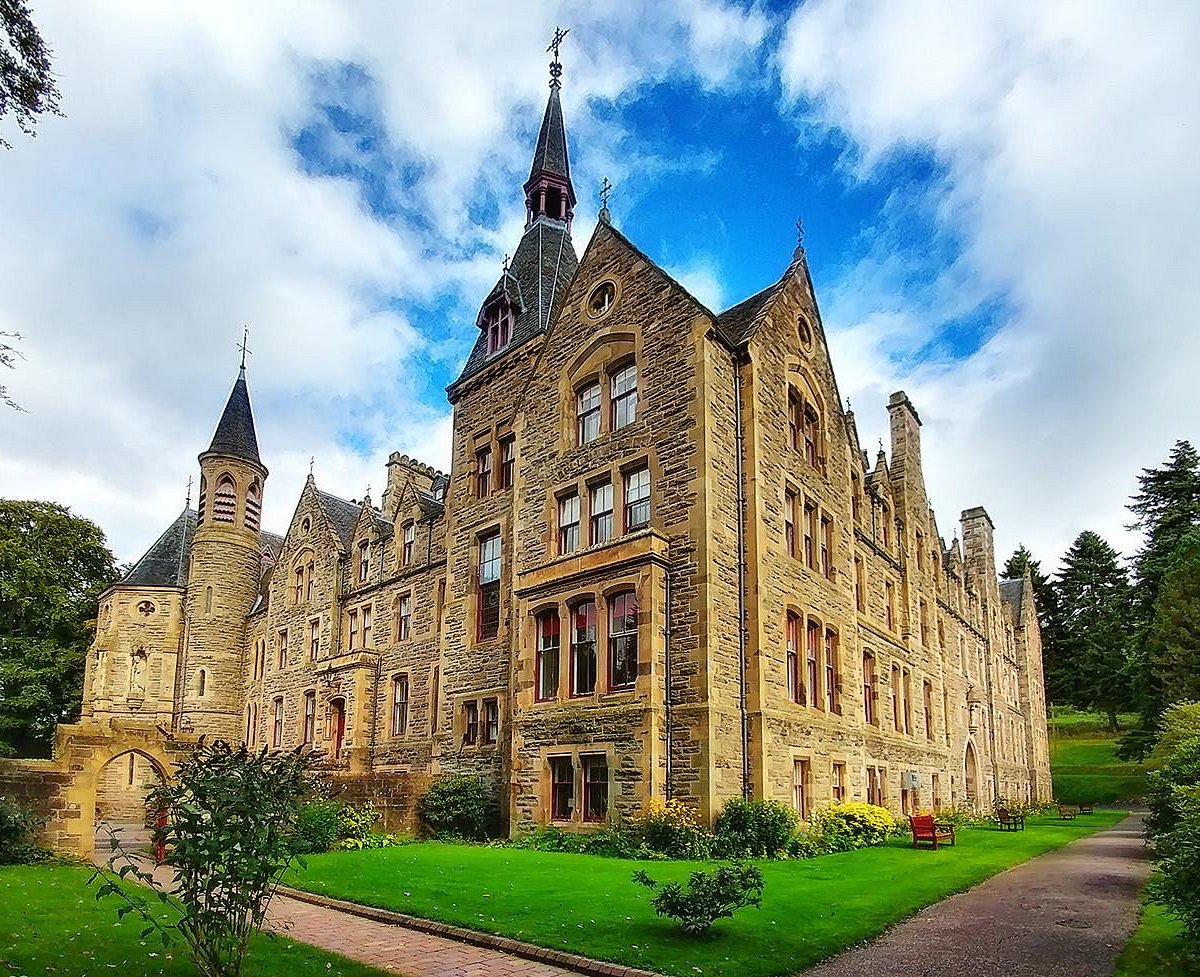
Queen Victoria, on one of her progresses to Scotland half a century or more ago, noticed on a wooded hill near Perth, overlooking the valley of the Tay, a picturesque and somewhat medieval looking building which had not been there when she last passed that way. 'What was it?' asked her observant Majesty; and the reply she received was that it was— not a new Redemptorist monastery (which might have been a slight shock), but ‘some kind of reformatory.’
A Life Hidden From the World
'A very good name for it, too,' said the Superior, when he heard the story and passed it on to me. Father Edmund Vaughan, first Rector of St. Mary's, Kinnoull Hill, was one of the- remarkable group of brothers, Vaughans of Courtfield all, who were distinguished and prominent in the Catholic Church of mid-Victorian days, just as their nephews were in a later generation. '''
The Redemptorist Congregation was already, in those far-off days, doing a great work for souls — its own chosen and peculiar work — under the ardent leadership of an apostolic Provincial, destined later to rule the See of Southwark. And what enabled them, under God, to extend that work, and to establish it firmly in at least four different countries, was the munificence of a hidden benefactor. I call him 'hidden' because he had already himself worn the Redemptorist habit for twenty years, and had long lived a truly hidden life in the house of his Order which he had himself founded in Rome.
Sixty Years of Mission Effort
The monastery of Kinnoull, looking down from its wooded eminence on the ancient town of St. John, now Perth, is, I am glad to see, about to celebrate the diamond jubilee of its foundation.
All Scottish Catholics will thank God for the sixty fruitful years, of labor for Him and His Church done during that long period by the devoted sons of St. Alphonsus. And not a few, I hope, will remember, in their prayers and thanks givings, Edward Douglas, to whom that great Order, and those to whom it ministers, owes so much.
A Generous Sacrifice
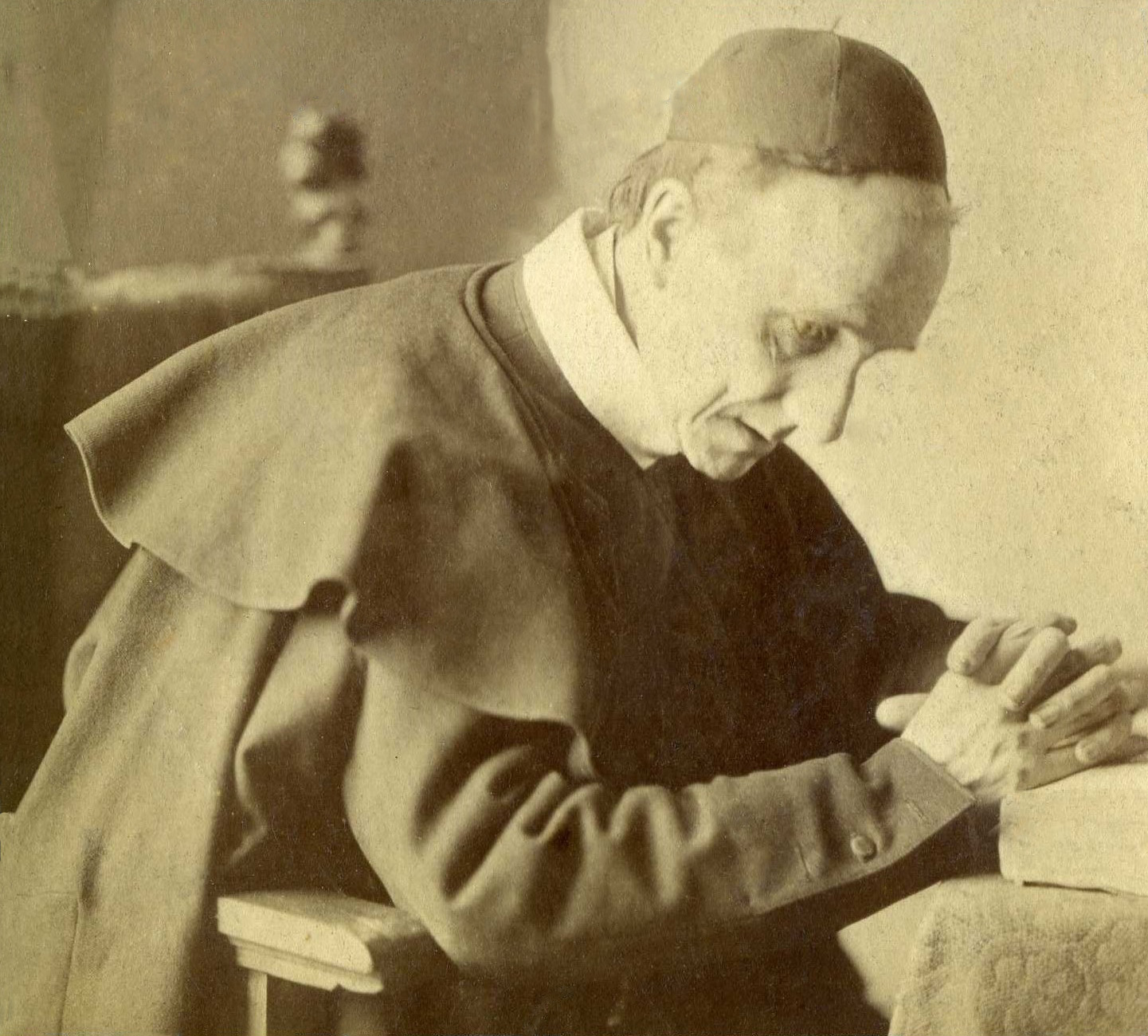
It is just a hundred and ten years since the birth of Edward Douglas, uncle of the fifth ; and sixth' Marquesses of Queensberry, and exactly eighty years since, subsequent to his remarkable conversion to the Catholic faith, he took his vows, as a humble Redemptorist novice, in a Belgian house of his Order.The young religious had never wavered in his desire to devote not only .himself, but the large fortune which he had inherited as his father's only son, to the growing work of the Redemptorists at home and abroad. And so, alike in the south-western suburbs of London, in the Scottish Highlands, at Dundalk in Ireland, and in Rome, were provided means for consolidating the manifold activities of the Congregation, and establishing' new centres whence fervent missionaries would go forth for the conversion of sinners and the evangelisation ofthe world.
In a Cell on the Esquiline (Rome)
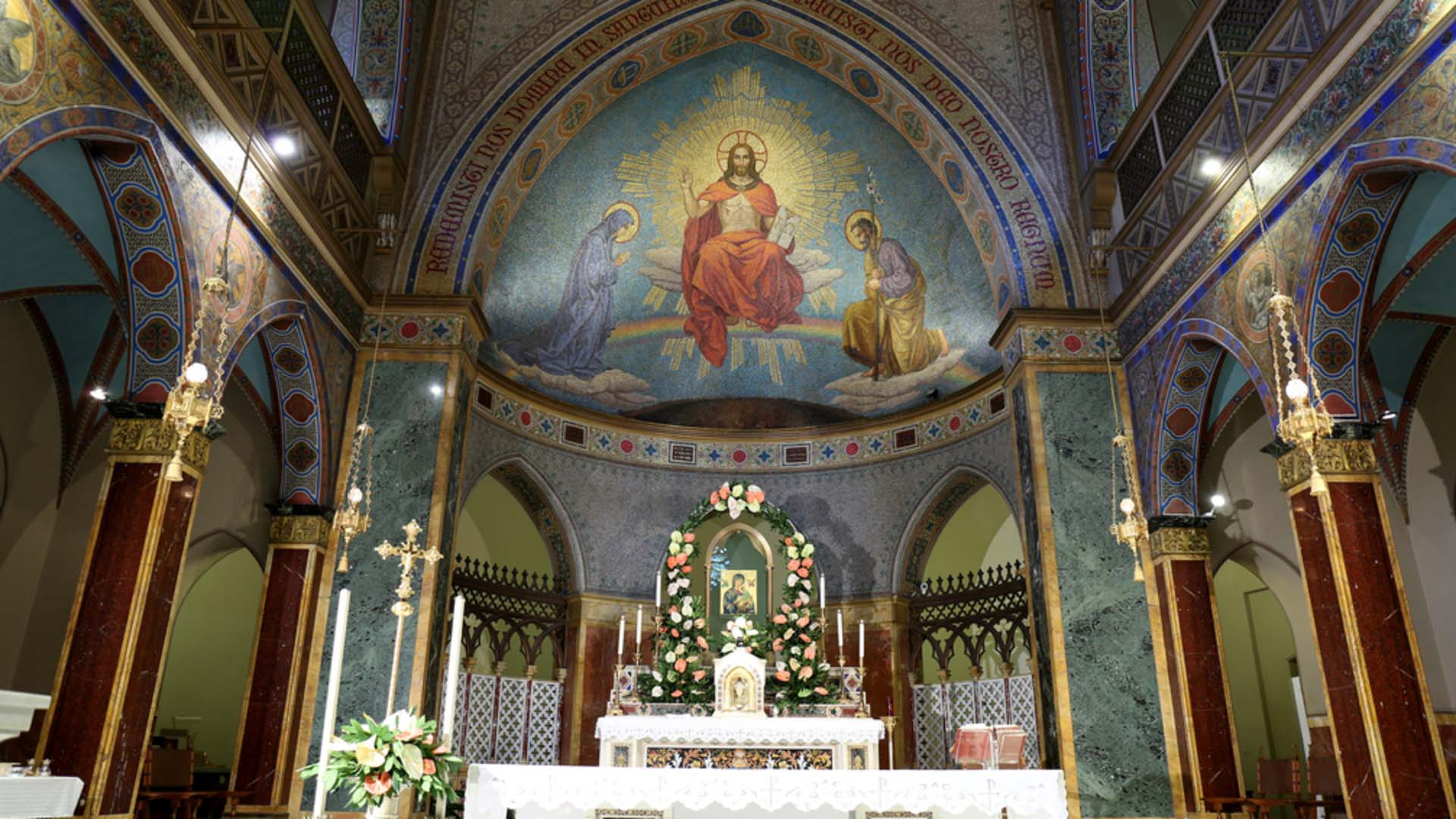
For four years from his religious profession Edward Douglas laboured at Clapham, chiefly among the poor and their children, and taking part also in missions in England and Ireland. Then he was called to Rome, which was to be his home for nearly half a century. It was through him that this Order acquired from the Gaetani family theVilla Caserta, and was able to add to it the curious Anglo-Gothic church of St. Alfonso, the home of the Virgin of Perpetual Succour, whose veneration and cultus has spread through- the whole Christian world. the opinion held of Father Douglas by his superiors was sufficiently attested by the fact that he was for a time Provincial of the Roman Province, for nearly forty years Consultor to the General of his Orders and until the day of his death rector of the monastery on the Esquiline Hill of which he was practical the founder.
Counsellor and Friend
During his long residence in Rome the holy Redemptorist was the counsellor, confessor, and constant friend of innumerable English Catholic residents in, and visitors to, the Eternal City. Many converts, including Father Henry Coleridge, S.J., were received by him into the Church; and the writer of these lines will not during life forget the March day — Mundy Thursday coinciding with Annunciation ('Our Lord in Our Lady's lap,' as the Italian proverb has it), when, kneeling before this saintly religious, he made his abjuration of heresy and his profession of the One Faith of Jesus Christ.
The Likeness of a Saint
Strange and striking was the personal resemblance which, after long years of prayer and mortification, grew up- between Father Douglas and the holy founder of his Order. In his deep humility, he could not have born to be reminded of it; but, as he sat at his table, bowed and worn with the weight of years and constant ill-health, gazing on, his Crucifix, there the likeness was, ? strong and unmistakable; and all those who knew and loved him, including Pius IX., were well aware of it. 'Un altro santo nel cielo! Another saint in heaven!' the great Pontiff Leo XII. is said to have exclaimed when he heard of the death of the holy Redemptorist, just thirty-one years ago. It was a sentiment which could not but be echoed by all who remembered the simplicity sweetness, and profound love of Holy Church which were as characteristic of him as of Saint Alphonsus himself.’—
'Nestor' in the 'Catholic Times.' 22nd August 1929


