


Who we are
Redemptorist Martyrs of Madrid
Blessed CSsR: Vicente Toribio CSsR and 11 Companions

Fr. Vicente Renuncio Toribio
 Fr. Vicente Renuncio Toribio was born in Villayuda (Burgos) on 11th September 1876.
He entered the Congregation and made his vows on 8th September 1895. Ordained a priest on 23rd March 1901, he devoted himself to missionary work, formation and teaching in the minor seminary. From 1912 to 1923, in the Commune of Perpetual Help in Madrid, he was Provincial Consultor and editor of the magazine of the Shrine. After a brief absence, he returned to Madrid as Prefect of the Shrine until July 1936, when, with the beginning of the persecution, he took refuge in the homes of family friends.
Arrested on 17th September, he remained in prison until 7th November when he was killed. On leaving his cell, he was heard to exclaim: “I offer my life for my confreres in Spain, for the whole Congregation and unfortunate Spain”.
Fr. Crescencio Severo Ortiz Blanco
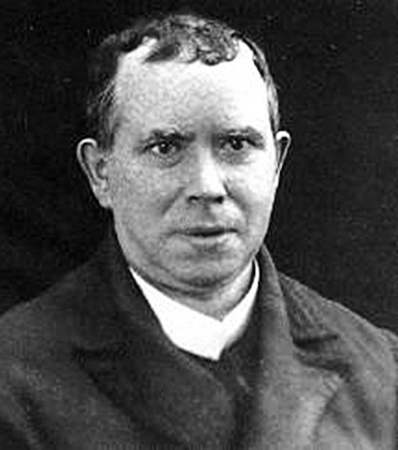 Fr. Crescencio Severo Ortiz Blanco, was born in Pamplona on 10th March 1881.
He professed his vows on 24th September 1900 and was ordained on 28th December 1905. Active in popular missions and teaching philosophy, he lived in the communities of Astorga, Cuenca, Valencia and Barcelona. Transferred to Madrid on 13th July 1936, in the community of St Michael the Archangel, on 20th July he was captured and killed by militiamen together with his brothers Ángel Martínez Miquélez and Bernardo (Gabriel) Sáiz Gutiérrez.
Fr. Ángel Martínez Miquélez,
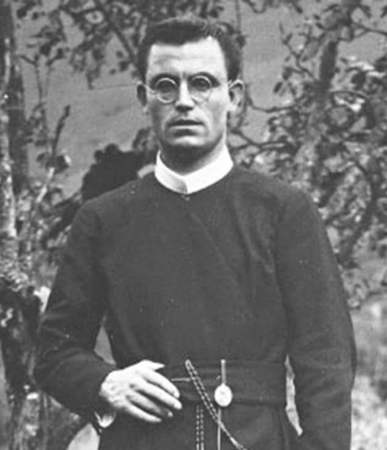 Fr. Ángel Martínez Miquélez, was born in Funes (Navarre) on 2nd March 1907.
Admitted to the Redemptorist order, he made his profession on 24th August 1925. Ordained a priest on 20th September 1930, he devoted himself to teaching and the missionary apostolate, living in various communities. On 10th July 1936, he was transferred from the Perpetual Help community to St Michael the Archangel. On 20th July, with the beginning of the persecution, he left the house with Fr Crescencio Ortiz and Br Bernardo Sáiz (Gabriel) searching for safe refuge. On the way, they were caught and killed by militiamen.
Br Bernardo (Gabriel) Sáiz Gutiérrez
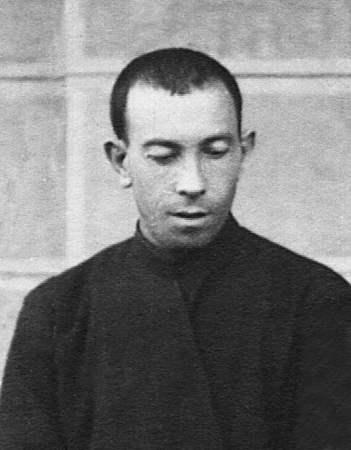 Br Bernardo (Gabriel) Sáiz Gutiérrez, was born in Melgosa (Burgos) on 23rd July 1896. He took the Redemptorist habit on 12 November 1919 and professed the following year on 13 November. After having been in the community of Pamplona, in 1925, he was transferred to the community of Saint Michael the Archangel in Madrid. He was an exemplary religious for his constant availability and life of prayer and was always dedicated to the service of the kitchens. Together with Fathers Crescencio Ortiz and Ángel Martínez, he was martyred on 20th July 1936.
Brother Nicesio Pérez del Palomar Quincoces
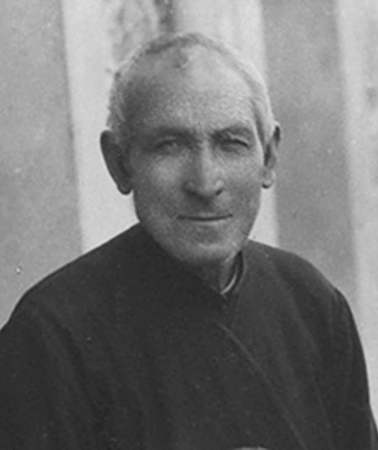 Brother Nicesio Pérez del Palomar Quincoces, was born in Tuesta (Álava) on 2nd April 1859.
He entered the Congregation and made his profession on 30th March 1891. He was a resolute and tenacious character, backed up by a solid faith and nourished spirituality. He worked as a carpenter, horticulturist, beekeeper, mason, and carpentry manager in the different communities in which he lived. He moved to Madrid in 1934 to the Perpetual Help community. With the beginning of the persecution, at the age of seventy-seven and almost blind, he and Br Gregorio Zugasti Fernández de Esquide sought hospitality with friendly families. Captured in the afternoon of 14th August 1936, he was killed two days later.
Gregorio Zugasti Fernández de Esquide
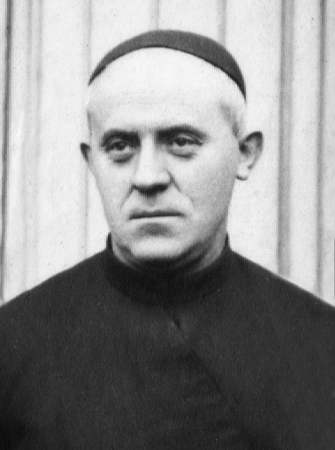 Gregorio Zugasti Fernández de Esquide, was born in Murillo de Yerri (Navarre) on 12th March 1884. He professed his vows on 25th December 1912 and lived in Madrid in the Perpetual Help community, working in the publishing house. Considered a pious religious, a reliable and obedient worker, he witnessed his evangelical charity not abandoning his elderly confrere Nicesio Pérez during the persecution, sharing his martyrdom on 16th August 1936.
Brother Aniceto Lizasoain Lizaso
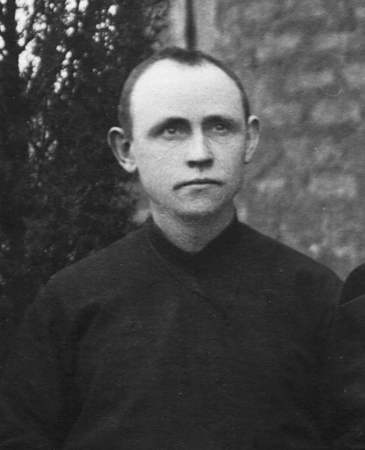 Brother Aniceto Lizasoain Lizaso, was born on 17th April 1877 in Irañeta (Navarre).
He became a professed Redemptorist on 15th October 1896 and lived in various communities, carrying out, in addition to various domestic tasks, the offices of sacristan, porter and bursar. Although he wanted to become a priest, he preferred to remain a coadjutor brother not to leave the Congregation. With the beginning of the persecution, he left the Perpetual Help house in Madrid to find hospitality with friends. Finally, he was taken into a boarding house and, following a complaint, on 18th August 1936, he was captured and killed.
Fr. José María Urruchi Ortiz
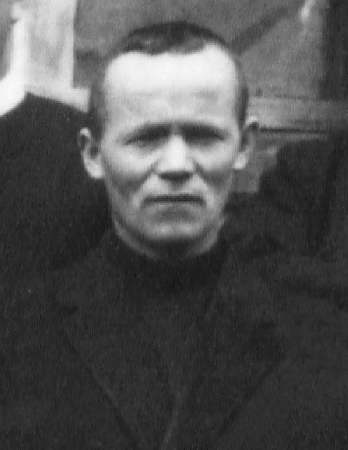 Fr. José María Urruchi Ortiz was born in Miranda de Ebro (Burgos) on 17th February 1909. After his religious profession on 24th August 1926, he continued his studies with tenacity and considerable effort in Astorga. Ordained a priest on 20th October 1932, he was transferred to Nava del Rey and in 1934-1935 to Coruña, Cuenca and Vigo. In October 1935, he was transferred to Madrid to the Perpetual Help community, where he remained until 20th July 1936, when, due to the persecution, he left the house to be hosted by a friendly family. Following a search, on 22nd August 1936, he was captured together with his brother José Joaquín Erviti Insausti and killed during the night, at only 27 years of age.
Brother José Joaquín (Pascual) Erviti Insausti
Brother José Joaquín (Pascual) Erviti Insausti, was born in Imotz (Navarre) on 15th November 1902.
He made his profession on 24th February 1930 and was sent to the community of Astorga. Transferred to Madrid on 24th February 1935 to the Perpetual Help community, he remained there until July 1936, working as an assistant cook. Forced to flee, he took refuge with Fr José María Urruchi Ortiz in a friendly family. Considered a prudent, pious and trustworthy religious, he spent his last period in constant prayer. Captured and killed by militiamen with Fr José María Urruchi Ortiz, his body was found on 22nd August 1936 on the road to Andalusia.
Fr. Antonio Girón González
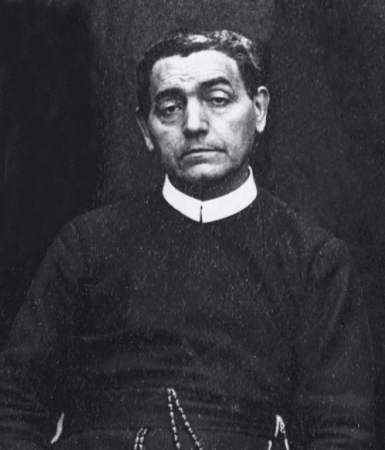 Fr. Antonio Girón González, was born in Ponferrada (León) on 11th December 1871. After his profession on 15th August 1889, he received the priesthood on 19th May 1894. He lived in various communities, involved in teaching, formation and as a provincial councillor. An exemplary religious, with remarkable intellectual gifts and deep interior life, he bore witness to the end to his devotion to the Virgin Mary by constantly reciting the rosary. At the beginning of the persecution, he had been a member of the Perpetual Help community since June. After taking refuge first in a private house, then in a convent and finally in a hospice, he was discovered and captured by the militia who killed him on 30th August 1936.
Fr. Donato Jiménez Viviano
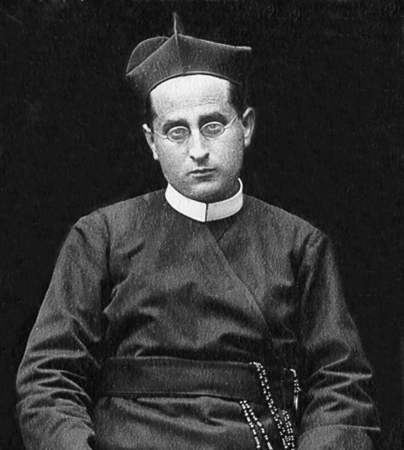 Fr. Donato Jiménez Viviano was born in Alaejos (Valladolid) on 21st March 1873.
He professed his vows on 8th September 1893 and was ordained a priest 27th May 1899. In the different communities where he lived, he almost always played the role of superior, without neglecting missionary activity and the promotion of vocations to religious life. He had been resident in Madrid, in the community of St Michael the Archangel, since 23rd June 1936, but with the persecution, he found hospitality with friendly families. Captured on 13th September, he was imprisoned and killed, probably on the night of 17th September 1936.
Brother Rafael (Máximo) Perea Pinedo
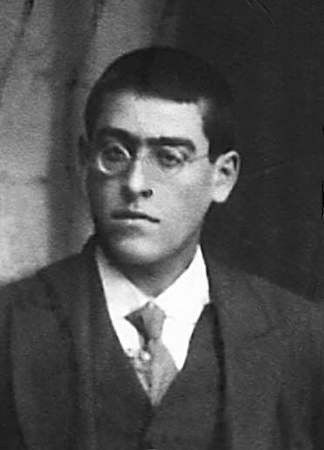 Brother Rafael (Máximo) Perea Pinedo, was born in Villalba de Losa (Burgos) on 24th October 1903.
After his religious profession on 27th February 1926, he lived in the communities of Astorga, Santander and, lastly, in Madrid from 28th June 1933. He was good-natured and joyful, with a generous spirit of service, working as a porter, sacristan, bursar and cook. He left the religious house on 20 July 1936 and found refuge first with families and friends and then in a boarding house, where he was captured and killed on 2 November.
Homily Fr Brian Russell CSsR RIP
Homily Fr Brian Russell CSsR RIP...

Homily at the Funeral Mass of
Fr Brian Russell CSsR RIP
23rd March 2021
Preacher - Bishop Ralph Heskett CSsR
The short reading from the prophet Isaiah that we heard a few moments ago is one of the readings that hear most frequently at gatherings such as this. I guess it is not difficult to know why. It is full of promise. In particular, it speaks of two promises that the Lord makes through the prophet that we put our hope in today as we gather around Brian in prayer for the last time. The first is the promise of a new world order where we will be recipients of the generous and gracious hospitality of our God and sit at table with him.
On this mountain, the Lord of hosts will prepare for all peoples a banquet of rich food.
Secondly it speaks of a future where the long curse of death has been defeated. Death will be no more.
He will remove the mourning veil covering all peoples .... he will destroy death forever.
Br Thomas Lavery CSsR RIP... Funeral Homily
Br Thomas Lavery CSsR RIP Funeral Homily...
Vivat in aeternum Br Thomas.
Homily at Funeral for Fr Barrie O'Toole RIP
FUNERAL OF FR BARRIE O’TOOLE, CSsR (82 YRS)...

BISHOP ETON, TUESDAY 21 MAY 2019 at NOON
HOMILY - preached by Fr Timothy Buckley CSsR - Parish Priest
I first met Fr Barrie O’Toole on the evening of Monday, October 18th 1965. Andrew Burns and I were two of the seven newly professed students who had made their way from the novitiate in Perth to Hawkstone Hall, then our Redemptorist seminary. The tradition was that each of the new students was placed in the tender care of a senior student – his guardian angel. As luck would have it, Barrie had been deputed to look after me. I recall that even at the age of 29 his distinguished mop of hair was more white than grey. I do not recall much about this initiation process beyond the fact that on that first evening, when he had shown me to my room, he looked around and said something along the lines of: “you poor thing – I couldn’t possibly face starting here all over again!”
In fact Barrie was to prove a delightful confrère and life-long friend. He was ordained the following January and went to Rome to study Church History. A few years later he returned to teach at Hawkstone and I worked with him, catechising some of the children on the RAF station at Shawbury, where he was the chaplain. Until the last nine years that was the only time we were ever attached to the same community, but I enjoyed working with him on many occasions, including a memorable mission in Tudhoe and Spennymoor back in the spring of 1977.
Barrie enjoyed a rich and varied life as a Redemptorist priest. He coped with the transition of the students from Hawkstone to Canterbury in 1973 and was the first rector of that new student community. He moved from there to Hawkstone, where he built on the foundations laid by Jim McManus and helped to develop the Pastoral Centre into a place of international renown. During his fifty-three years of priesthood he had spells as a missioner and a retreat giver, two years in Brazil and three in Zimbabwe. He was part of two new experimental mission communities, one at Kiln Green near Reading and the other in Middlesbrough. His last years were spent here in Liverpool, where his cheerful and compassionate ministry was greatly appreciated.
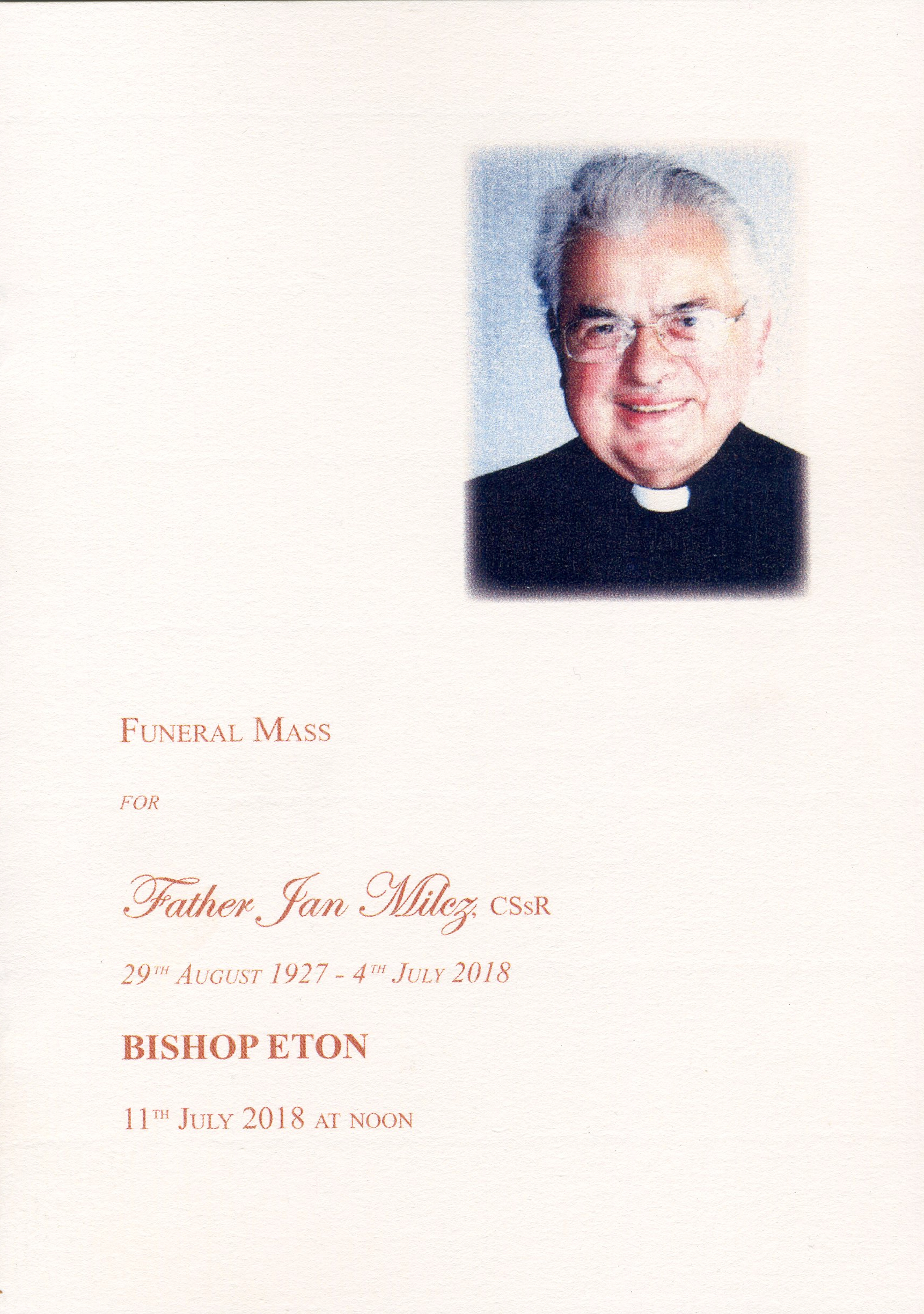
Homily preached at Fr John Milcz's funeral.
Homily preached at Fr John Milcz's funeral...
FUNERAL HOMILY FOR FR. JAN MILCZ, CSsR
BISHOP ETON, WEDNESDAY 11 JULY 2018 at NOON
“As a man lives, so shall he die” is a phrase that will resonate with all Redemptorists of a certain vintage: the vintage mainly represented on the sanctuary today. These were the words at the beginning of one of those classic mission sermons that, as students, we were expected to learn by heart and use to hone our skills as preachers. No doubt Fr Jan himself, as a young man, proclaimed them to the assembled brethren at one of those mission academies in Hawkstone back in the 1960s. Of course, these sermons were all designed to stir the so-called lapsed and wayward to mend their ways, but today I would like you to reflect that those words – as a man lives so shall he die – can very aptly be applied in the best possible way to this good and holy man. Jan died a very peaceful death in the Marie Curie Hospice on Tuesday evening last week. When I saw him for the last time on the Sunday morning before I left for Hampshire there was a wonderful serenity about him. In the final weeks of his life, I have rarely met anyone who so continually expressed his gratitude for any little kindness. This natural courtesy was much appreciated by the staff at Marie Curie as well as the carers and nurses who tended to him in the monastery and the staff at Christopher Grange, where he spent a short time a few weeks ago. To them all and to our own wonderful resident team, we, as a Redemptorist family are immensely grateful, as we are to his family and his many friends in this congregation today: he treasured your love and support.
Venerable Bernard Lubienski CSsR...
Venerable Bernard Łubieński CSsR...

On 6th March 2018, Pope Francis authorised a decree put forward by the Congregation for the Causes of Saints bestowing heroic virtues on the Servant of God, Bernard Lubienski CSsR (1846 – 1933).
"The heroic virtues of the Servant of God Bernard Łubieński, Professed priest of the Congregation of the Holy Redeemer; born in Guzów (Poland) on 9 December 1846 and died in Warsaw (Poland) on 10 September 1933"
Fr Lubienski lived for some time in England, making his Profession in Bishop Eton Monastery Liverpool and living in the Redemptorist monastery in Clapham.
Venerable Antonio Maria Losito CSsR
Venerable Antonio Maria Losito CSsR
On September 30th 2015 , Pope Francis, authorized the promulgation of the Decree on the heroic virtue of Redemptorist Fr. Antonio Maria Losito, a professed priest of the Congregation of the Most Holy Redeemer.
By virtue of this Decree Fr. Antonio Maria Losito is declared VENERABLE

Biography
Antonio Maria Losito was born in Canosa (BA) on December 16, 1838. He was the youngest of the five children of Antonio and Maria Celeste Ricco. When he came to see the light of day he was already orphaned by his father, who had died a few months earlier in an accident at work.
He was baptized on the same day he was born. One year later, on October 18th, he received the Sacrament of Confirmation.
After the death of his mother, at the age of ten, he and his siblings were entrusted to the care of his maternal grandmother, going to live in Margherita di Savoia (BT). After her death he returned to Canosa, living at the house of his sister Angela, where he continued his studies at the Franciscan monastery.
When he was 17 years old, having been influenced by the Redemptorists Vittorio and Nunzio Loiodice, Antonio Maria entered the Redemptorist novitiate at Ciorani (SA), on November 24, 1855.
After his profession of religious vows on October 24, 1856, he began studying theology at Materdomini (AV). He received minor orders on May 15, 1859, and the subdiaconate in Nusco (AV) on March 19, 1861.
Because of poor health, his superiors decided to allow him to recuperate in his family’s care. After ten months, fully recovered, he returned to Materdomini where, on March 15, 1862 he was ordained a deacon and, with a papal dispensation of 8 months and 20 days, he was ordained a priest on April 5 of that same year.
He remained in the Materdomini community, preparing for missionary activity until 1867. After the application of the repressive laws of July 7, 1866, which suppressed religious institutes in southern Italy, he was forced, like all the other Redemptorists in the Neapolitan Province, to return to his family.
He lived at Canosa for 20 years during which, in addition to staying in constant contact with the superior general and the other members of the Congregation, with whom he shared many apostolic activities, he worked especially for his fellow citizens, participating with keen missionary sensitivity in their human vicissitudes, both spiritual and social.
During the two decades in Canosa, he poured his strength and his willingness to bear witness to the Gospel of mercy into preaching, the formation of conscience, spiritual direction, the reconciliation of conflicts, the comfort of prayer in difficulties and a practical concern to the poor and the sick.
He twice tried, unsuccessfully, to reestablish a Redemptorist community, at Materdomini in 1869 and at Francavilla Fontana in 1886. With the calming of the anticlerical wave, on the morning of January 3, 1887, without notifying anyone of his departure, he was finally able to return to the Redemptorist community at Pagani (SA) where he contributed actively to the recovery of the Redemptorist province.
After five years in the community at Angri (SA), together with the Servant of God, Fr. Giuseppe Leone, Antonio Maria was transferred to Pagani where, for the next 20 years, he was responsible for the training of the theology students. In 1907, despite having already suffered a progressive paralysis for 17 years, he was appointed superior of the Pagani community and provincial superior in 1909.
Profoundly passionate about the Redemptorist charism, in proclaiming the Gospel to the most abandoned, Antonio Maria, with sacrifice and a great sense of responsibility, spared no effort and used his God-given talents in the ministry of preaching, in the wisdom of government, in the witness of charity to the confreres, in steadfastness amidst adversity and in total confidence in God’s help. Considered an expert and merciful spiritual guide, people from all walks of life benefited from his advice: priests, bishops, cardinals and popes, St. Pius X and Benedict XV. Both Blessed Bartolo Longo and his wife, the Countess De Fusco, had him as a confessor and spiritual director. Fr. Losito’s support of Bartolo Longo was instrumental in the more difficult moments during the construction of the social works connected to the Shrine of Pompei (NA), especially for the foundation of the Institute for the education and salvation of the children of prisoners.
Due to a kidney stone, he died at Pagani on July 18, 1917.
On April 9, 1983, following the insistent demands of some bishops of Puglia, with the approval of his Redemptorist superiors, the remains were transferred to the cathedral of Canosa and buried in the chapel of St. Alphonsus.
VENERABLE ANTONIO LOSITO - PRAY FOR US!
(Translation: Fr. Joseph P. Dorcey, CSsR)
Homily - Fr. James Corrigan Funeral
Homily - Fr. James Corrigan CSsR Funeral...
FUNERAL OF FR JAMES CORRIGAN, CSsR
BISHOP ETON, THURSDAY 24 SEPTEMBER 2015 at NOON
HOMILY BY FR. TIM BUCKLEY C.SS.R

I have not had far to look for the connections which so fascinate me when I came to prepare these few words to honour the memory of Fr Jim Corrigan as we lovingly entrust him to the Lord today. Just three weeks ago to this very day, Fr Andrew, Fr Barrie and I went to Christopher Grange, complete with a cake, to celebrate Fr Jim’s 88th Birthday. I don’t think we were responsible, but that night he was in the Royal Liverpool Hospital, only to be discharged at lunchtime the following day. Sadly these breathless turns were becoming a pattern and a few days later he landed in Whiston Hospital. They kept him in for a few days, and it seemed that both he and the Lord had decided that enough was enough, so on cue on the night of the 62nd anniversary of his ordination he went peacefully to the Lord: it was the feast of Our Lady of Sorrows and today is the Feast of Our Lady of Walsingham. He would appreciate the connections: he had a great devotion to our Blessed Lady.
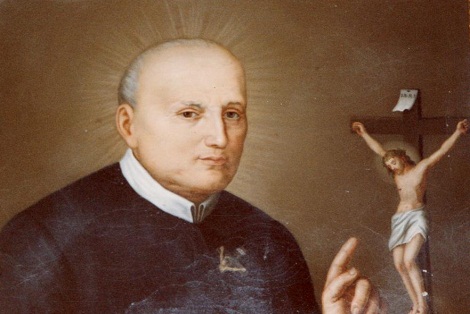
St Clement Hofbauer CSsR
ST CLEMENT HOFBAUER CSSR
 Feast Day 15th March...
The Second Founder of the Redemptorists
Congregation of the Most Holy Redeemer
As he points to the crucifix, let us look and make our Lent count!
Read the article below...
"Although his name is not listed on the official Church calendar for March 15, Clement Mary Hofbauer is my choice for saint of the month. (So writes Norman J Muckerman CSsR in the Liguorian Magazine)
One reason for this choice is that Saint Clement, born on December 26, 1751, in central Europe, became a Redemptorist priest, just as I did, so we are “family.” Second, I am presently living in Saint Clement Health Care Center, and I will soon need a benevolent promoter “on the other side.”
So even though we cannot celebrate him liturgically, we can recall some facts of his life that have caused him to be recognized as the “second founder” of the Redemptorists and the patron saint of Vienna.
His life was marked by frequent surprises and sudden changes. His earliest surprise was probably when his father, a butcher by trade, died. Clement, the ninth of twelve children, was six years old at the time. As he grew older he felt called to the priesthood, but his family was too poor to pay for his seminary training, so he became a baker instead.
Later he got a job as a servant in a Premonstratensian monastery. Perhaps the holy atmosphere awakened in him a desire to become a hermit, because he abruptly went off to be one—but not for long. Emperor Joseph II abolished all the hermitages in his realm, and Clement returned home to the bakery.
But Clement didn’t stay there. He became a pilgrim and made several trips to Rome. While there he came into contact with the Redemptorists and knew he had found a home. He and a fellow pilgrim named Thaddeus Hübl joined, entered the novitiate, professed their vows, and in 1785 were ordained Redemptorist priests. Clement was then thirty-four years old.
The aged founder of the order, Saint Alphonsus Liguori, was still living (just barely), but he rejoiced in hearing about the two new members. He predicted they would enjoy huge success in taking the Redemptorists, until then known only in Italy, beyond the Alps into Vienna and points beyond.
Because of the political situation at the time, Hofbauer and Hübl could not settle in Vienna. Instead they went to Warsaw, where the archbishop gladly gave them charge of the rundown, priestless Saint Benno’s church, which had been built for German Catholics living in Warsaw. He told them to see if they could make it go.
And make it go they did! Redemptorist lore is full of stories about the perpetual mission atmosphere that pervaded the parish when Hofbauer and Hübl were in charge. The stories tell of daily sermons preached in various languages and always to a full church. There are tales of the catechism lessons given to Catholic, non-Catholic, and even Jewish children, and accounts of the long lines of people waiting to go to confession. And there is the story of the orphanage that Clement built to house the abandoned children roaming the streets.
After Father Hübl died in 1807, Clement finally moved to Vienna. He lived and ministered there for the next twelve years. His official title was chaplain at the Ursuline convent, but his good influence and presence spread much farther. He influenced all levels of Viennese society from Emperor Franz Joseph to the poorest of the poor.
It is difficult to list all his spiritual successes there, but the fact that Clement was (and still is) known as the “Apostle of Vienna” says it all.
Clement Mary Hofbauer died on March 15, 1820. He was beatified in 1888, and in 1909 Pope Pius X declared him a saint."
Venerable Pelagio Sauter CSsR
FR. PELÁGIO SAUTER CSsR

A short biographical profile of the Venerable Fr. Pelágio Sauter, CSsR
Fr. Pelágio Sauter was born on September 9, 1878, in Hausen am Thann (Württemberg, Germany), to Matthias and Martha who had 14 other children. At sixteen he entered the Redemptorist seminary in Bachham. In 1902 he made his religious profession in Gars am Inn and was ordained a priest in Deggendorf on June 16, 1907.
Having accepted the invitation to be sent as a missionary to Brazil, he set out, arriving in Rio de Janeiro with four other confreres on August 4, 1907, never to return to his homeland.
In his 52 years of living in Brazil, he spent the first 10 in São Paulo, working in various parishes, and the other 42 in Goiás. His favorite apostolate was the itinerant mission in the most abandoned areas of the region. Evangelizing in hundreds of small towns, arriving nearly always on horseback, the simple people learned to know and esteem him as a man of God.
The place that most benefited from his apostolic presence was Trindade (GO), where the faithful, on pilgrimage to the famous shrine dedicated to the Most Holy Trinity (Divine Eternal Father), had the opportunity to listen to him and receive his blessing.
Fr. Pelágio is considered, above all else, the priest of the poor and the comfort of the sick. In the last five years of his life, in fact, he devoted himself almost exclusively to the pastoral care of the sick. His last illness, which led to his death, is itself linked to a visit to a sick person. In fact, surprised by rain during his return to the community, he was first forced to go to bed for a bad cold and then to be admitted to the Santa Casa de Misericordia [hospital] in Goiás. Overcome by pulmonary emphysema, he died at 1:00 p.m. on November 23, 1961 at the age of 82.
The whole city of Goiânia attended the funeral and the Regional Government decreed three days of mourning. A crowd of about 30 thousand people attended his funeral.
Considered a national hero, several monuments were erected, streets and city squares were dedicated to him, and organizations were established in his name.
As a result of the many extraordinary graces attributed to his intercession, Fr. Pelágio is still remembered today as “the apostle of Goiás and the missionary of the people.”
The Diocesan Process about his life, virtues and reputation for holiness, begun on November 23, 1997, in the Mother Church of Campinas, was closed in the presence of a multitude of the faithful, in the Sanctuary of the Divine Eternal Father in Trindade (GO) on March 21 1999.
Fr. Antonio Marrazzo, CSsR
(Translation: Fr. Joseph P. Dorcey, CSsR)
On November 7 2014, Pope Francis declared the Servant of God, FR. PELÁGIO SAUTER, CSsR (1878-1961), to be VENERABLE, authorizing the Cardinal Prefect of the Congregation for the Causes of Saints to promulgate the Decree on his heroic virtues.


