


Who we are
Homily - Br Anthony's Funeral
Homily - Br Anthony's Funeral...
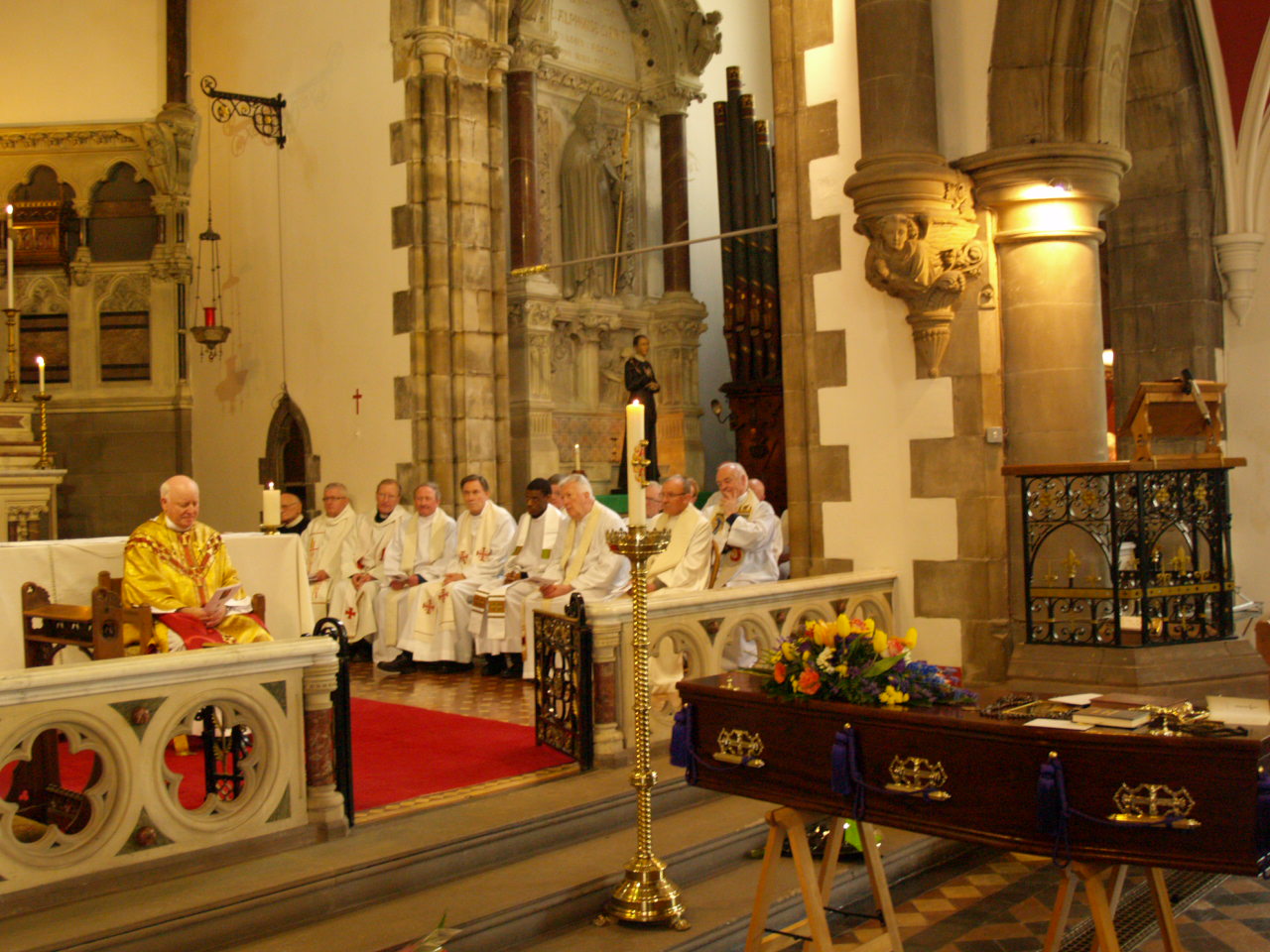
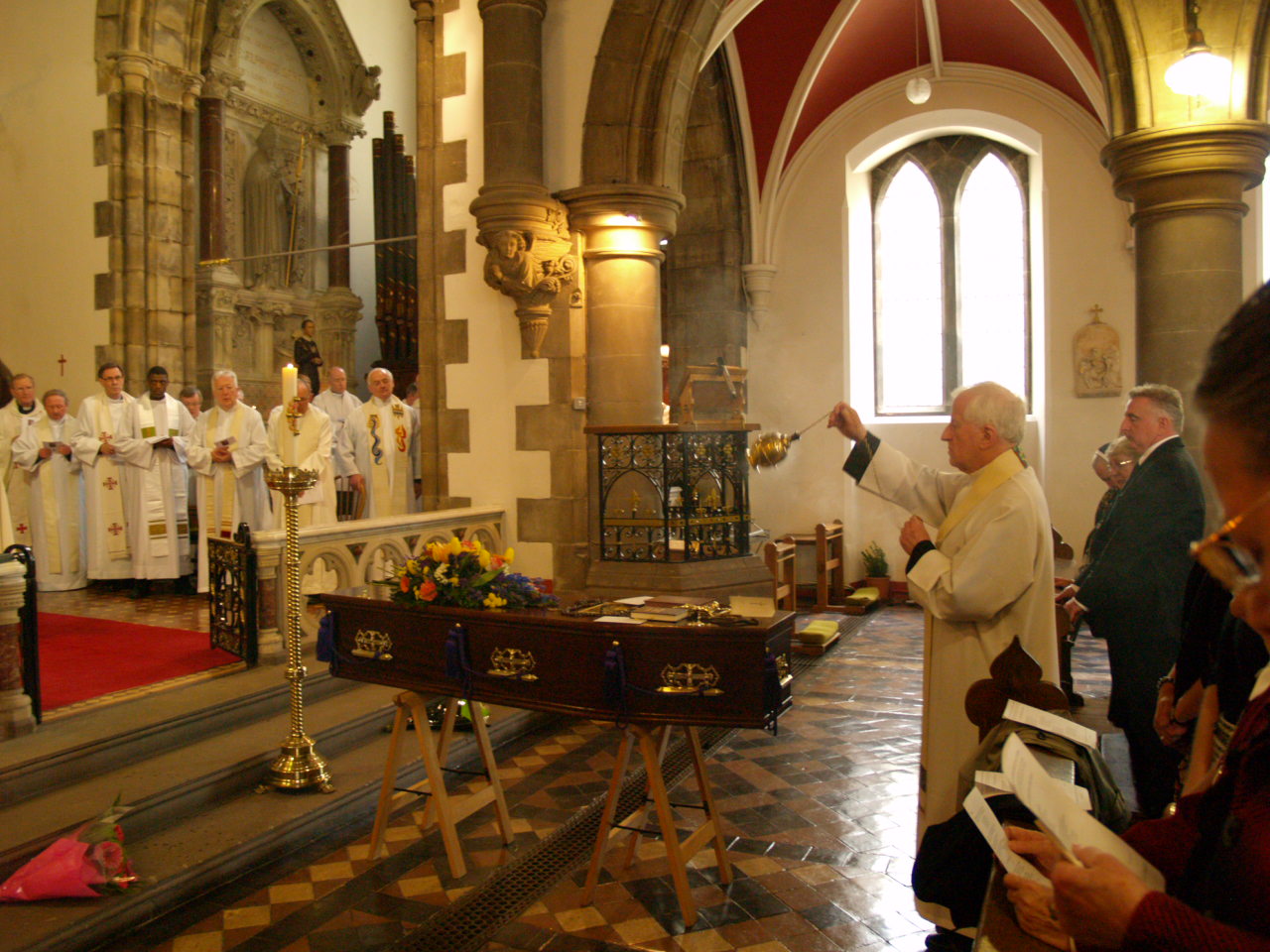
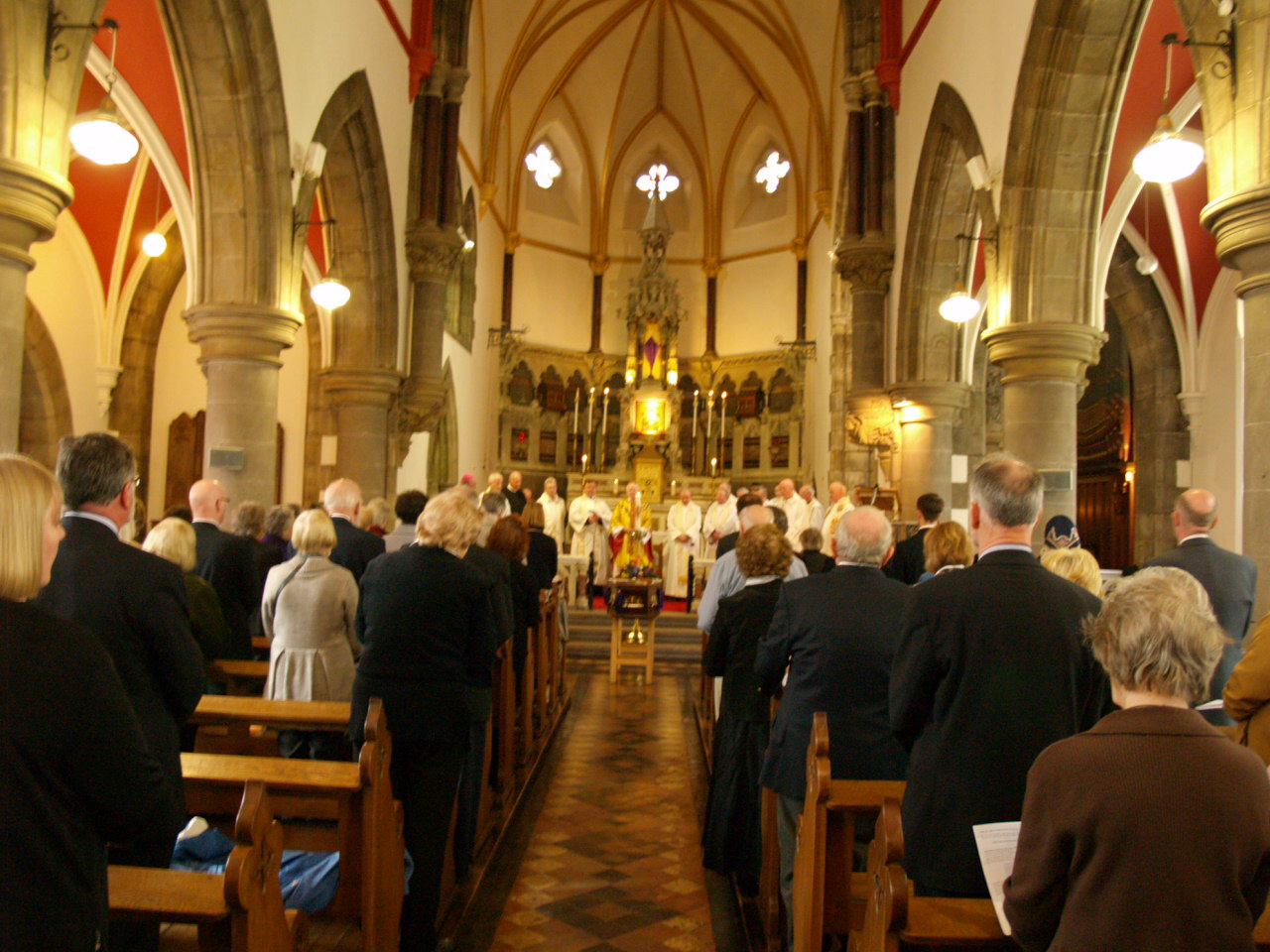
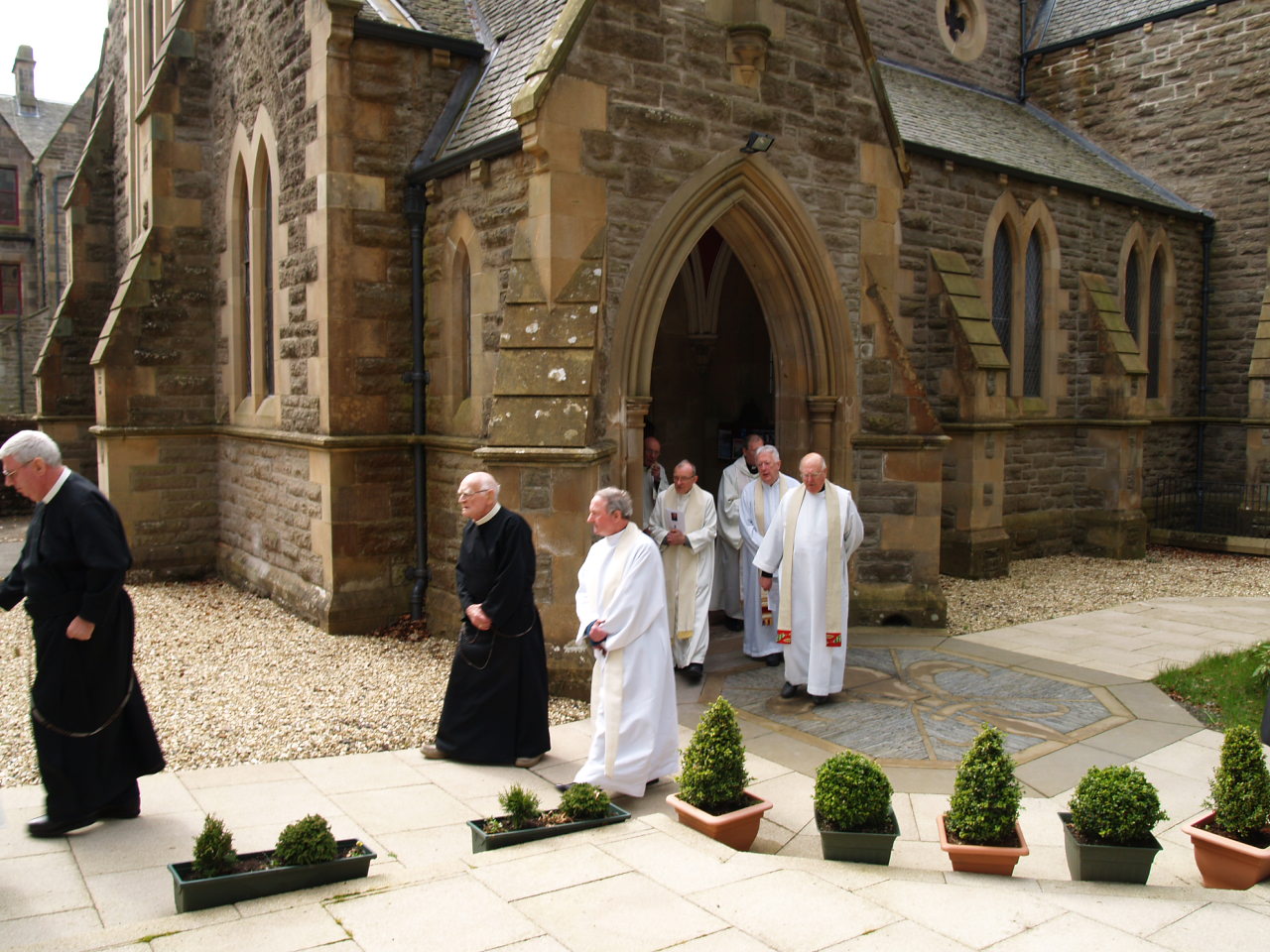
Br. Richard's Funeral Homily
Br. Richard's Funeral Homily...
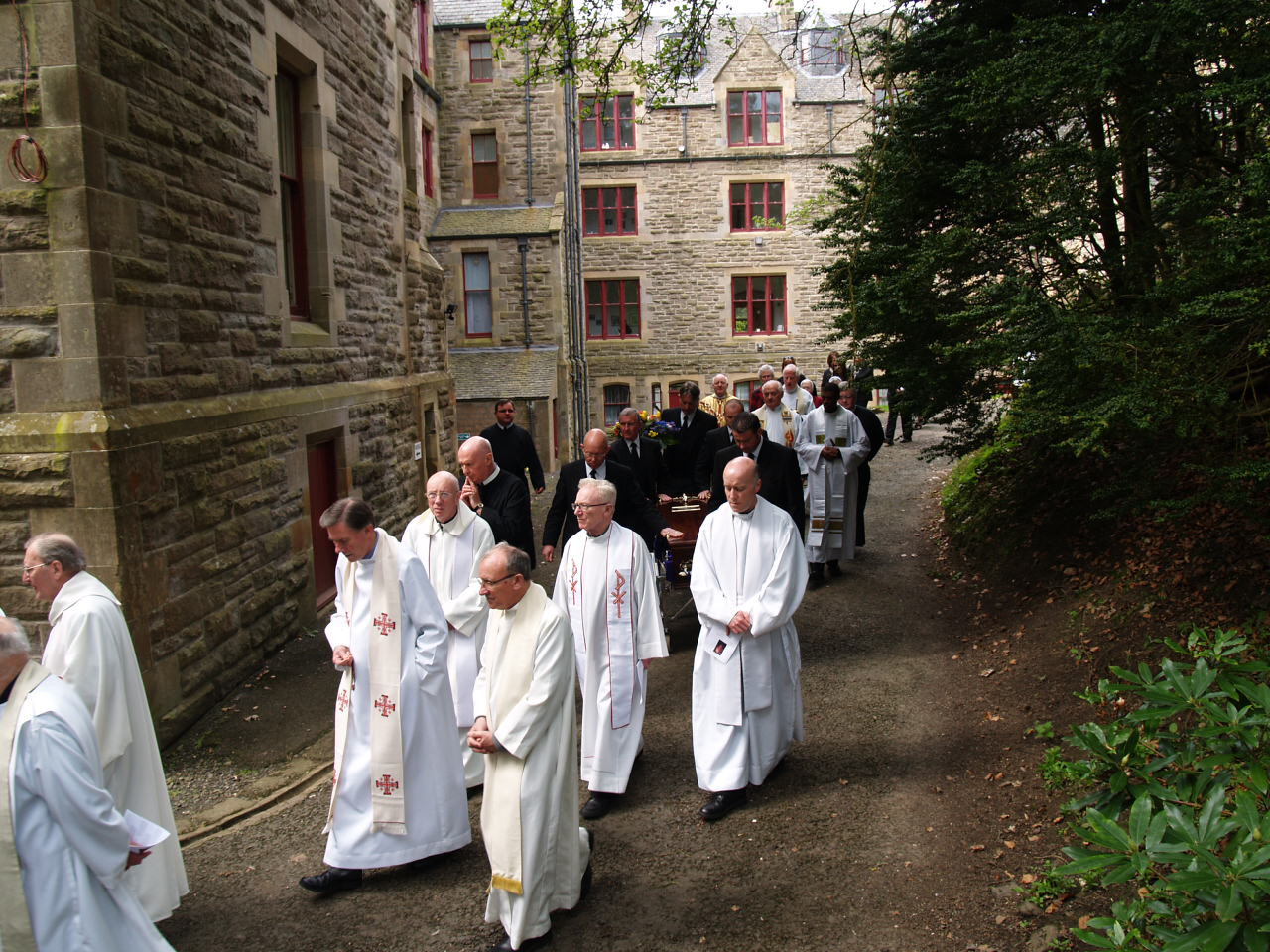
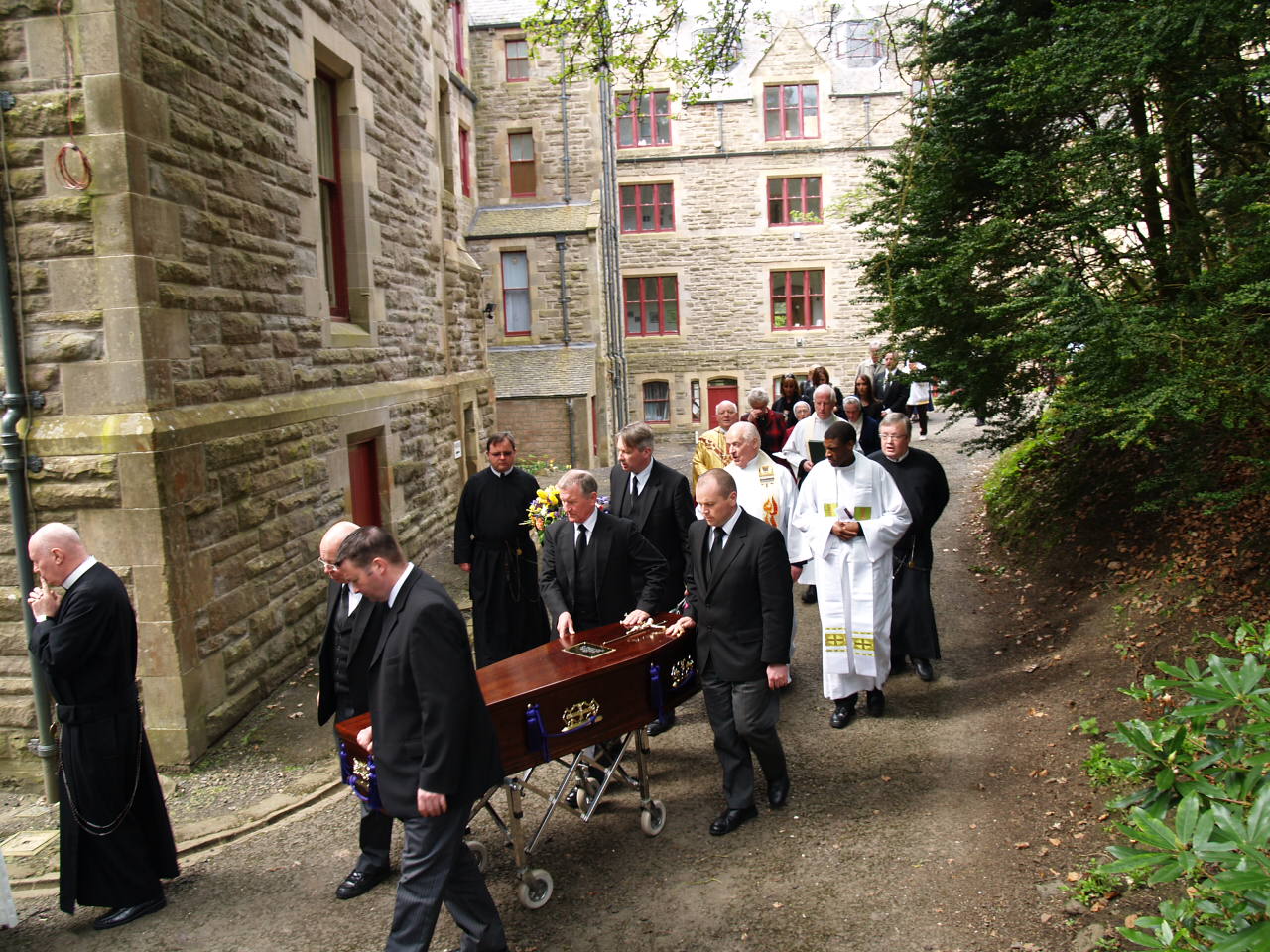
BROTHER RICHARD GOLDING, CSsR, 1924- 2009
Dear family and friends:
People say there is a page in the Gospel for each of us. One, in particular, is a source of great hope and consolation. It tells the story of an old man, Simeon, who lives on a promise. He is unusual because his hopes are ahead of him, not behind him. He is not fascinated by the past - he's too interested in what's going on now. This venerable pensioner is alive with conviction, waiting for the one who will be his consolation and the consolation of all peoples. In spite of the arithmetic of his years, he inclines forwards not backwards; he hungers for new signs of God's presence, and waits for the day when he can experience God's presence in the flesh.
His stubborn waiting is rewarded. One day Mary and Joseph bring their child to the Temple. Luke's Gospel paints a wonderful picture: the old man takes the newly born child from the young mother and holds him in his arms. In the person of Simeon old age welcomes into its arms the eternal youth of God. Simeon prays the prayer of happy old age, the Nunc Dimittis. You hear poetry through the wrinkles:
Now, Master, you can let your servant depart in peace
according to your word;
for my eyes have seen the salvation
which you have prepared before the face of all peoples,
a light to enlighten the Gentiles
and the glory of your people, Israel.
It was clear to Simeon that no woman or man or child would ever have to face life alone. In all the moments of life, the times when we are hurt and haunted, the times when we feel lucky and graced, Christ would be there. More than this: Christ would be there at the moment of death. And that was why Simeon was not afraid to die. He could depart in peace because he knew that the child he held for a few moments in his arms would one day hold him in an everlasting embrace.
Dear friends, Hawkstone was graced to have its own Simeon in the community, our own ancient prophet, Brother Richard, who held God close to his heart, and the Redemptorists shall always be grateful to him for his unfailing courtesy to the people who journeyed from faraway places to this remote Temple in Shropshire.
I first met Bro Richard when I was 18, freshly arrived at our novitiate house in Kinnoull, Perth. The double-barrelled novice master, Fr Edward Lumley-Holmes, decided that given my Irish name, for manual labour I should obviously be assigned to the farm rather than the house, under the superintendence of Brother Richard. It was a strange but wonderful appointment. All the advice in the novitiate I have long forgotten except Richard's when he said to me one day: "Don't believe; do not believe even half of what you hear!"
Richard was my first Redemptorist teacher - independent, wildly attractive, utterly unpredictable. A bit like another prophet, John the Baptist in the wilderness, with an instinctive suspicion of authority, so that when our chief priests would check what he was doing he would dismiss them in a line as a brood of vipers. Like John the Baptist, Richard had no automatic respect for authority: he was his own man, with a deep sense of self and mission. I can't imagine Richard, or indeed John the Baptist, needing to attend a course on "Developing Your Self-Esteem."
Assigned to Richard, of course I was useless on the farm, testing the reaches of his patience and language, and years later when I read Seamus Heaney's poem, Follower, I thought of dear Richard:
I stumbled in his hobnailed wake, Fell sometimes on the polished sod;
I wanted to grow up and plough.
All I ever did was follow
In his broad shadow around the farm.
I was a nuisance, tripping, falling, Yapping always. But today It is he who keeps stumbling Behind me, and he will not go away.
Richard and I lived in the same community for 33 years, and I have never met a pope, or a cardinal, or a bishop, or a priest, that could measure up to this authentic human being. He was an awesome man.
Born in Shrual House, Co. Mayo, in 1924, a more unlikely beginning to Richard's career could hardly be imagined - soon after school, he joined the RAF as a military policeman. Those of you who know him well will find it difficult to imagine Richard arresting people for being insubordinate or unruly, since he had a natural charism for both. His brief career as an authority figure forever behind him, he began the Redemptorist novitiate in 1952 and was appointed to South Africa a few years later, where he joined the community in Modimong to run the farm. It was the beginning of his long love affair with animals, creatures he much preferred to humans. Richard rewrote the book of Genesis and placed cattle and dogs as the summit of God's creation.
He returned to the province after six years and had a brief disastrous spell in Brazil, when he transported three tractors to Bishop Murphy, which were promptly confiscated by the customs on arrival, leaving him empty-handed and desolate. He returned, raging at corruption and greed, disillusioned but not surprised at the low calibre of human beings. Apart from brief excursions to Perth and Erdington Abbey, Richard's true home was here in Hawkstone, running the farm, for some years ably, assisted by his nephews, Paschal, David, Paul, Kevin, Bernard - there was a legion of them. It was a family business. Richard loved Hawkstone with a full heart: this was his soul home. When I came back in 1987, Richard had 72 head of cattle, 23 cats, 18 pigs, and 7 dogs. Richard happily presided over his own zoo.
In time, of course, the farm had to go, the cattle and pigs had to be sold off, the cats put down, except for Blackie, and six of the dogs found a home. Richard's world had diminished. Some years after young Dr Mehta bought the old stable block, which was Richard's cow house, Richard and I went up for the house warming. Richard stepped in to this shining expansive sitting room, now exquisitely decorated, and looking around the reaches of the room he announced to no one in particular: "Just to think how many cows I calved in here!"
So much of what he treasured was now memory. And I thought of Larkin's poem:
Perhaps being old is having lighted rooms Inside your head: everything looms Like a deep loss restored.
........... That is where they live:
Not here and now, but where all happened once.
Not here and now, but where all happened once. Yet Richard was not constrained by nostalgia: he moved on, and during the courses here in Hawkstone, he was generous in welcoming people from all over the world. Richard developed a new life - counsellor, guru, patriarchal figure to rival Abraham. Three times a day, at table, he would hold court and dispense his wisdom, loudly, so that on each course he would assemble his own groupies who are now, after all these years, as numberless as the stars.
He had a wonderful visual use of language - I remember when a sister bought him a pair of trousers, he held the hugely oversized pair up for all to behold. I said, "They're a bit big." Richard replied, "Big? Sure, you could take a lodger in these." When you listened to his summary of the morning news at breakfast, everything seemed hugely exaggerated; if there was a plane crash where 126 people died, Richard would render it that hundreds upon hundreds had perished. In his imaginative sympathy he knew that the loss was not limited to the arithmetic of people inside the plane: the loss would go on and on and on. Instinctively he knew that.
Richard's large and distinguished family visited regularly, and he would sit in the coffee room, listening and attending. And then at supper he would share the insights always of the little ones, like little Luke or Bobbie, and say with pride: "Aren't they the clever little divils!" Needless to say for Richard, devil was a compliment.
Richard's real companion in old age was Meg, his favourite dog. As Richard got slower and slower, Meg got larger and larger. You would see them out walking every day, Meg adjusting her pace to the faltering stride of her master. Richard would often sit in the summer house, brushing her coat, while she would look up adoringly into his eyes. This wordless relationship was Richard's favourite. When Meg died out of season I thought that Richard would find a new companion, but it wasn't to be: Meg could never be* replaced, he explained; to replace her would be - " unfaithful" was his word. So for the last couple of years of his life, Richard walked haltingly around the grounds alone, with the memory of Meg, in step, beside him.
For the final chapter of his life he was attended by Sister Laurice, who cared for Richard with enormous love and devotion. They were the odd couple at Hawkstone, cajoling one another, accusing one another across tables, laughing. They had antennae fixed on each another, ever alert to the other's presence or absence. As Redemptorists we owe a huge debt of gratitude to Laurice for her abiding care.
Richard's favourite place was the chapel, his Temple, where he was at home with God. He would bend God's ear for hours every day, reminding God in no uncertain terms, who to care for especially and who to smite. Or he would simply snooze, at ease with the God he had served so generously through his long life. He waited for God; he was ready. "Now, Lord, you can let your servant depart in peace."
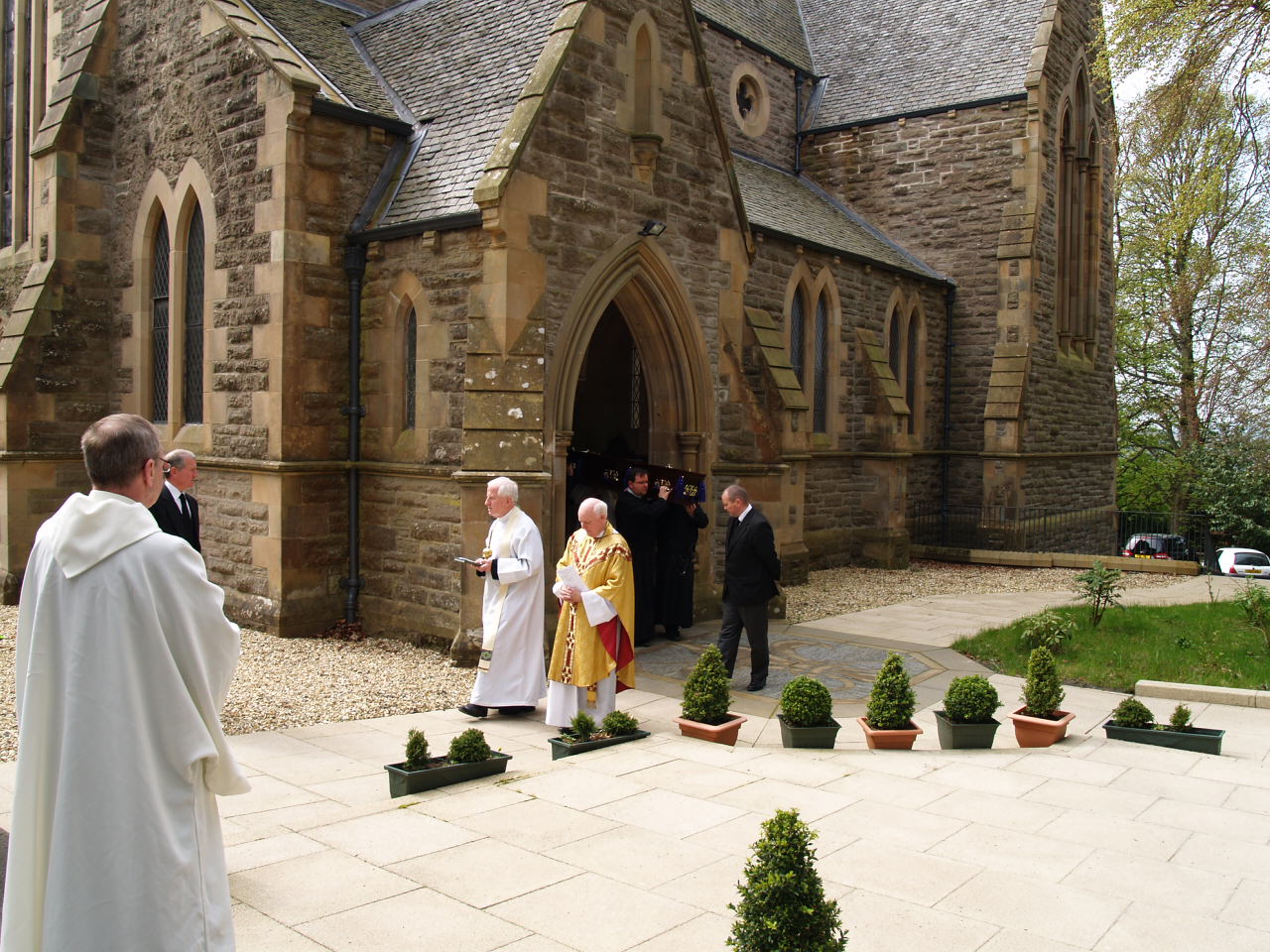
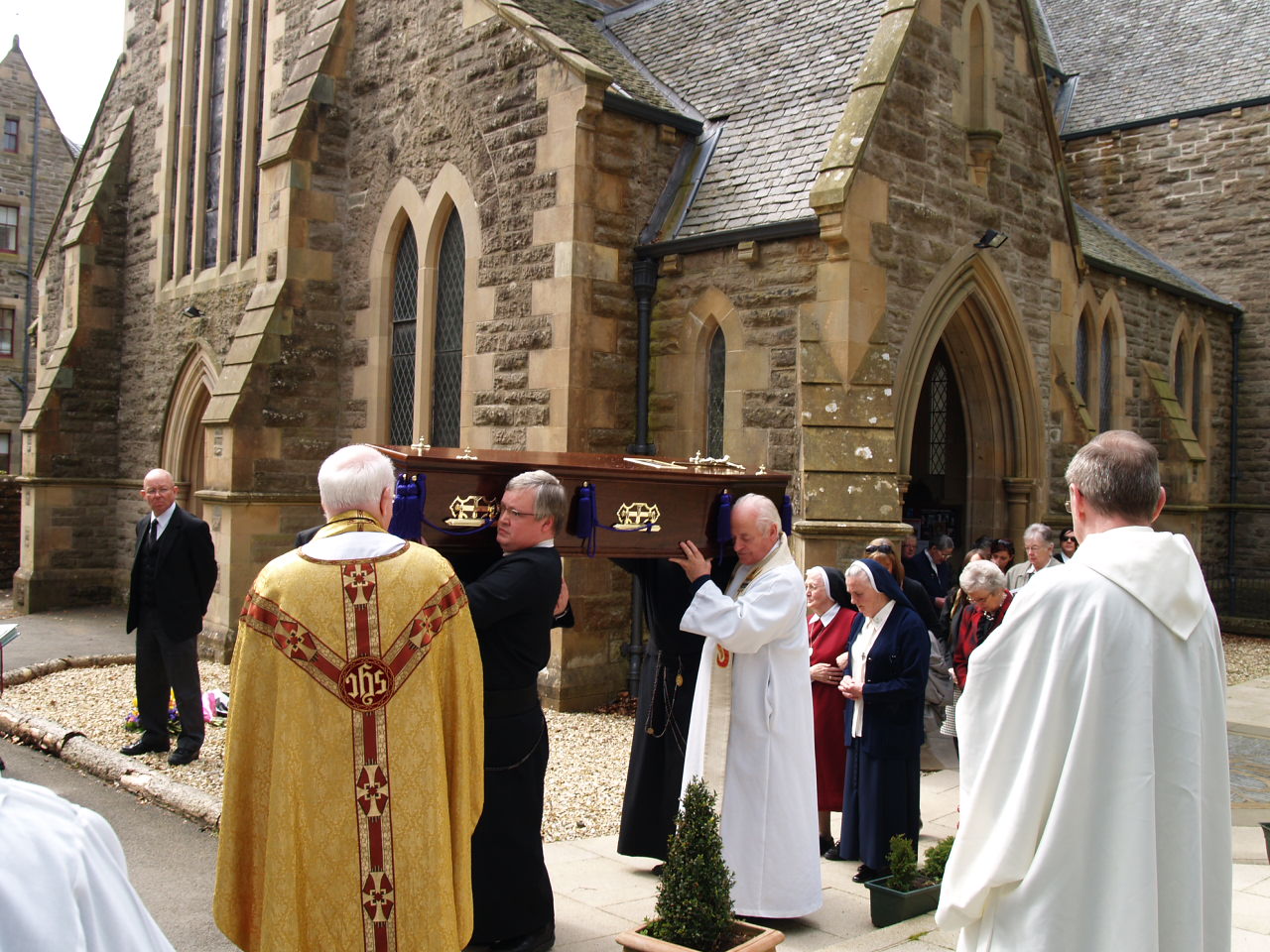
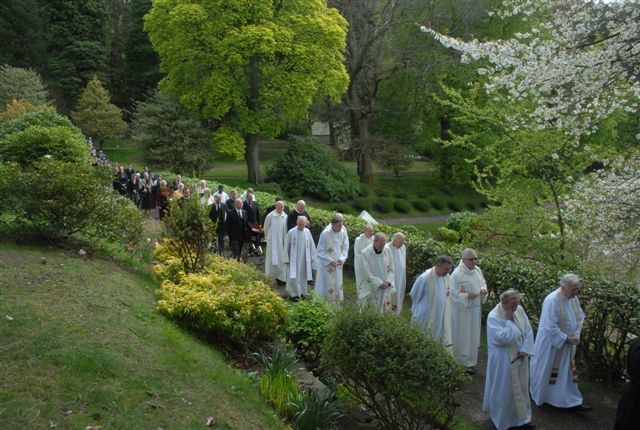
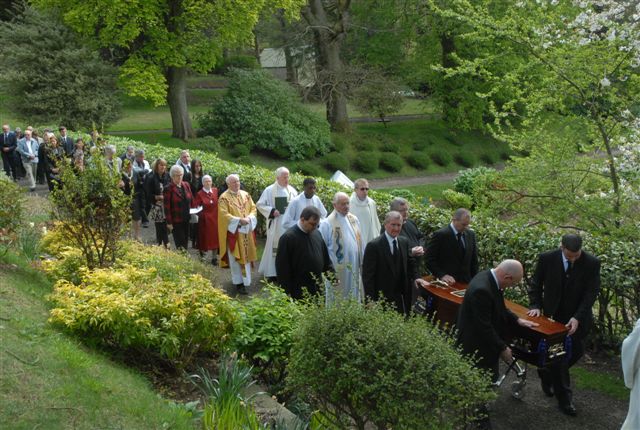
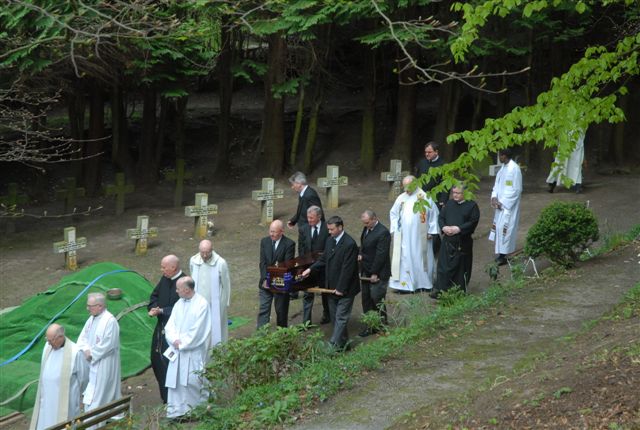
Richard died on a sunny afternoon in May, out of doors, walking up the lane, in view of his beloved cow-house. He was himself until the end and he died inside his own landscape.
Dear friends, those of us who knew Richard will have our private memories of him.
For me, he leaves behind him the memory of a man of abiding faith,
the memory of graciousness to others,
a dear good-humoured friend who loved life until life was no more.
He has now gone to the place about which Saint Alphonsus wrote:
When we reach heaven, our state is changed. There will be no more toil, but rest; No more fear, but security; No more sadness or weariness; But gladness and joy eternal.
May dear Richard, and all his beloved family who went before him, rest in peace.
Denis McBride, CSsR


Province Contact Details
Our Addresses...

Very Rev Fr. Provincial C.Ss.R
St. Mary's Monastery,
8 Clapham Park Road,
Clapham,
London, SW4 7AP
ENGLAND
E-mail Addresses
If you have any safeguarding concerns please email
To enquire about a Parish Mission
Are you interested in being a Redemptorist Priest of Brother
Interested in joining the League of St Gerard:
Have you found an error on the website
Social Media
| Follow us on X | @redemptoristsgb | |
| Follow us on Facebook | @RedemptoristVocationsGB | |
| Follow us on instagram | @cssrvocationsgb | |
| Instagram St Gerard 300 | StGerard300 | |
| Subscribe on Youtube | redemptoristsuk |
CLAPHAM
Very Rev Fr. Rector C.Ss.R.,
St. Mary's Monastery,
8 Clapham Park Road,
Clapham,
London, SW4 7AP
ENGLAND
Parish Website
Facebook click here
YOUTUBE click here
CHAWTON
Very Rev Fr. Rector C.Ss.R.,
St. Clement's,
Wolf Lane,
Chawton,
Alton,
Hants, GU34 3HG
ENGLAND
Redemptorist Publications Website
Facebook : Click here
YOUTUBE: Click here
Birmingham
Very Rev Fr Rector C.Ss.R.,
The Redemptorist Community,
49 Sutton Road,
Erdington,
Birmingham, B23 6QJ
ENGLAND
Parish Website
Liverpool

Very Rev Fr. Rector C.Ss.R.,
Bishop Eton Monastery,
Woolton Road,
Liverpool, L16 8NQ
ENGLAND
Parish Websites
Shrine Website
Bishop Eton Facebook : Click here
Bishop Eton Instagram: Click here
Bishop Eton YOUTUBE: Click here
Perth
Very Rev Fr. Rector C.Ss.R.,
St. Mary's Monastery,
Kinnoull,
Perth, PH2 7BP
SCOTLAND
Website
Facebook: Click here
Instagram: click here
Youtube: click here
Redemptorist Lay Associates
If you are interested in becoming a Lay Associate of the London Province
League of St Gerard
The League of St. Gerard is an association of Christians united in prayer for family life and its Christian values.
Membership is open to all.
The enrolment fee of £5.00 covers postage and membership fee - which includes the League of St Gerard prayer book, card and a medal. plus a weekly Mass is offered for all members and their intentions.
Send an email to The Director Br. Michael Duxbury C.Ss.R
download the application form by clicking here
or write to:
Br Malachy CSsR RIP
Br Malachy's Requiem...

Brother Malachy
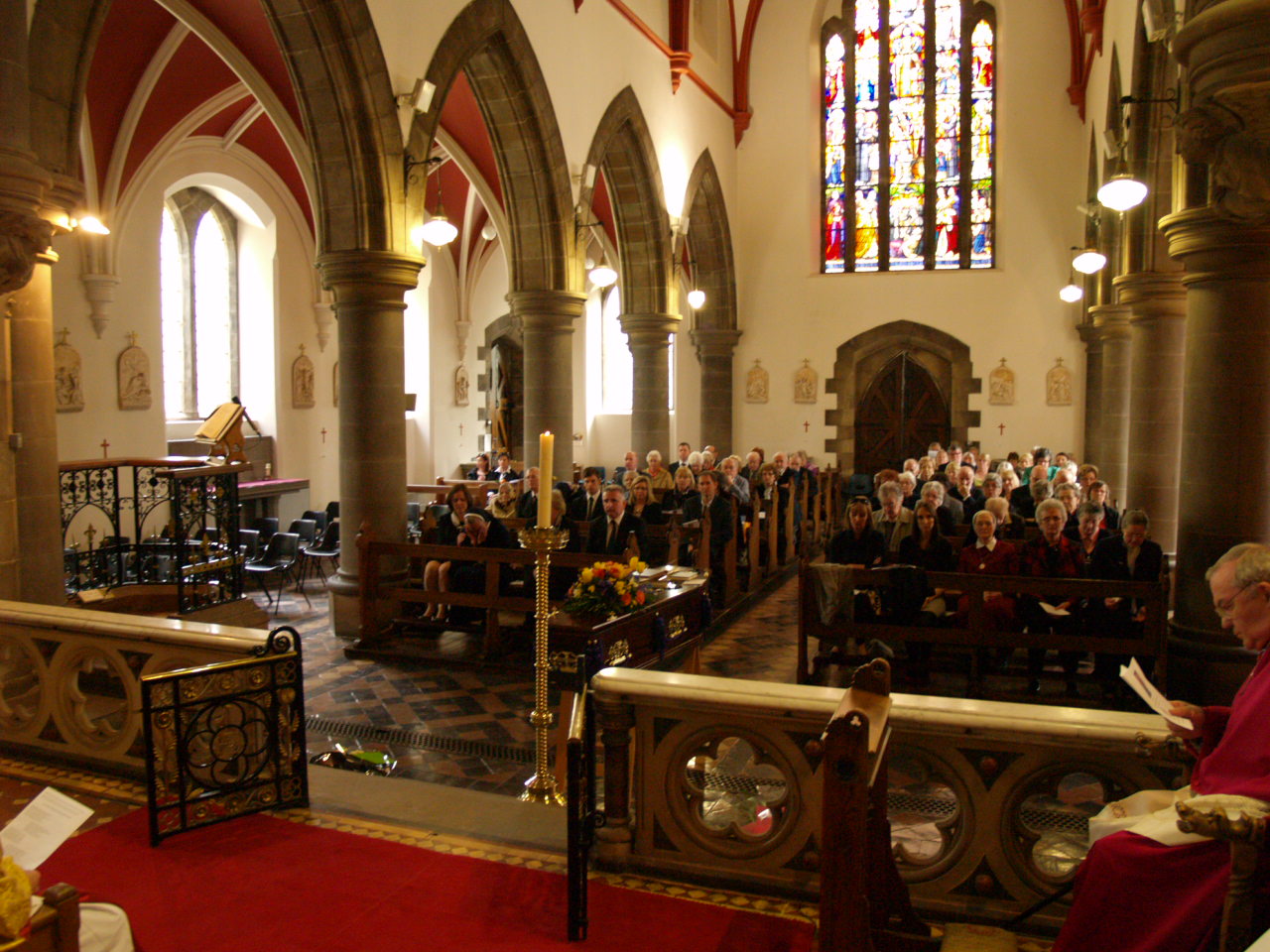
Homily Preached by Fr. Provincial, Ronald McAinsh C.Ss.R.
I feel enormously privileged to be preaching today at the Mass to celebrate the life and death of Bro. Malachy – but also at somewhat of a loss as to what I should say about so great a man.
That Brother Malachy was a saint is not in doubt in my mind. I recall the evening before his death Fr. Richard and I coming away from a visit and saying, 'Well why would anyone want to go to Padua or Assisi or our own Materdomini where St Gerard is buried – to venerate the body of a dead saint - when we have just spent half an hour with saint we both know’. Certainly by the huge turn out here today, this view is shared by so many of you.
Brother Malachy lived a comparatively hidden life. But in fact, he was probably the best known and most loved Redemptorist by the people, in any of the communities in which he lived
I mention the hidden life of Malachy – mostly spent in the garden or in the sacristy. But this was a man who had seen the world. Although he was born in Leitrim, Ireland, he joined the British Army at a young age and his first foreign posting (after England) was in Austria. After this he was sent to Hong Kong in 1947 where his Unit was involved in the battle against the communists.
From there he moved almost right round the world to Jamaica. However, with the outbreak of the Korean War he was sent back to Germany, and then posted to Korea. I asked him only a week or so ago if it was very hot in Korea. And with perfect clarity he said that in fact he was in the North, and in winter is was colder than Perth. So already he was hardened for the rigours of cold Kinnoull...
On his return to UK, he prayed about his future and decided that he was called to be a Cistercian Brother. However, when he went to the Redemptoristine Convent to tell this to Sr. Patrick – his sister who is here with us today – the Reverend Mother of that time – and remember, Reverend Mothers had power in those days – told him that he should be aRedemptorist Brother. And so he came here to Kinnoull in 1955 to begin his journey in Redemptorist Religious life...... a life he lived faithfully for these past 56 years.
We could say today that this is where the journey ends.... ...where it all began. But of course our faith tells us something very different. Because we believe that the journey carries on... it carries on in God, in eternal life... it carries on it the hearts of the many people Malachy touched during his life, it carries on in all the works and kindnesses he preformed over the years in the various communities in which he lived and worked.
Because we all know that Brother Malachy had a very rich and full interior life. I remember two years ago he was admitted to PRI after he had a slight blood clot on his leg. And he asked to me go to his room and there I would find a small (and I must say battered) little case in which he kept the few necessities of life which he might need in such an eventuality - His pyjamas, his toiletries and two books. Both books were by the medieval mystic saint, Maister Eckhart – about whom Malachy seems to have been something of an expert. Malachy had a deep knowledge of the interior life – and indeed when he went into hospital a few weeks ago – and little did we know that he would not return home – we took him a new life of Mother Celeste, the mystic and foundress of the Redemptoristines, and he read it within two days – and loved it.
Malachy had extraordinary physical energy. He never pushed a wheelbarrow. He ran with it. He washed dishes and dug gardens at an amazing rate. However, I would suggest that the energy came from within. It came from a deep inner freedom and a deep union with God that we cannot even begin to fathom.
I had glimpse of it from time to time when we spoke about his impending death and what lay beyond. When he was first diagnosed with motor neuron disease at the end of February I was in Zimbabwe, and Fr. Mulligan contacted me. My first reaction was one of anger.....’How could you do this God, to aman who has served you so vigorously with so much faithfulness’?
And when I returned the following week, I shared this with Malachy. He just smiled and said “Well perhaps God wants absolutely everything”; - and indeed God did. I then said, I suppose you are a bit like St. Peter to whom Jesus said, “When you were young you would put on your clothes and go where you wished”....And Malachy finished the phrase for me by saying, “But when you are old, another will take you and lead you in a way you would rather not go”...... And again he gave his quiet smile. And no other words were necessary.
His trust in God was complete and utter. And likewise his gratitude for all he received from God’s hands – which appears even to have included his illness. He was truly a man with a grateful heart.
And it was this serenity, this gratitude, this graciousness - (Full of grace) that touched the hearts of so many people. I recall when he was in Ninewells hospital Dundee, a nurse telling me that she had asked to be moved from another ward for the weekend to his ward, because when she was nursing Malachy, she felt she was in the presence of something blessed and special that she could not describe.
When he was in Cornhill, the Nurses told him that he did not have to keep on saying ‘thank you’ for every little service they rendered. They said, “That’s why we are here”. But Malachy could not change his nature of being a gracious man who always expressed his thankfulness.
I remember many year ago when I was Novice Master asking Fr. Bernard Haring, a famous and holy Redemptorist in Rome, what I should look out for in men who were joining us.
And he said, ‘First of all try and see if they have Eucharistic hearts. Eucharist means gratitude, and so I mean hearts that are positive and grateful – and that they are people who are ready and willing to break the bread of their lives for others.’ Surely our Malachy fulfilled this description to perfection.
Those of us who have lived with Brother Malachy knew that he was an intensely private person. He worked alone in the garden. He prayed for hours alone in the Church. He worked alone in the sacristy, and he sat in his room for hours reading his spiritual books in solitude.
I often wondered how he would accept illness and the loss of privacy. The reality is that he accepted them with totally equanimity and peace. When he first began to feel feeble, we got him a Zimmer so that he could be moderately mobile. You would have thought we had brought him a Ferrari – the gratitude and joy on his face was so intense.
And when he totally lost his privacy and had to be fed and bathed, his disposition remained utterly positive and docile. His adaptability from a hidden and independent life in the Monastery, to a public and dependent life in hospital was truly amazing.
So what do we learn from this life? We are not here to canonise Malachy. That is the last thing he would have wanted.
But there are a few lessons that his life can teach us.
The first, I think is to be grateful – to be people who can see the half full glass rather than the half empty glass. To be people who remember the blessings we have in life – our health, our families, our friends, and God’s love for us.
To be wholehearted in what we do. Malachy it seems to me, was single-minded. It did not matter if it was digging a field, welcoming a visitor or lighting the candles. He put his heart in to whatever was needed at that moment.
To be cheerful in adversity. Malachy was the same when things worked out well for him, as when things were collapsing around him. He accepted the various moves from community to community without a grumble, although I have no doubt it cost him something within.
To pray and to trust in God. This I think was Malachy’s greatest legacy to us. He was a man of deep prayer. Often he would sit in this church in silence and pray for the world – for us. And in times of difficulty, he had particular devotion to and trust in our Mother of Perpetual Help, under whose title this church is dedicated. And he often told me he was praying to her for me, and for all our needs.
And finally to be there for others. Malachy did so much for others – quietly and humbly, whether it was putting out the dustbins each week or leaving a note to change the host in the tabernacle or to collect the eggs from the hens. He generously prayed for so many intentions. You only had to ask him and he would assure you of his prayers.
Above all, he challenges us to put God before everything else.
I would like to conclude by thanking the members of the Community here at the Monastery, for their love and care for Brother Malachy. It was utterly outstanding. The Redemptorist community and the extended community, not only of Srs. Maureen and Monica, but all of these who work here and loved him so much. I cannot mention each one by name. But I know that each one loved him – and was loved by Brother Malachy.
I would like to thank our regular Masses attenders, and all of those who visited Malachy when he was in hospital or Cornhill.
A special word of thank to the doctors, nurses and staff of PRI and Ninewells – and in a very special and focused way to those in Cornhill who made life for him – and for us – so blessed during his final few weeks.
I express our condolences to Srs. Patrick and Colette his blood sisters, and to Brother Malachy’s family and friends.
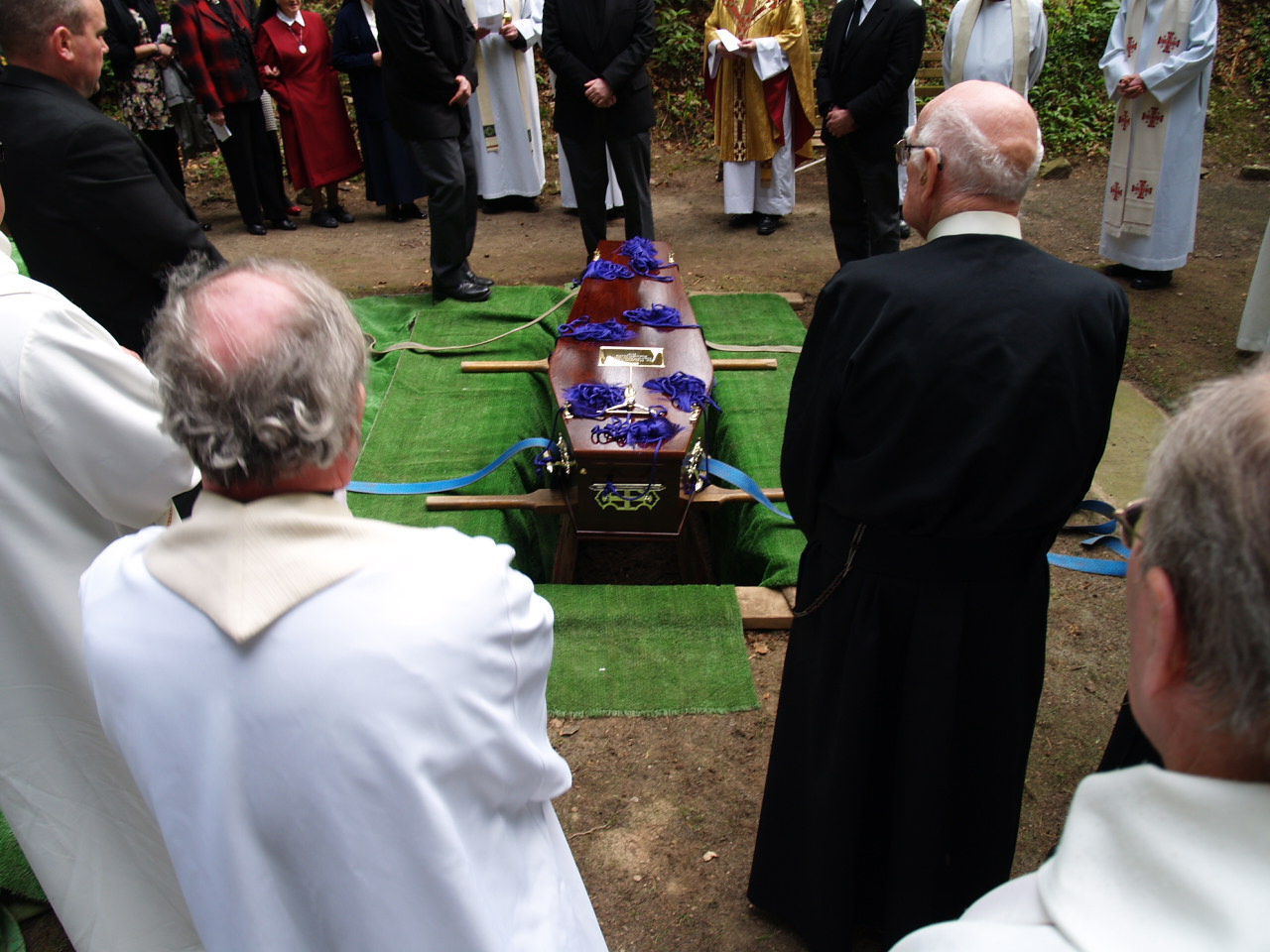
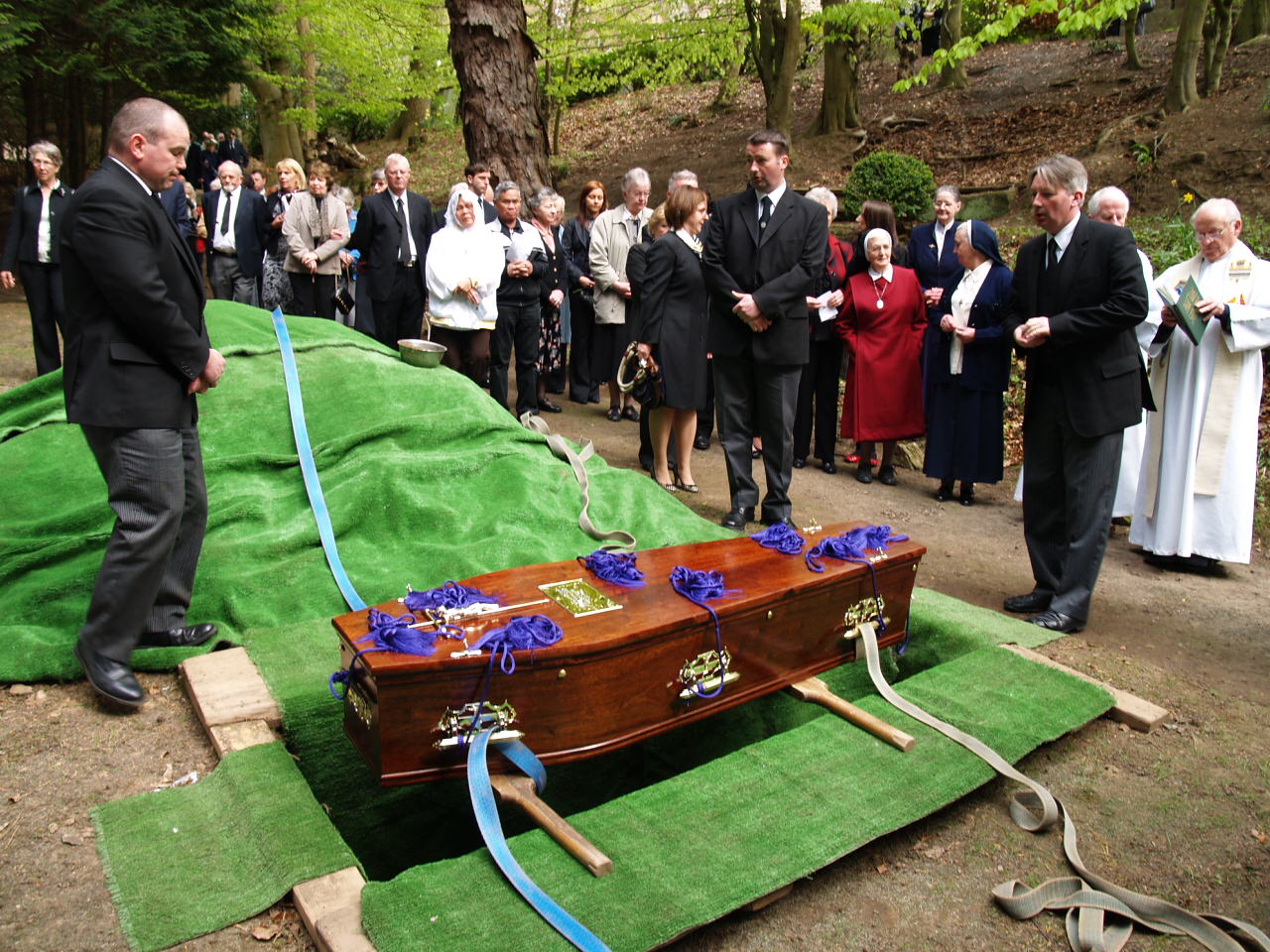
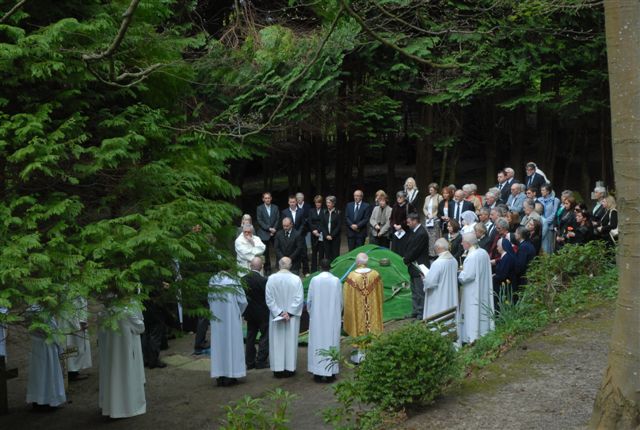
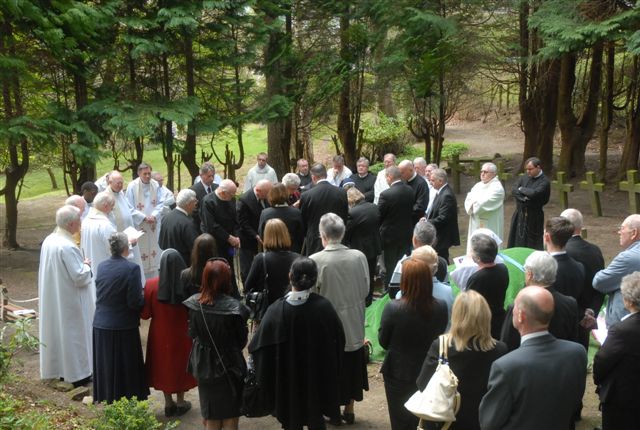
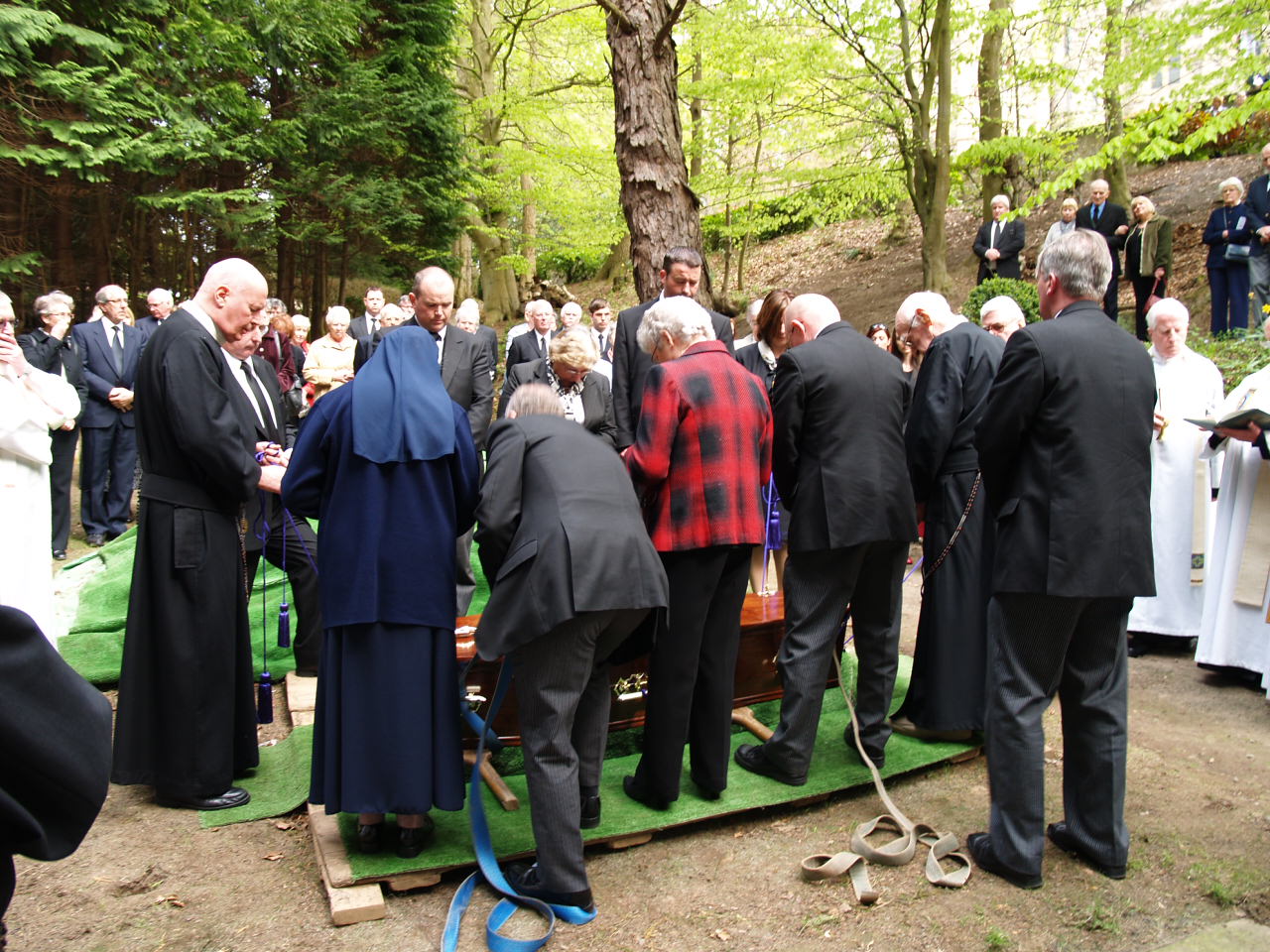
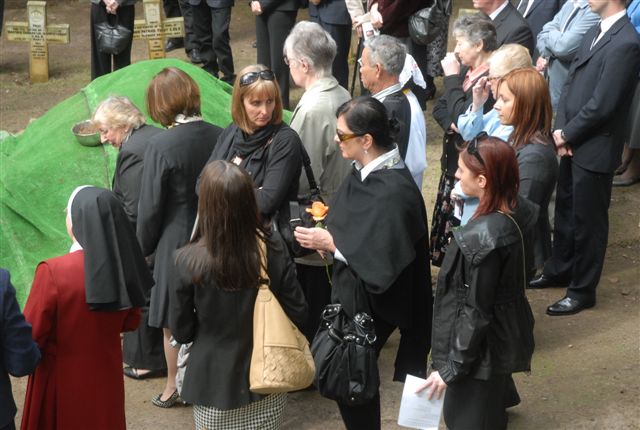
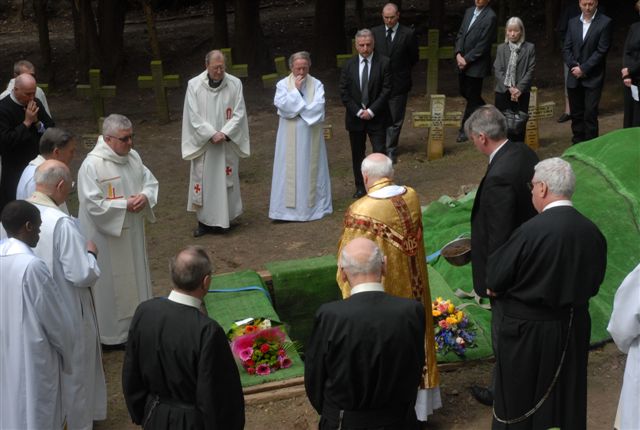
We will shortly lay Malachy to rest in our Monastery cemetery. We will say farewell to his body. But his spirit will remain with us in the years that lie ahead - whenever we come into this Church, or walk in the gardens, or look at the hens, or watch the grass grow, Malachy’s spirit will be with us.
We were privileged to have Brother Malachy with us for so long a time. May his soul rest in peace. Amen

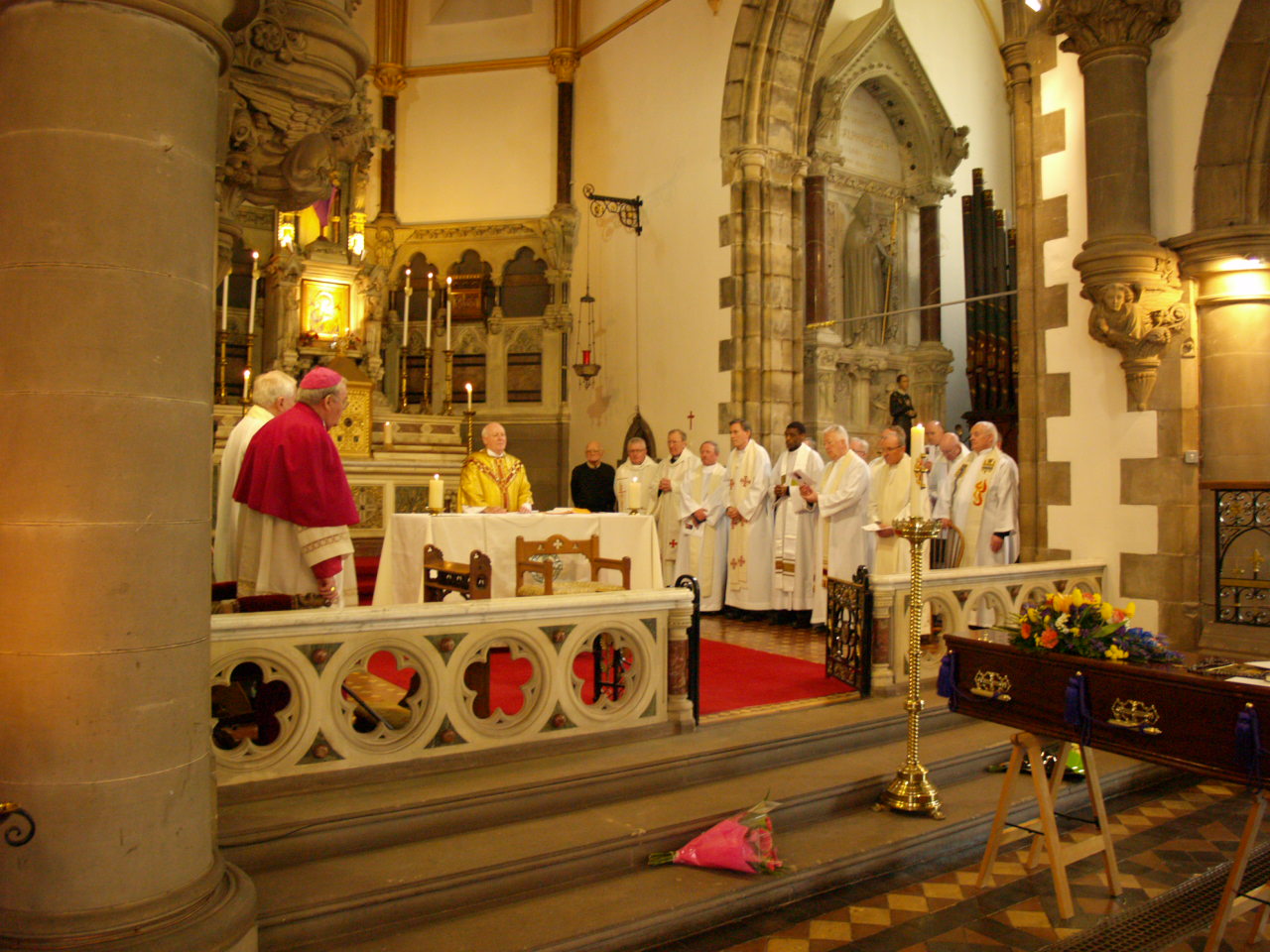
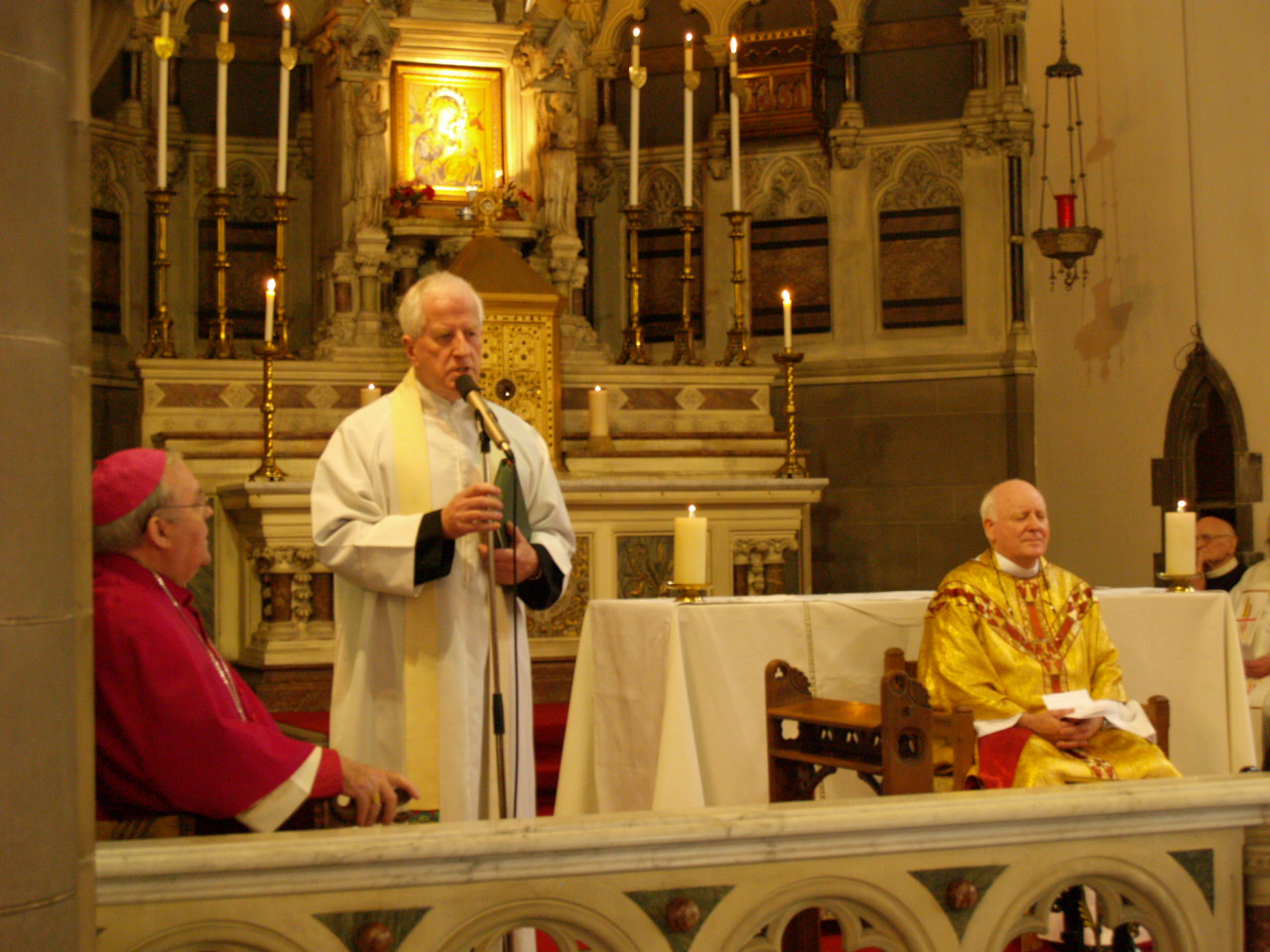




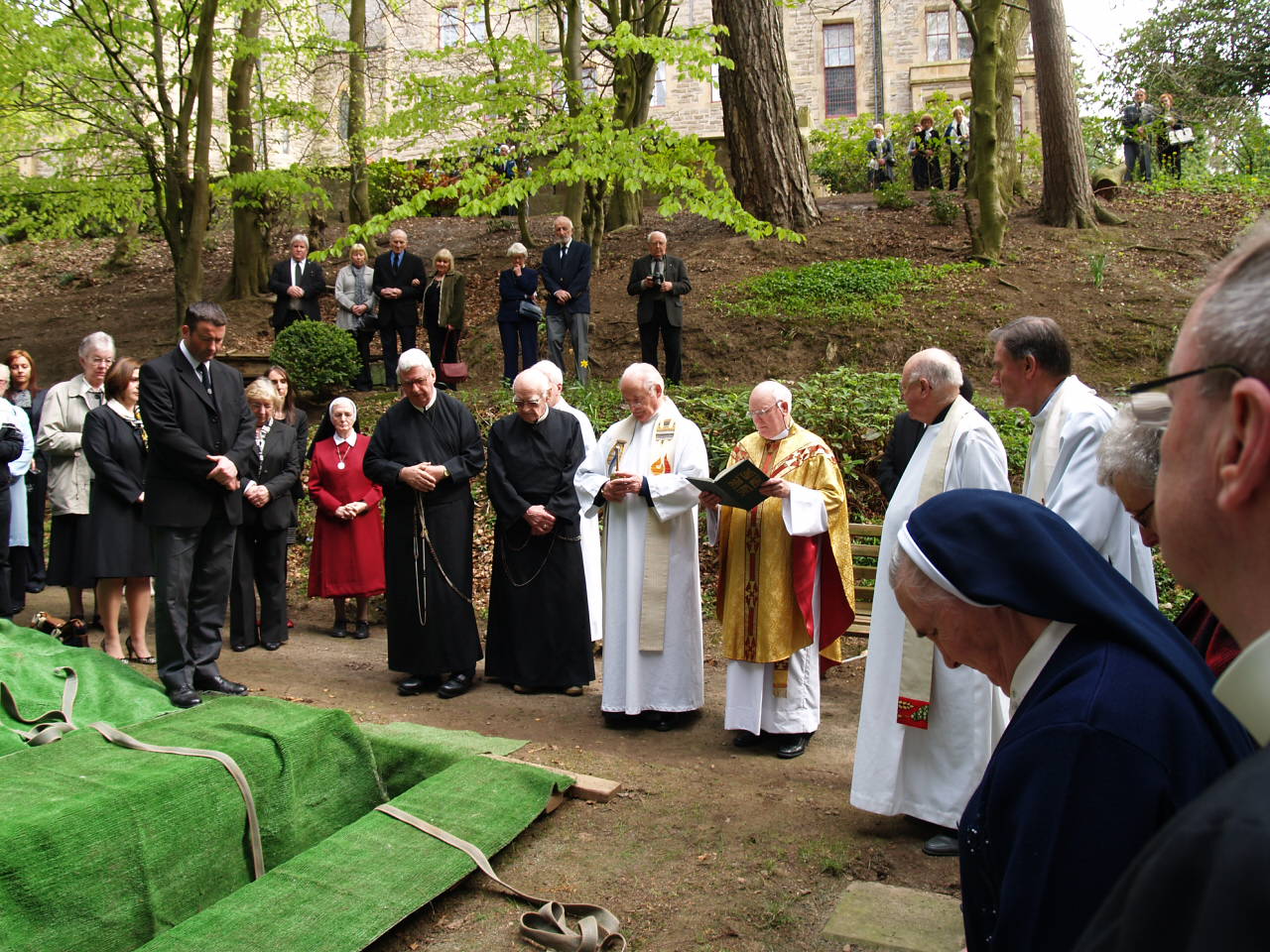
Requiem Homily Fr. Lavery
HOMILY FOR FUNERAL OF FR. W. LAVEREY C.Ss.R
Delivered by the Very Rev'd Fr Provincial C.Ss.R.

Two days ago I was on the London Underground travelling to Heathrow. Between the stations, the tube suddenly stopped and there we waited. What was most striking was that during the wait, not one person said a word. Some kept on reading. Some stared straight ahead, and some cast their eyes down. But there was no chit chat, no re-assurance to one another. Just a stony silence.
This was the atmosphere into which Fr. Bill was catapulted over 50 years ago as he began his journey to the Redemptorist priesthood. He often recounted the story to be with great amusement. Here he was, a young man from a rural area in which everyone knew everybody, in which you could enter a neighbour’s house without knocking, an environment of family closeness (which we still see here today) and friendliness.
And he described to me how after arriving in London, he took the tube to Osterley College to begin his studies. Here it was he encountered his first obstacle - as he chatted first to one person on the tube, then to another; only to be met with silence, eyes lowered, and noses further into newspapers. That evening he arrived at Osterley only to find some of the same reserve – but worse, a curriculum of studies which included English literature, Greek and Latin.
I asked Fr. Bill how he coped in these first few weeks and his answer was a reply I would hear from him many times over the years. “Well I just said my prayer. That’s what helped me”.
Throughout Fr. Bill’s life, this situation of being thrust into the unknown was repeated again and again.
After ordination, he was appointed to work on the School Mission Team in Liverpool – something for which he had not in any way been prepared….. facing very large groups of teenage boys and girls. I asked him how he managed that! Again it was the same answer. “Well I said my prayers, and somehow or other the Lord did the rest.” And it worked. He related well to these young people
Later in life, he was appointed Parish Priest and Superior of the community in Plymouth, dealing with the diocesan administration. And again the response was the same. “I just said my prayers and the Holy Spirit did the rest”. And as someone who lived with him in the community at that time, I can assure you that the Holy Spirit did work through Fr. Bill and touched the hearts of many, many people.
Bill, both in Sunderland and Plymouth, started charismatic prayer groups – again with complete trust in God to ensure that they proceeded well.
When he was appointed to Hawkstone to work on the team here – he told me laughingly – “I thought that Hawkstone was only for the intellectuals”. But the prayers worked, and countless people were encouraged and assisted by his kind words and the gentle encounter in the Sacrament of Confession, for which Bill was in great demand.
And when his health began to fail, he faced it with the same equanimity. First his protracted stay in the local hospital, where I visited him and found him trying to pray his rosary in the midst of a busy ward. And then when he moved to the care home, he confided to me on one occasion, “All I have to do here is say me prayers”. And he did
Out of the life of each Redemptorist, one can often draw a characteristic which marks them out…. A great administrator, a great preacher, a great writer, a great story teller. For me, whenever I think of Fr. Bill, the characteristic is a great pray-er.
We live in an age in which the value of prayer is doubted and perhaps even mocked. However, prayer remains not only as a support for our lives – but as a real power in our lives.
The founder of the Redemptorists, St. Alphonsus was clear. Prayer is our life line with God and if that life line becomes corroded or blocked, then there is a danger that our souls will, as it were, wither and die. Prayer is not only the way in which we keep our relationship with God alive. It is the tool which again and again, gives us life and courage and strength to reach out to others, as we see so clearly from the life of Fr. Bill.
And perhaps the best way to remember Fr. Bill is to recommit ourselves to prayer. To be women and men of prayer. People who really believe in the power of God, not only to support us, to work in us and through us and to build a better world. This is certainly a feature of the Lavery family.
I prayed often with Fr. Bill – both when he was in ministry and when he was ill. I also prayed with Kathleen his sister in law, when she was in the hospice. It was Brother Thomas who suggested it to me. Thomas used to call Kathleen every afternoon for a chat, and then they prayed together. What a marvellous family act of love.
Someone from the family said to me this morning, “Thank you for all you did for Fr. Bill”. I would say rather, “Thank you to the Lavery family for giving us Fr. Bill and Brother Thomas. Thank you for what each one of you has done for us……reminding us of the value of close family ties, reminding us of the value of prayer." Last year while preaching the Novena in Belfast, I met Patrick and his family. And again, I had the invitation and the joy of praying with them.
Before I conclude I would life to express my deep gratitude to those who live and work here at Hawkstone Hall. First of all, thanks to the Rector, Fr. Maurice who cared so deeply for Bill. Maurice visited him regularly, monitored the level of care he received, celebrated Mass for Bill in his room, and regularly prayed with him. Fr. Kevin was likewise a good friend and a confrere who accompanied Bill closely during these final months of his life. All the staff here at Hawkstone were wonderful. However, if I may, I would like to say a special word of thanks to Srs. Carole, Jackie and Laurice who loved Bill, and showed this love by their frequent visits to him in hospital and in the care home. Indeed Sr. Laurice and another Nazareth House Sister said the rosary with him just half an hour before he died. What a wonderful way to die, surrounded by love and prayer. On behalf of the Redemptorists and on behalf of the family, I thank everyone here at Hawkstone for their loving support of Bill in his final years.
As we gather to say our final farewell here to Fr. Bill, we are again reminded that those who die in grace go not further from us than God. And God is always very close. Today, as we celebrate this requiem Mass, we are reminded that Fr. Bill, Kathleen and all our deceased relatives and confreres are very, very close to us – and we ask them to pray for us – that we may live and die as they died……..people of prayer – people close of God our creator.
May Our Mother of Perpetual Help, our Holy Founder St. Alphonsus, and all the saints meet and welcome our Brother Bill today. Amen
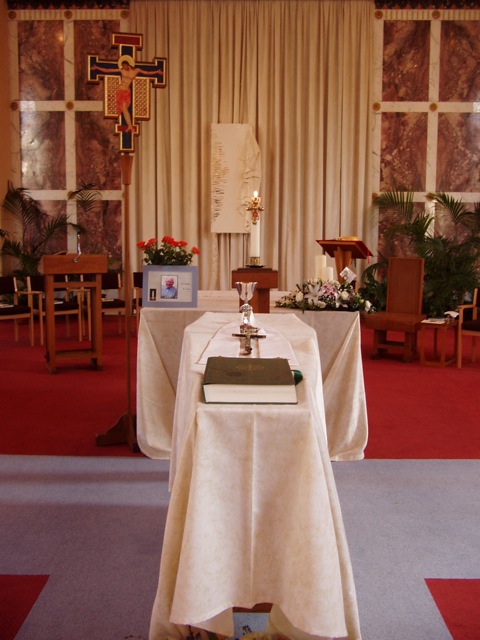


The Redemptorists of the London Province
Welcome to the website of The Redemptorists of the London Province. We would like to share our Vocation story and religious life with you.
We serve communities in Scotland, England, and Wales and stand together with our brothers serving in Zimbabwe, and around the world. We are an international Catholic Congregation, leading a vowed religious life following Christ the Redeemer, making an impact in a broken world, making a difference in people’s lives. We do this through the inspiration of our founder St. Alphonsus de Liguori. We do this by leading a shared apostolic life of prayer, meditation and devotion to the Eucharist, the source and summit of our christian lives. We do this by being close to the powerless and abandoned, focusing on the proclamation of the Good News of Plentiful Redemption.
"I want to say to you, a big thankyou - as big as the world itself, for your nearness to people.. try hard to strengthen it. If we want to save the world we have to unite ourselves to the people by being in the midst of the world."
 In these pages we tell our story, and the stories that have inspired us. A young man once asked:" What more can I do to have eternal life?" The path taken toward exploring a vocation to religious life always begins with a question. Let us share with you our life, our community, and our mission to follow Christ as Redemptorist confreres, priests and brothers. Follow the guide at the top of each page to find out what ministries we are engaged in within the UK, and in our region of Zimbabwe. Come and see where we live. You may find the answers you are searching for in the words that follow.
Read on that you may share our hopes and dreams.
In the Upcoming year we will be focusing on one of our very special Redemptorist confreres, a saint whose feast falls on the 15th March each year, called St. Clement Hofbauer. He helped develop and move the Congregation over the Alps and is also known as the second founder of our Order. To find out a little about this extraordinary man, view the Video presentation given by our Former Superior General Archbishop Joseph Tobin CSsR. To view, click here.
"A Religious vocation is a gift freely given and freely recieved."
Living in shared communities that are free and faithful to the teachings of the Church. We are dedicated to finding ways to 'proclaim the Gospel anew'. Because of this our communities are at the heart of the Church. (St. Alphonus our founder is the only moral theologian whose opinion the Church has specifically said all can follow.) Engaging in ministries of outreach bringing Christ's message of truth and liberation to the poor and abandoned.
Redemptorist missionaries stand on holy ground, we see early morning mystics paging through tatered prayer books, the promise of the prayers gives us confidence. We see the teenager smiling at old church jokes she has never heard. We see families coming to church, parents having worked eight hour shifts, prepared the meals and fed the dog, and still getting to the mission. We counsel people who witness to a holiness they are unconscious of. Each of us is evangelised by the experience of a Mission.
A Redemptorist Missionary
Our Heritage, Alphonsus de Liguori, Roman Catholic Church
Our Heritage
No-one likes losing, yet, when this happened to a promising lawyer from Naples, it became a turning point. Until losing the court battle, Alphonsus de Liguori had spoken for the powerful elite of his day, but he felt that something was missing. Through prayer he began to see that people around him were in need, and through his contact with the poor, he realised that God was calling him to serve people in a new way.
Eventually he became a priest and bishop, and is now honoured as a doctor of the church and patron of confessors. He is the only Moral Theologian whose opinion the Roman Catholic Church has specifically said we can follow on moral issues. His opinions always came from a profound understanding of people and their real life situation. This is an understanding and wisdom that Redemptorist priests and brothers continue to share with the contemporary Church.
What Redemptorists try to do is to receive from people the wealth of their ordinary experience and when this meets with gospel compassion, something wonderful emerges. And that is what they want to share with the whole world.
Alphonsus founded the Redemptorists in 1732 to proclaim the good news to the abandoned. His words were now at the service of Christ, reaching the poor through preaching, writing and retreats.
Pope John Paul II described Alphonsus as
a close friend of the people
…a missionary who went in search of the most abandoned
…a founder who wanted a group which would make a radical option in favour of the lowly
…a bishop whose house was open to all
…a writer who focused on what would be of benefit to people.
To read more on Pope John Paul's thoughts click here.
In all of the above, we his present day brothers, continue Christ’s mission to the marginalized through the inspiration of our brother Alphonsus.
The principal thing I recommend to you is the love of Jesus Christ. Very much are we bound to love Him. For this end He has chosen us from all eternity and called us into His Congregation, there to love Him and to make others love Him. What greater honor what greater mark of love could Jesus Christ show us? He has taken us from the world in order to draw us to His love and so that, during the pilgrimage of this life by which we must pass into eternity, we might think of nothing but of pleasing Him and of bringing those crowds of people to love Him who, every year by means of our ministry, put themselves into the grace of God.
Read more about our early heritage and the life of our inspiration St. Alphonsus.
St. Alphonsus Ligouri - Doctor of Prayer
St. Alphonsus Liguori - Doctor of the Church
Bernard Häring, C.Ss.R.
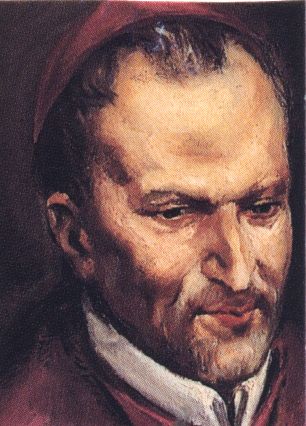 Alphonsus was declared a Doctor of the Church primarily because of the significant impact he had on moral theology. His role in the renewal of moral theology can be evaluated only in the context of the battles that raged between various kinds of rigorism and legalism. Alphonsus became a tenacious champion in favor of conscience, rejecting the devastating theories that prevailed during his time.
Jansenists and other rigorists preached a religion of fear and anguish, while legalists overburdened Christians with many strictures and outdated laws. I came to understand Alphonsus only after I read the four books in which he defends himself against his detractors—men who evidently believed more in law and control than in creative liberty. How passionately he defends the redeeming love of God against these narrow-minded rigorists! He asks: Did God create a system of law that must be obeyed in servile anguish? No! God creates human beings out of his own love and freedom. Therefore, law and the threat of punishment cannot be foremost in God's plan. In God, the Creator, love and freedom coincide. In God's plan of creation and salvation, the indivisible call to love and to freedom is to be cherished.
REDEEMED AND REDEEMING LOVE
In his moral theology and pastoral care, Alphonsus draws his conclusions from the primacy of love and liberty. One conclusion says: Where there is a concrete doubt about the existence or application of a law or prohibition, freedom is always "in possession." The main purpose of the God-given liberty cannot be the observance of laws but a creative response of love to God and neighbor. Creative and faithful love is immensely greater than that of laws.
From his own pastoral experience, Alphonsus knew that overburdening people's conscience with laws, especially if these laws were arbitrary, suffocated the creativity of love and freedom and caused anguish. Most of the good that Christians do is neither regulated nor imposed by law but is inspired by spontaneous and creative love. Therefore, the core of Alphonsian moral teaching is the ability to discern what is true love, genuine redeemed and redeeming love. Alphonsus best expresses this in his small book The Praxis of Love, which he considered not only his most pious but also his best writing.
Alphonsus writes from personal experience. He had only gradually been liberated and healed from his early experience of rigoristic teaching that he had received while preparing for the priesthood. As a friend of the poor and the outcast, he could fill their hearts with this good news, becoming for many a healer of anguish.
Learning to always give primacy in his pastoral care to the good news of liberating and healing love had taught Alphonsus to test all laws and norms to see whether they truly served the cause of creative and faithful love. Time and again, his opponents accused him of opening doors to arbitrariness and unbridled egotism. All of his responses reflect his firm conviction that the love of God is poured out into the hearts of the faithful. He adored the Holy Spirit, who endows even the most simple person with the gift of wisdom and discernment. He became ever more a master of the Pauline paraklesis, sharing hope-inspired encouragement that is based upon the love and grace of God poured out into the hearts of the humble by the Holy Spirit.
EMPHASIS ON CONSCIENCE
Against legalistic moralism, Alphonsus sets a well-elaborated doctrine on the primacy of conscience. His great work on moral theology (Moral Theology) shares some deficiencies of the period. But his unique and lasting contribution is the role he gives to conscience and the care with which he describes the dynamics of a sound conscience.
Two distinct traits of Alphonsian moral theology are the great reverence he accords each person's conscience and the equally strong appeal to each individual to form a mature conscience. For Alphonsus, the latter does not mean an insistence on the minute details of all possible moral norms and prescripts. Without neglecting the role of norms and laws in Christian life—always, of course, in the light of true love—his main emphasis is on the upright conscience: the individual's search for the meaning of genuine love and for its implications for the good of each person and of the community. Formation of conscience centers on the ability to discern what furthers or hinders the growth of true love. Formation of conscience coincides with the formation of character and an ever more committed choice to love Jesus, joining him in his loving concern for others. Favoring the preeminence of conscience and inner freedom over an anguishing rigorism and legalism is the hallmark of Alphonsian moral teaching.
It is significant that two Redemptorists (Father Domenico Capone and I) drafted the final wording of the article on conscience in the Pastoral Constitution on the Church in the Modern World. I believe that this text accurately summarizes the Alphonsian vision on conscience:
"Deep within his conscience, man discovers a law which he has not laid upon himself but which he must obey. Its voice, ever calling him to love and to do what is good and to avoid evil, tells him inwardly at the right moment: do this, shun that. For man has in his heart a law inscribed by God. His dignity lies in observing this law, and by it he will be judged (see Rom 2:15-16). His conscience is man's most secret core, and his sanctuary. There he is alone with God whose voice echoes in his depths. By conscience, in a wonderful way, that law is made known which is fulfilled in the love of God and of one's neighbor (see Mt 22:37-40; Gal 5:14). Through loyalty to conscience Christians are joined to other men in the search for truth and for the right solution to so many moral problems which arise both in the life of individuals and from social relationships. Hence, the more a correct conscience prevails, the more do persons and groups turn aside from blind choice and try to be guided by the objective standards of moral conduct. Yet it often happens that conscience goes astray through ignorance which it is unable to avoid, without thereby losing its dignity. This cannot be said of the man who takes little trouble to find out what is true and good, or when conscience is by degrees almost blinded through the habit of committing sin" (16).
The merit of this truly Alphonsian text becomes even more evident if you read previous formulations written by those from a more legal-minded tradition. Alphonsus and his followers in moral theology fought difficult battles to sustain this vision, supported by other great men such as Cardinal John Henry Newman.
It is gratifying to recognize in these battles for the preeminence of conscience over law and control not only Alphonsus' skills as an outstanding lawyer but his thoroughly pastoral approach as well. He was a bold advocate of the upright and sincere conscience.
ABIDING CONCERNS
We need to be aware that the moral theology of Alphonsus reflects to some degree the influences of his time. Alphonsus had to work, think, and write within the context of his culture and, as far as possible, in accordance with the Church of his time. Even so, Alphonsus was ahead of his time in his teachings on several controversial issues. I mention here two examples: his stand on usury and on marital chastity regarding the transmission of life, where he had to fight not only stubborn rigorists but longstanding tradition as well.
His stance—vehemently labeled as laxism—was, in reality, rooted in Alphonsus' emphasis on the universal vocation to holiness. Many people in those days identified holiness with belonging to the so-called "states of perfection" and with scrupulous observance of rigoristic norms (usually of prohibitive character). Alphonsus, on the contrary, firmly believed that God calls each of us, married people as well as celibates, business people as well as cloistered nuns, to Christian holiness that integrates love of God and love of neighbor.
USURY
In Alphonsus' time, borrowing or lending money with interest was labeled and condemned as usury. Traditional rules did not allow any exceptions, which alerted the pastoral concern of Alphonsus. How could people whose economic status forced them to borrow or lend money with interest fulfill their vocation to holiness? The solution had to be in accordance with the vocation of all to holiness. Looking to Tradition and church documents with little success, he turned to the example of good Christians. He found that many of them had good reasons and felt free to lend or to borrow capital with interest. He finally trusted in the experience of these good people and determined that there were occasions when taking or granting loans with moderate interest should be allowed. This decision provoked wild protest from numerous moralists and other churchmen, but Alphonsus was finally able to convince Pope Benedict XIV.
THE TRANSMISSION OF LIFE
When Alphonsus first became a moral theologian, the Augustinian view of marriage and marital chastity was commonly held: conjugal inter-course could be "excused" from sin only when motivated by the intention to transmit new life. In this matter, Alphonsus was particularly daring. He wrote that "with all respect for Saint Augustine and Saint Thomas Aquinas," it has to be affirmed that the conjugal act, when manifesting conjugal love and faithfulness, needs no "excusation" by a direct intention to procreate new life. And he sharply concluded: "And this is a matter of faith—Et hoc est de fide" (Moral Theology).
CONCLUSION
Many issues mentioned in this article manifest clearly why Alphonsus is known for his courageous stand against rigorism and legalism. For him, this was nothing less than removing unnecessary obstacles on the road to holiness. He didn't stop, however, at just removing obstacles; his strongest characteristic was in giving positive encouragement. Through his wisdom and enthusiasm, he could somehow "contaminate" people with his own firm conviction that all are called to nothing less than holiness. Its origin is God's love, its road is love, its final goal and fulfillment are everlasting love.
Bernard Haring, C.Ss.R., a renowned moral theologian and prolific author, died July 3, 1998.
Venerable Joseph Passerat C.Ss.R
Feast Day: 30th October
Joseph Passerat was born in Joinville, France, in 1772. He served as a drum major and Quartermaster in Napoleon's army until one day he skipped into Germany. His quest for the priesthood led him to Warsaw, where under the direction of Saint Clement, he entered the Redemptorists. For 20 years, Clement used Passerat in his plans for expansion and chose him to succeed him as vicar general of all the Redemptorists in northern Europe. Passerat sent the first six Redemptorists to the U.S. in 1832, and for 28 years, fostered the American Mission. Saint Clement called him the Great Pray-er, a legacy that he has stamped upon the New World Redemptorists. His cause for Canonization is progressing in Rome.
Thanks to the Redemptorists of North America
Other articles
Venerable Alfred Pampalon C.Ss.R

Feast Day: 30th September
Venerable Alfred Pampalon is the Patron of Alcoholics and Drug Addicts.
Venerable Alfred is a link in the chain of New World Redemptorist holiness; he was born near Quebec, Canada, one month after the death of Blessed Francis Seelos.
Accepted by the Redemptorists, he made his novitiate and priestly studies in Belgium and was ordained in 1892. He contracted tuberculosis and returned to Canada in 1895. Declining rapidly, he died in 1896 at age 29, at St Anne de Beaupre.
His priestly life was short, but he prayed much, suffered patiently and trusted in God's love. Dying, he suddenly sang Mary's Magnificat. His cause for canonization is progressing in Rome; he is a model for all those who take God seriously wherever they find themselves in life.
Thanks to the Redemptorists of North America
Other Articles


